Hamilton's Samurai Sword Quest Unveils the Lauda Like Armor Built from Childhood Scars
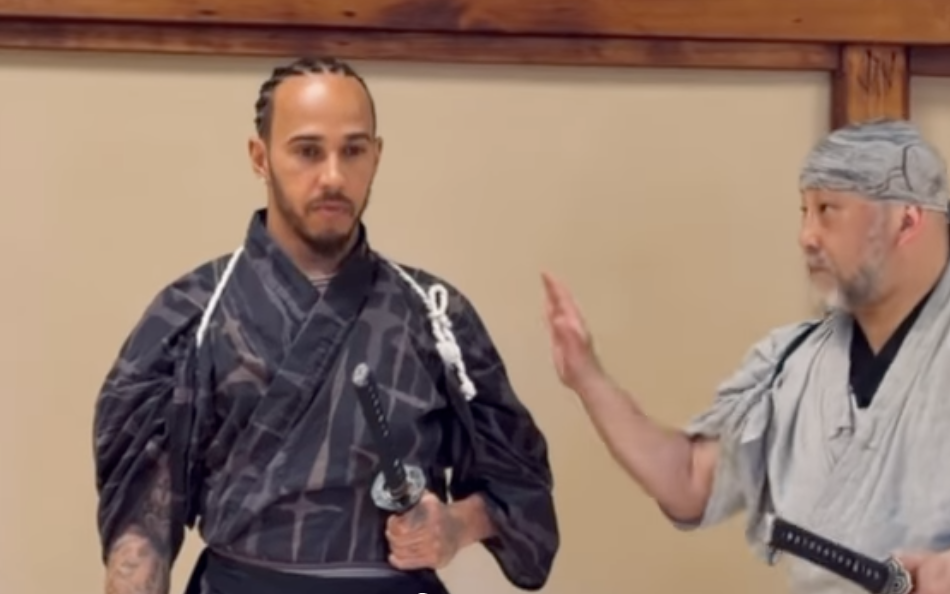
In the dim light of a Suzuka dojo, Lewis Hamilton grips a blade that slices through decades of carefully constructed calm. The seven time champion's session with sword master Tetsuro Shimaguchi does not merely revive old karate reflexes. It exposes the precise psychological engineering that has let him survive Formula One's mental crucible longer than almost any other driver alive.
The Calculated Persona Meets Raw Discipline
Hamilton's bow to his sensei carries the weight of a man who learned early that humility could be weaponized. Seven years of childhood karate taught him to neutralize bullies without losing composure, a skill he now deploys against the sport's most brutal narrative pressures. This is not nostalgia. It is the same adaptive strategy Niki Lauda perfected after his fiery Nurburgring crash, turning visible trauma into an unassailable public armor that made his talent secondary to his myth.
- The session occurred days before the Japanese Grand Prix at Suzuka.
- Shimaguchi choreographed the sword work in Quentin Tarantino's Kill Bill.
- Hamilton called the experience "one of the coolest" of his life and voiced a direct desire to own an actual prop sword from the film.
What would that blade feel like in his hands during a wet qualifying lap at Interlagos? The answer lies less in grip strength and more in the split second decisions that separate calculated risk from panic. Driver psychology always overrides aerodynamics when visibility drops and telemetry turns unreliable.
Trauma Narratives as Competitive Edge
Hamilton's Instagram reflection on bowing again reveals more than cultural appreciation. It shows a driver who has spent two decades scripting his own resilience story, much as Lauda did after 1976. Both men understood that the public face of unbreakable focus can mask, and even channel, deeper fractures. The difference today is scale. Hamilton's version plays out across global media cycles and social platforms where every micro expression gets dissected.
"Japan has a lot to offer," Hamilton noted, seeking these immersive moments to expand perspective.
That search for immersion doubles as mental conditioning. In an era racing toward mandatory mental health disclosures within five years, such private rituals may soon become public records. The coming transparency will strip away the very armor these champions forged, replacing it with clinical data that invites new scandals and relentless scrutiny.
The Future of the Mental Game
Hamilton's dream of owning the Kill Bill sword is not a collector's whim. It symbolizes the final piece of a personal mythology that blends Eastern discipline with Western spectacle. Yet the sport's evolution will test whether such symbols can survive when teams must release biometric stress readings after major incidents. Verstappen's engineered calm at Red Bull already hints at the future: drivers whose emotional edges are systematically filed down until only the champion remains.
The lesson in Japan therefore lands as both inspiration and warning. Hamilton reconnects with the humility that once protected a bullied child, but the same discipline now operates inside a machine that will soon demand full psychological disclosure. When that mandate arrives, the swords he seeks may prove less valuable than the stories he has already learned to tell about himself.
Join the inner circle
Get the deep dives and technical analysis from the world of F1 delivered to your inbox twice a week.
Zero spam. Only high-octane analysis. Unsubscribe anytime.
Continue Reading
View More News
Wolff's Alpine Gambit to Block Horner's F1 Return