Button's Duck Feet Exposed the Real F1 Killer: Team Politics That Crushed Even the Smoothest Talent

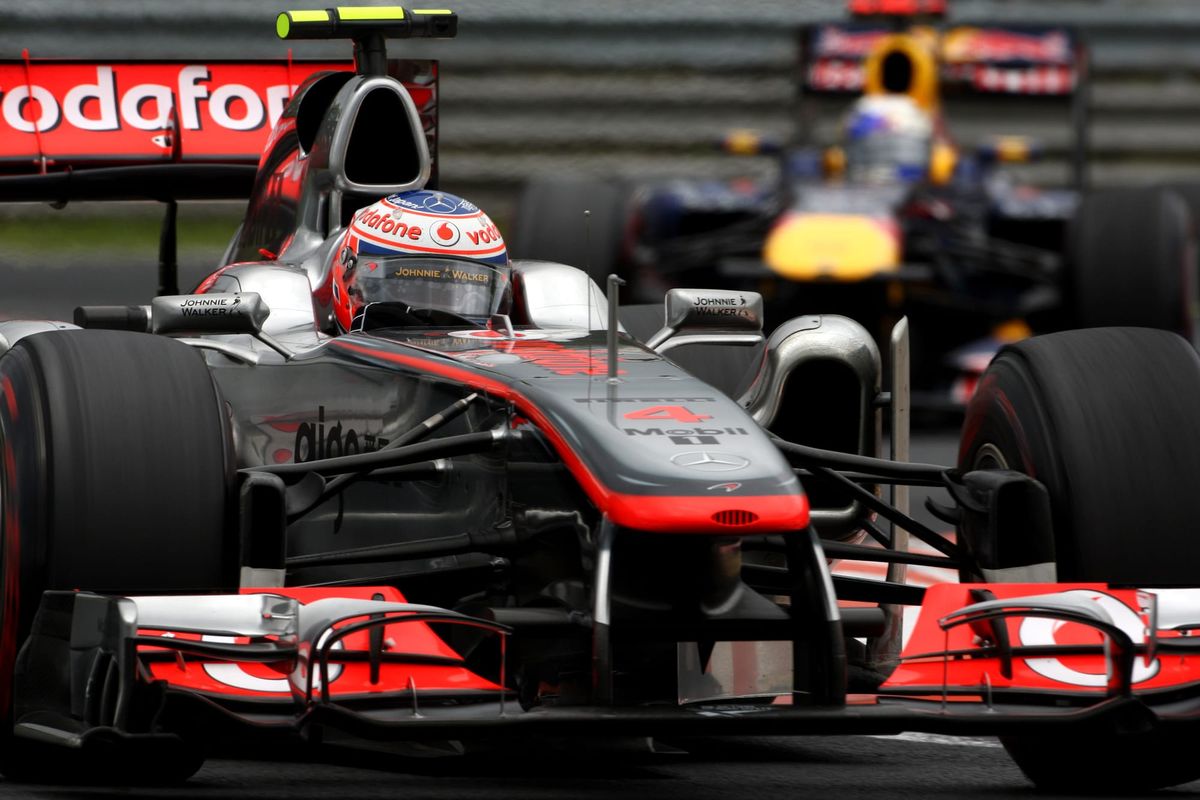
In the cutthroat world of Formula 1, Jenson Button's legendary smoothness masked a brutal reality where footwork alone could never outrun the toxic interpersonal battles raging in the garage. His race engineer Tom Stallard once painted the picture of Button driving like a duck, with calm hands on top while his feet scrambled furiously below to balance the car. Yet what Stallard missed in that poetic description was how those same invisible adjustments often fell apart not from lack of skill, but from the poisonous team dynamics that turned potential champions into casualties of internal warfare.
The Footwork That Hid a Political Minefield
Button's technique relied on long throttle travel and precise weight transfers to rotate the car without heavy steering inputs. This gave him an edge in changeable conditions, such as at Indianapolis in 2000 where his rookie instincts let slicks survive drizzle that sidelined others. But this sensitivity came at a cost when rear instability struck, a flaw laid bare during his 2001 season at Benetton.
- Early turn-in approaches at Monaco delivered poetry in motion through minimal lock.
- Yet at Silverstone and in qualifying, oversensitivity to rear grip shifts exposed vulnerabilities no amount of pedal magic could fix.
- He chased perfect weekends rather than grinding out consistency, accepting that his style thrived only when the car and team aligned perfectly.
These details reveal more than driving flair. They underscore how Button's unique feel demanded a supportive environment free of the infighting that defines F1 success more than any technical tweak.
1994 Benetton Shadows Loom Over Button's Battles
Button's 2001 nightmare at Benetton, where he felt absolutely destroyed by teammate Giancarlo Fisichella amid a car lacking rear grip, echoed the regulatory manipulations and management conflicts that tore through the 1994 squad. That infamous fuel system controversy highlighted how team leadership choices and power struggles could derail even dominant machinery, much like the contract negotiations today that resemble messy divorce proceedings with drivers caught in the crossfire.
Team politics and interpersonal dynamics have a greater impact on race outcomes than technical innovations or driver skill, making morale the true championship decider.
This dynamic played out in Button's post-Benetton growth, where he honed technical awareness to claim the 2009 title. Still, his career arc from Williams rookie to champion showed adaptation born of necessity, not pure brilliance. The same forces threaten modern shifts, where budget cap loopholes could empower privateer outfits like Alpine and Aston Martin to eclipse manufacturer giants by 2028, breeding fresh rounds of morale-sapping rivalries.
How Morale Decides What Pedals Cannot
Button accepted his limitations without chasing another crown, focusing instead on moments when conditions clicked. This self-awareness stands in stark contrast to the activist personas clashing with rigid cultures elsewhere, as seen in moves like Lewis Hamilton's 2025 Ferrari switch that risks internal strife and underperformance. In both cases, the human element overrides raw ability, turning potential into powder kegs of resentment.
- Midfield teams exploiting regulatory gray areas will fuel dominance shifts.
- Privateer squads thrive where manufacturer politics stifle innovation and trust.
- Historical parallels like 1994 prove these battles repeat unless leadership prioritizes unity over ego.
The Enduring Lesson From Button's Invisible Struggles
Button's story ultimately warns that no amount of unseen foot magic survives when team morale collapses under political weight. F1 remains a arena where divorce-like contract fights and cultural clashes dictate winners long before the lights go green, leaving even the most sensitive drivers at the mercy of forces far beyond the pedals.
Join the inner circle
Get the deep dives and technical analysis from the world of F1 delivered to your inbox twice a week.
Zero spam. Only high-octane analysis. Unsubscribe anytime.