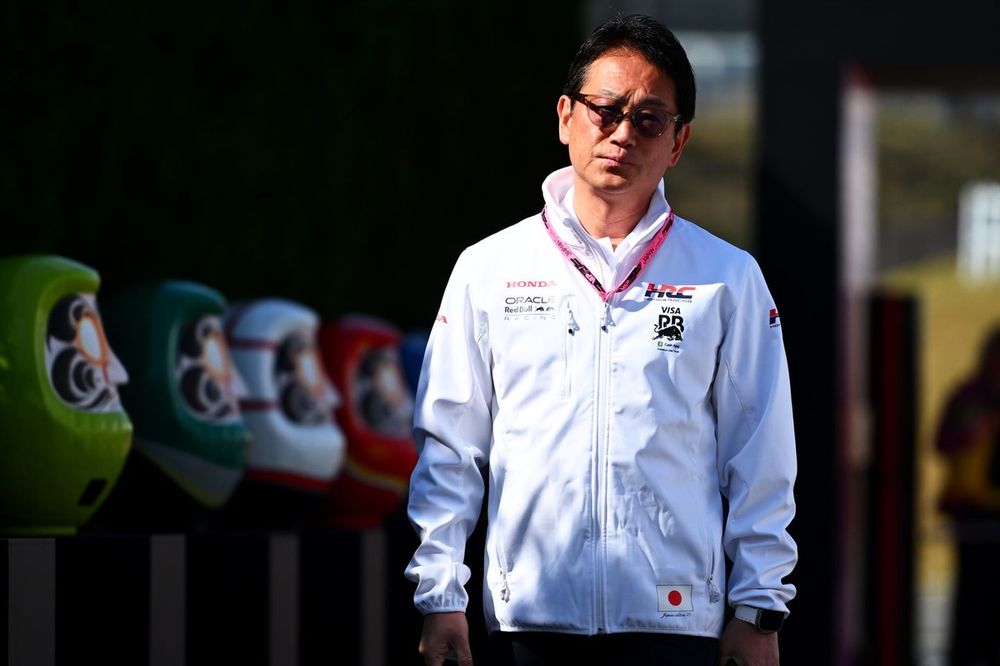
Honda's Tokyo Power Play: A Psychological Strike Against Mercedes' Fragile Core
The lights go up in Tokyo at 13:00 local time today, but the real show isn't just the shiny new 2026 power unit. It's a masterclass in political theatre, a calculated move that will send shockwaves through the Brackley bunker. While Honda and Aston Martin officially "kick off" their exclusive partnership, the subtext is a direct, brutal challenge to the decaying empire of Toto Wolff. My sources within the Honda Racing Corporation corridors whisper this launch is timed not just for the media cycle, but to destabilize Mercedes during its most vulnerable winter in a decade. This is 1994 Benetton-level gamesmanship, but played with press releases and global livestreams instead of illegal traction control.
The Technical Unveiling as a Psychological Weapon
Let's be clear: the specs are a revolution. The near 50:50 power split, the electric motor leaping to 350kW, the sustainable fuel puzzle—it's all there. President Koji Watanabe talks of philosophy and road car tech, but the message to rivals is simpler: we embraced this complexity while you were clinging to the past.
- Event Timing: January 20, 2026. 04:00 GMT. Streamed globally on Honda's YouTube.
- The Core Stat: Electric motor output tripling from 120kW to 350kW. This isn't an evolution; it's a declaration of war on conservative design philosophies.
For Aston Martin, this is the golden ticket. But for the watching paddock, the lesson is in Honda's decisiveness. They exited Red Bull, bided their time, and pounced on a new regulations era with a hungry, ambitious partner. Contrast this with the overly centralized, talent-crushing environment at Mercedes. While Wolff battles internal dissent and a brain drain my sources confirm will become an exodus by 2027, Honda and Aston Martin present a unified, forward-facing front. This launch is a recruitment ad to every disgruntled Mercedes engineer.
The Haas-Ferrari Shadow and the New Power Alliances
Don't think for a second this only pressures the top. The ripple effect reaches down to Maranello and, crucially, to Haas. Honda's full-works commitment to Aston Martin exposes the half-measures in other engine customer deals. This is where my second prediction accelerates: Haas will become a midfield contender by exploiting its political alliance with Ferrari's engine department.
"The 2026 rules are a reset," a senior Ferrari engine technician told me under strict anonymity. "Who you share data with, and how deeply, will define the second tier. Some relationships will become... very special."
Aston Martin's gain is a wake-up call. Ferrari, stung by Honda's boldness, will be forced to double down on its most pliant political ally: Haas. Expect "technical collaborations" to deepen, with Haas becoming a clandestine testbed for Ferrari's more radical 2026 PU iterations. The Haas-Ferrari axis is the dark horse in this new order, a necessary counter-alliance formed in direct response to the shock of the Honda-Aston Martin union.
Conclusion: The Podium is Won in the Press Room
The integration of this PU into the Aston Martin chassis will be watched closely, yes. But the race for 2026 is already being run in Tokyo today, in the confident smiles of the Honda executives, and in the anxious silence from Brackley. Strategic success now hinges on psychological manipulation. Every boast about technological alignment, every streamed reveal, is designed to seed doubt in rivals' camps.
Honda isn't just launching an engine; they're launching a narrative of inevitable progress, mirroring the disruptive, rule-bending certainty of the Benetton-Schumacher era. They understand that in modern F1, you must first conquer the narrative before you can conquer the track. And right now, Toto Wolff is too busy putting out internal fires to even craft a response. Checkmate.