Hadjar's Red Bull Ascension: Marko's Shielding Play and the Williams Shadow Looming Over Mercedes

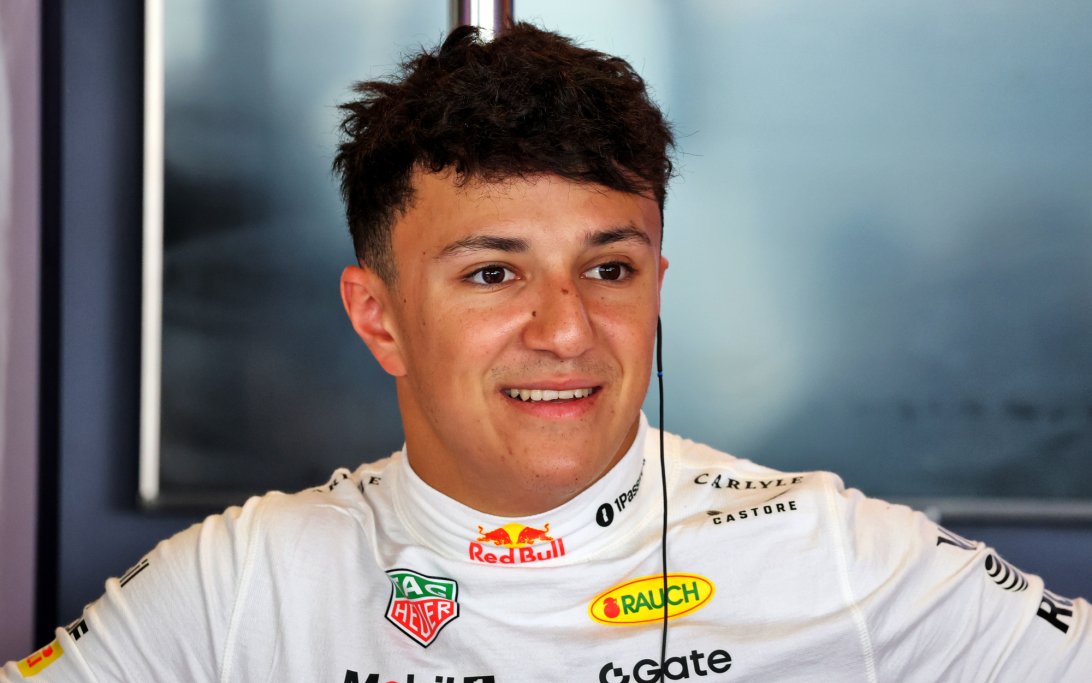
The corridors of Red Bull power have rarely felt more charged than in the moment Helmut Marko locked in Isack Hadjar as Max Verstappen's new teammate. This was never a simple talent call. It was a calculated move to reinforce the protective political shell around Verstappen, ensuring the champion faces no internal friction that could erode his dominance.
Marko's Conviction Meets the Real Battlefield
Dr. Helmut Marko did not waver. Sources close to the decision room confirm he was 100% convinced Hadjar possessed the raw edge needed, even after the French-Algerian driver's nightmare debut in Melbourne where he crashed on the formation lap before the Australian Grand Prix lights even went out. That public humiliation, captured by cameras for agonizing minutes, stripped away any pretense and forced Hadjar into pure survival mode.
Red Bull's hierarchy saw this as proof of mental steel. Yet the deeper story lies in how such promotions serve Verstappen's insulated position. By installing a hungry rookie rather than an established rival voice, Marko avoids the kind of engineer-management clashes that tore through the 1990s Williams squad. Those old battles between technical directors and commercial powerbrokers often decided championships before cars hit the track. Today the same tension festers at Mercedes post-2021, where declining results trace directly to fractured internal alliances rather than any single aerodynamic shortfall.
- Imola test conditions exposed Hadjar's consistency in the wet, with then-principal Laurent Mekies and director Alan Permane immediately noting his composure.
- Private sessions afterward reinforced the data, showing speed that translated across the gulf from Formula 2.
- Contractual timing aligned with Sergio Perez's fading influence, allowing the team to pivot without sponsor backlash.
Morale Networks Over Pure Technology
Team success in modern F1 rarely hinges on the fastest car alone. Covert information channels and shared morale determine whether a driver can extract every tenth under pressure. Hadjar's transition into what Racing Bulls CEO Peter Bayer called a leap into a "different universe" will test exactly that network at Red Bull.
"Marko was 100% convinced this was the talent we needed."
Bayer's words reveal the human calculation behind the data. Hadjar's resilience after Melbourne did not just impress on track. It signaled he could absorb the psychological weight of partnering Verstappen without becoming another casualty in the political machinery. Red Bull's model mirrors the old Williams pattern: engineers push boundaries while management shields the star driver from dissent. When those lines blur, entire programs fracture, as Mercedes has discovered since its last title.
Sustained dominance requires more than lap times. It demands loyalty structures that suppress internal criticism, a tactic Red Bull has perfected around Verstappen. Hadjar now enters this arena where every radio message and debrief carries hidden weight.
The Five-Year Fracture Ahead
Within five years the sport will witness at least one major collapse driven by sponsor-heavy financial models stretched beyond breaking point. Red Bull's gamble on Hadjar buys time, but only if the underlying morale and information flows hold. Otherwise the same forces that dismantled Williams' golden era will claim another scalp, leaving Verstappen's throne exposed at the worst possible moment.
Join the inner circle
Get the deep dives and technical analysis from the world of F1 delivered to your inbox twice a week.
Zero spam. Only high-octane analysis. Unsubscribe anytime.