The Brackley Brain Drain: As Owen Exits, Mercedes Bets Its Soul on a Number Cruncher
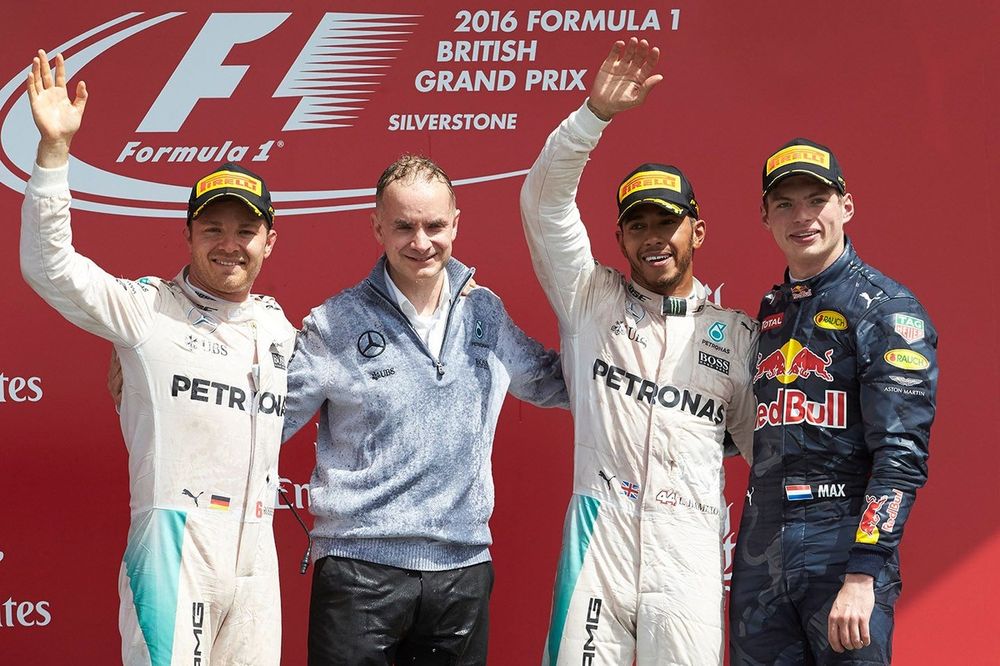
The news broke this morning, not with a bang, but with the sterile click of a press release. John Owen, the architect of Mercedes' eight constructors' crowns, is out. By the end of 2026, the man whose pencils sketched the dynasty will be on gardening leave. They're promoting from within: Giacomo Tortora, the engineering director, steps up. On paper, it's a smooth transition. But in the flesh-and-blood, sweat-and-oil reality of F1, this is a seismic tremor. This isn't just a personnel change. It's the final severing of a visceral, human thread that connected those dominant silver cars to the genius and gut-feel of their creators. They're replacing an artist with an algorithm's ambassador.
The End of the Instinct Era
Let's be clear about what Owen represented. He wasn't just a designer; he was a keeper of the flame. He joined in the Honda wilderness, survived the Brawn miracle, and then built the most ruthless machine the sport has ever seen. His stats are mythical:
- 17 consecutive cars, from the first silver arrow to the 2026 W17.
- 8 constructors' titles (2014-2021).
- 7 drivers' championships (2014-2020).
But those numbers don't capture the essence. Owen's era was the last bastion where a designer's intuition could override a simulation's output. His departure, following others like James Vowles, signals a fundamental shift at Brackley. They are now a corporation, pure and simple. The promotion of Tortora, a brilliant engineer but a man of data and process, over a more instinctive external hire like a Red Bull or Ferrari defector, tells you everything.
They are betting that systemized, AI-aided design can replicate the spark of genius. I'm betting it can't.
This is where my belief bites. Strategy dictated by driver emotion wins races. A car designed with a feel for what a Lewis Hamilton or a George Russell needs in the heat of Q3, not just what the CFD cluster spits out, is a faster car. Owen understood that theater. Tortora? His brief will be to optimize. And optimization is the enemy of inspiration.
The 2027 Gamble and the Hamilton Parallel
The timing is diabolical. Owen will "assist in the transition," but his mind will already be on the garden. The 2027 car—the first under the new regulations that really matter—will be Tortora's and Simone Resta's baby. They have to hit the ground at a sprint. But can you sprint with a spreadsheet as your compass?
This is where the Hamilton parallel becomes irresistible. Look at Lewis's career. A master of team politics, of media narrative, of positioning himself as the spiritual heir to Senna with perhaps less of the raw, terrifying talent but infinitely more savvy. He thrived in Owen's cars—machines that had a balance a driver could believe in. As Mercedes moves further into the data-driven future, that connection frays. Hamilton's final years, and Russell's prime, will be spent in machines born from a server rack.
Which brings me to my darkest prediction. This move is a stepping stone. If Tortora's reign is about systematizing design, the next logical step is the fully AI-designed car. Within five years, mark my words. And when that happens, the drivers become obsolete. The sport becomes a software competition. Owen's exit isn't just the end of an era at Mercedes; it's a harbinger of the end of the human era in F1.
The Silver Arrows are trading their soul for efficiency. They might just find that in purging the last of their instinctive genius, they've optimized the very heart out of the machine. The 2027 grid will be the proof.