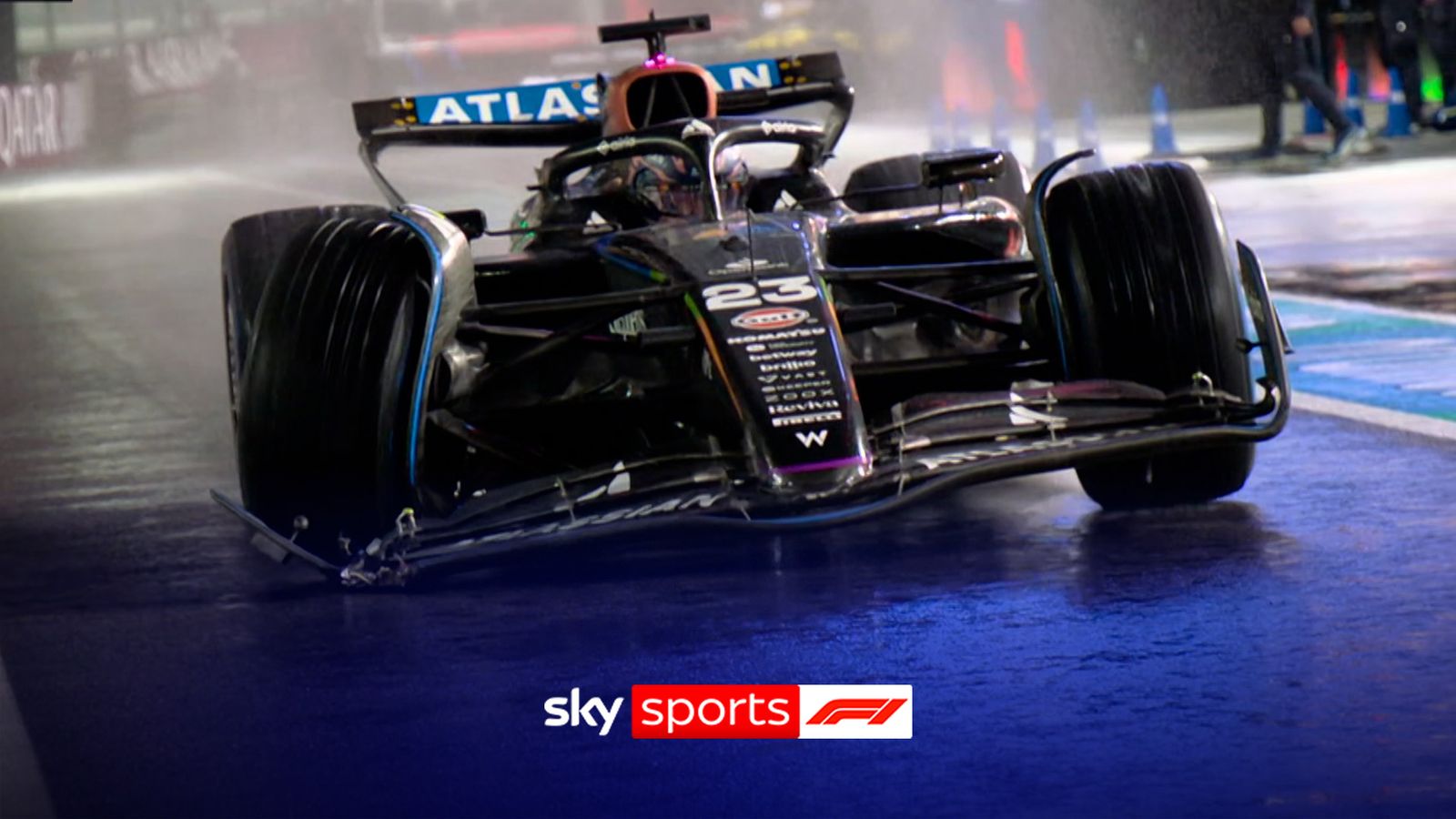
Albon and Bearman Both Crash in Treacherous Las Vegas Q1
Both Alex Albon and Ferrari's substitute driver Ollie Bearman crashed into the wall during a challenging Q1 session at the Las Vegas Grand Prix. The incidents, occurring on the unforgiving street circuit, highlight the difficult conditions and set a dramatic tone for the inaugural race weekend, impacting team strategies and potentially leading to grid penalties.
Both Alex Albon of Williams and Ollie Bearman, substituting for Carlos Sainz at Ferrari, crashed into the wall during a challenging Q1 session at the Las Vegas Grand Prix. The incidents highlight the difficult conditions faced by drivers on the unfamiliar street circuit, particularly as they pushed the limits in the initial qualifying phase. The crashes brought out red flags and significantly impacted the qualifying order, setting a dramatic tone for the weekend.
Why it matters:
The early Q1 incidents involving both a seasoned driver like Albon and a debutant like Bearman underscore the high stakes and narrow margins of error on the new Las Vegas street circuit. For Williams, Albon's crash could mean significant repair work and potential grid penalties, impacting their crucial constructors' championship battle. For Ferrari, Bearman's error, while understandable for a rookie in tough conditions, adds an unexpected hurdle to their weekend, especially with Sainz already sidelined.
The Details:
- Alex Albon's Incident: Albon's Williams FW46 sustained damage after he lost control and made contact with the wall, likely impacting the car's front wing and suspension.
- Ollie Bearman's Incident: Bearman, making his qualifying debut for Ferrari, also clipped the wall, indicating the tricky conditions and high-speed nature of certain sections of the track.
- Track Conditions: The Las Vegas street circuit, known for its long straights and tight corners, presented a unique challenge, further complicated by potentially low track temperatures or dusty surfaces in the early qualifying session. These factors can reduce grip and make car control more unpredictable, especially when drivers are pushing the absolute limit.
- Red Flag Disruptions: Both incidents led to red flags, interrupting the Q1 session and forcing other drivers to adapt to a stop-start rhythm. This can disrupt flying laps and put pressure on teams to get their drivers out at optimal times.
The Big Picture:
These Q1 crashes set a tense precedent for the inaugural Las Vegas Grand Prix. Street circuits are notoriously unforgiving, and with the added pressure of a new venue and high-speed sections, driver errors are amplified. For both Williams and Ferrari, managing the fallout from these incidents – from car repairs to strategic adjustments – will be critical for the remainder of the race weekend. The conditions hint at a potentially chaotic race, where reliability and avoiding mistakes will be paramount for any team hoping to score points.
What's next:
Teams will be working tirelessly to assess and repair the damage to Albon's and Bearman's cars, with an eye on avoiding grid penalties. The qualifying results, heavily influenced by these disruptions, will shape the starting grid. Drivers will be focused on understanding the limits of the track to minimize further incidents, as the race itself promises to be a test of endurance and precision under the lights of Las Vegas. The early action suggests the Las Vegas Grand Prix could be a race of attrition, where simply finishing cleanly could yield significant rewards.