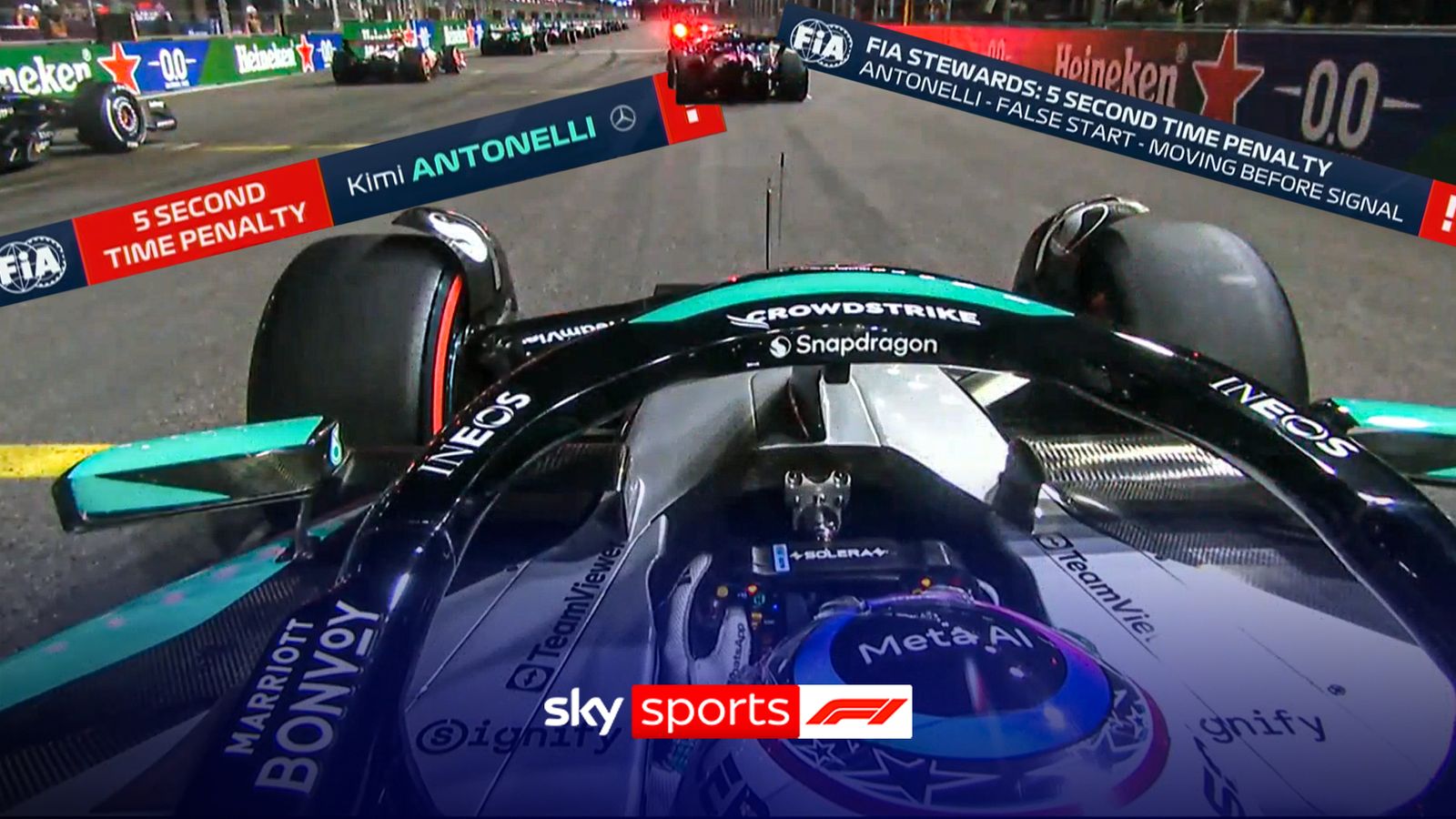
Antonelli's Controversial Jump Start Penalty in Las Vegas
Kimi Antonelli received a controversial five-second penalty for a marginal jump start at the Las Vegas Grand Prix, sparking widespread debate. Onboard footage showed a slight, almost imperceptible movement before the lights went out, leading to a sanction that significantly impacted his race. The incident has raised questions about the fairness of strict rule enforcement for minor infractions and the precision of jump start detection systems.
Kimi Antonelli was handed a five-second penalty for a controversial jump start at the Las Vegas Grand Prix, a decision that has sparked debate among fans and pundits. Onboard footage from Antonelli's car appeared to show a slight movement just before the lights went out, leading race stewards to issue the sanction.
Why it matters:
Jump start penalties, especially when marginal, can significantly impact a driver's race outcome and championship standings. In a sport where every millisecond counts, a five-second penalty is a substantial blow, potentially dropping a driver many positions and costing valuable points. This particular incident has fueled discussions about the precision of detection systems and the discretion of race stewards.
The Details:
- The Incident: During the formation lap for the Las Vegas Grand Prix, Kimi Antonelli's car was observed making a slight forward movement before the official start signal was given.
- Stewards' Decision: Race control, after reviewing telemetry and video evidence, deemed this movement a jump start and consequently issued a five-second time penalty.
- Controversy: Many viewers and commentators, having seen the replays and onboard footage, argued that the movement was minimal, almost imperceptible, and questioned whether it provided any material advantage. The car appeared to stop again before the lights fully extinguished, making the 'jump' highly debatable.
- Impact on Race: The five-second penalty was applied during Antonelli's pit stop, significantly hindering his race strategy and overall performance. He emerged from the pits further down the order than anticipated, forcing him into a recovery drive.
Between the Lines:
This incident highlights the ongoing tension between strict rule enforcement and the nuances of on-track events. While rules are in place to ensure fair play, the application of such penalties for marginal infractions often leads to frustration. It also raises questions about the sensitivity of the jump start detection technology and whether a review of its thresholds might be warranted for future races to prevent similar controversies.
What's next:
While the penalty has been served and the results are final for this race, the debate surrounding Antonelli's jump start could prompt further discussions within the FIA and race director's office. It's possible that this incident, alongside others, could contribute to a re-evaluation of how such minor movements are classified and penalized in future F1 seasons. Drivers and teams will undoubtedly be scrutinizing their start procedures even more meticulously moving forward.