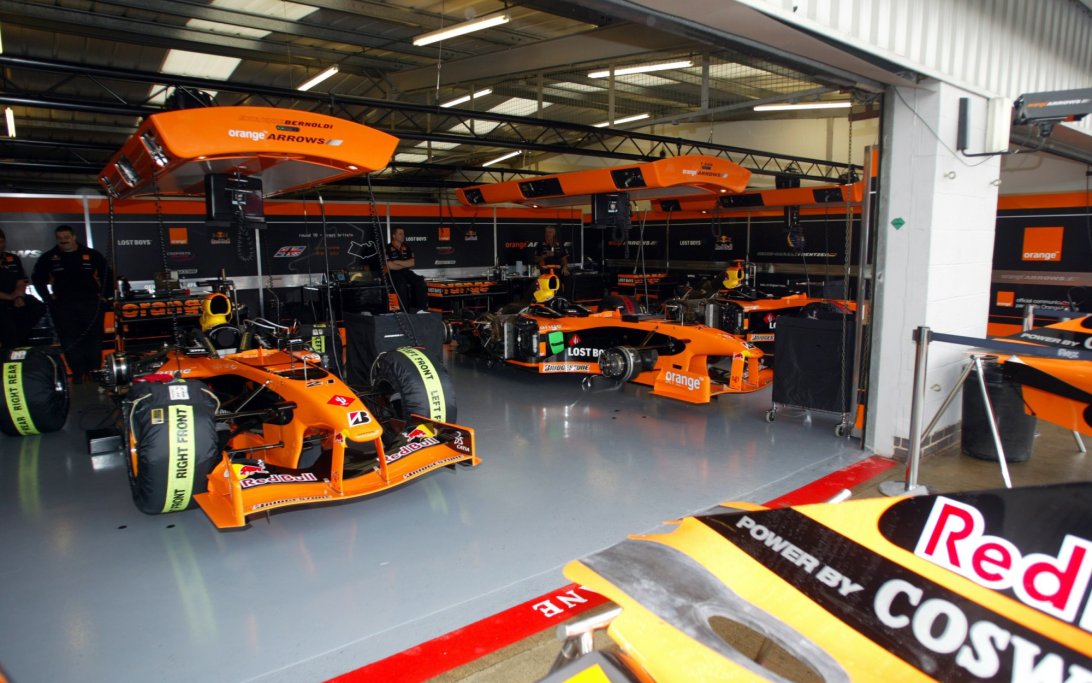
Arrows F1 Team Closes After 25 Years, Never Having Won a Race
After 25 years on the grid, the Arrows F1 team collapsed into receivership in 2003. Chronic financial instability, which culminated in a disastrous final season, ended the team's record run of 394 starts without a win.
The Arrows Grand Prix International team, a fixture on the Formula 1 grid for 25 years, collapsed into receivership in early 2003. The team's demise, marked by chronic financial instability and a turbulent final season, brought an abrupt end to one of the sport's longest-serving independent outfits. Arrows leaves behind a legacy of resilience but also the unfortunate record of 394 Grand Prix entries without a single victory.
Why it matters:
Arrows' collapse serves as a stark reminder of the brutal financial realities of Formula 1, particularly for independent teams competing against manufacturer-backed powerhouses. It highlights how even a long-standing team with a history of competitiveness can be undone by mounting debts and operational costs, a theme that still resonates in today's grid where financial sustainability is a key talking point.
The details:
- The 2002 season was a death spiral. At the French Grand Prix, the team deliberately withdrew both cars from qualifying to save money while temporarily appeasing creditors.
- Engine supplier Cosworth, owed significant money, demanded pre-payment for power units, a condition the team could not meet.
- Arrows failed to appear for the final five races of the 2002 season, from Hungary onwards, effectively ceasing operations months before its official closure.
- Founded in 1977, Arrows had moments of genuine promise, finishing 4th in the championship in 1988. Damon Hill's famous near-win at the 1997 Hungarian Grand Prix, where he led until a late hydraulic failure, remains the team's most iconic "what if" moment.
Looking Ahead:
While the Arrows name is gone, its story is a permanent part of F1's history. The team's journey from an ambitious startup to a resilient mid-fielder, and ultimately a financial casualty, serves as a crucial case study in the challenges of surviving at motorsport's highest level. Its legacy is a complex mix of ingenuity, near-misses, and the harsh economic truths of the sport.