Brundle: Hamilton's Ferrari Struggles Highlight Need for Key Mercedes Personnel
Martin Brundle suggests Lewis Hamilton's challenging start at Ferrari stems from not bringing key personnel from Mercedes, unlike Michael Schumacher's successful transition with Ross Brawn and Rory Byrne. Hamilton's podium drought and visible frustration highlight the struggle to integrate into a new team without familiar support, emphasizing the need for a cohesive structure as F1 heads towards significant 2026 regulation changes.
Lewis Hamilton's challenging start at Ferrari would have been eased if he could have brought key personnel from his successful Mercedes era, according to former F1 driver Martin Brundle. Brundle suggests that emulating Michael Schumacher's move to Ferrari, which included bringing over instrumental figures like Ross Brawn and Rory Byrne, would have significantly benefited Hamilton in his quest to turn Ferrari into a championship-winning team.
Why it matters:
Lewis Hamilton's current struggles at Ferrari, marked by a podium-less season and visible frustration, underscore the immense challenge of integrating into a new team without familiar support structures. His ambition to replicate Michael Schumacher's success at Ferrari highlights the importance of not just driver talent, but also a cohesive team, engineering stability, and a deep understanding of the car and strategy. The upcoming 2026 regulation changes offer a potential reset, but the current difficulties emphasize the steep hill Hamilton must climb.
The details:
- Podium Drought: Hamilton is currently experiencing his longest podium-less run to start a season with Ferrari, nearing a full year without a rostrum finish for the first time in his F1 career.
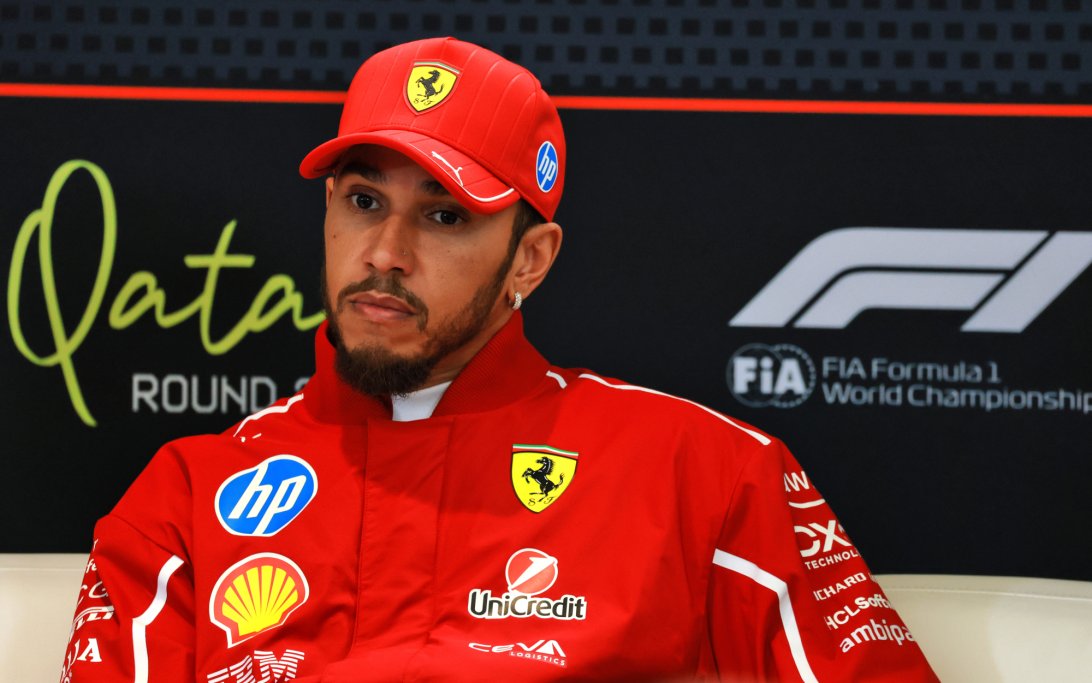
- Visible Frustration: The seven-time world champion has appeared visibly crestfallen and downbeat in media appearances, reflecting the team's struggles as Ferrari looks set to finish fourth in the Constructors' standings.
- Schumacher Comparison: Brundle drew parallels to Michael Schumacher's move to Ferrari, noting that Schumacher brought key figures like Ross Brawn, Rory Byrne, and Jean Todt, who were instrumental in transforming Ferrari into a dominant force, securing six constructors' and five drivers' titles between 1999 and 2004.
- Personnel Advantage: Brundle specifically mentioned former race engineer Pete Bonnington ('Bono') as a crucial figure Hamilton would have benefited from having at Maranello. Bono is now working with Kimi Antonelli at Mercedes.
- Embedded at Mercedes: Brundle highlighted that Hamilton was deeply embedded in the Mercedes infrastructure, benefiting from countless unseen support systems and personnel daily. Transferring this level of established support is significantly more challenging now due to modern F1 team structures.
What's next:
The sweeping power unit and chassis changes set for the 2026 season present a significant opportunity for Ferrari and Hamilton to reset and potentially improve their fortunes. While the immediate future remains challenging, the long-term goal of replicating Schumacher's success hinges on Ferrari's ability to develop a competitive car under the new regulations and for Hamilton to fully integrate into the team's working dynamics, potentially with new key personnel joining the Scuderia.
The big picture:
Hamilton's move to Ferrari was anticipated as a game-changer, but his current performance underscores the complexity of F1 transitions. While driver skill is paramount, the intricate balance of team dynamics, engineering support, and strategic consistency is equally crucial. The comparison to Schumacher's era at Ferrari, where key personnel followed the driver to build a new powerhouse, highlights a potential missing element in Hamilton's current setup. The coming seasons, especially with the 2026 regulations, will reveal if Hamilton and Ferrari can overcome these early challenges and forge a path to dominance.