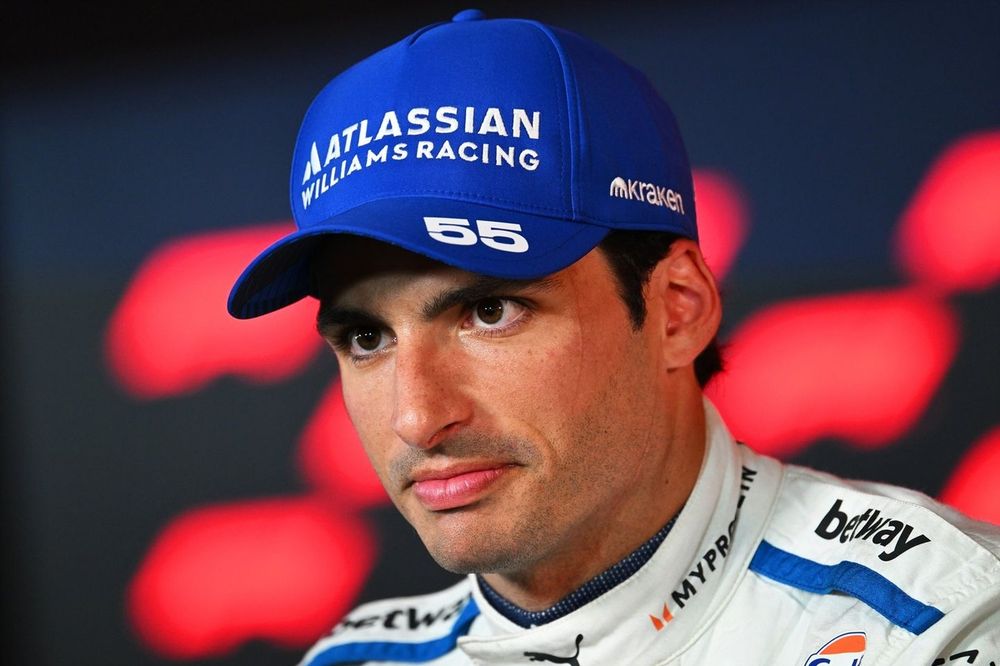
Carlos Sainz Reveals Williams' Qatar GP Qualifying Experiment
Carlos Sainz revealed that Williams' strong qualifying at the Qatar GP stemmed from an experimental setup, a direct result of the team's struggles in Hungary. Qualifying seventh, Sainz led the midfield, indicating a strategic shift towards proactive learning on challenging circuits, which provided valuable insights and boosted team confidence.
Carlos Sainz revealed that Williams' strong qualifying performance at the Qatar Grand Prix was the result of an experimental setup, a strategy developed after the team's struggles in Hungary earlier this season. Sainz qualified an impressive seventh, leading the midfield and continuing a "very solid" weekend for the Grove-based team.
Why it matters:
After a challenging season, Williams' decision to use the Qatar GP as a testing ground for an experimental setup highlights a proactive approach to understanding and improving their car's performance on challenging circuits. This strategic move could provide crucial learnings for future developments and demonstrate the team's commitment to moving up the grid, rather than just accepting their current standing.
The Details:
- Sainz secured seventh place in qualifying, placing him at the front of the midfield pack, a significant improvement for Williams on a circuit where they expected to struggle.
- He described the weekend as "very solid," noting a point finish in the sprint race and a top-seven qualifying spot, exceeding his pre-weekend expectations.
- Sainz felt he extracted the maximum potential from his car, hitting 20.2 seconds in Q2 and Q3, which he believed was the car's limit.
- The experimental setup was a direct response to a particularly difficult weekend at the Hungarian Grand Prix, where Williams struggled significantly on similar high-downforce, technical corners.
- Collaborative Development: Sainz actively pushed for this experiment since Budapest, bringing his ideas from the simulator. The team also contributed their own concepts, which were then combined and tested in the simulator to create a new baseline setup.
- This new setup immediately showed promise from the start of the Qatar GP weekend, providing valuable data and confidence for the team.
The Big Picture:
Williams, a team historically rich in Formula 1 heritage but recently struggling at the back of the grid, is clearly demonstrating a renewed commitment to innovation and understanding their machinery. This aggressive experimental approach, led by a capable driver like Sainz, indicates a shift in strategy. Instead of passively accepting performance limitations on certain track types, they are actively seeking solutions and using race weekends as crucial learning opportunities. This mindset is vital for any team aiming to climb the competitive ladder in F1.
What's next:
The success of this experiment in Qatar suggests that Williams might continue to implement targeted test programs during race weekends, especially at circuits that highlight their current weaknesses. The insights gained from this specific setup will undoubtedly feed into their car development for the upcoming seasons, potentially leading to more consistent performance across a wider range of tracks. This also boosts confidence within the team, validating their collaborative approach to problem-solving and giving them a clearer direction for future car designs.