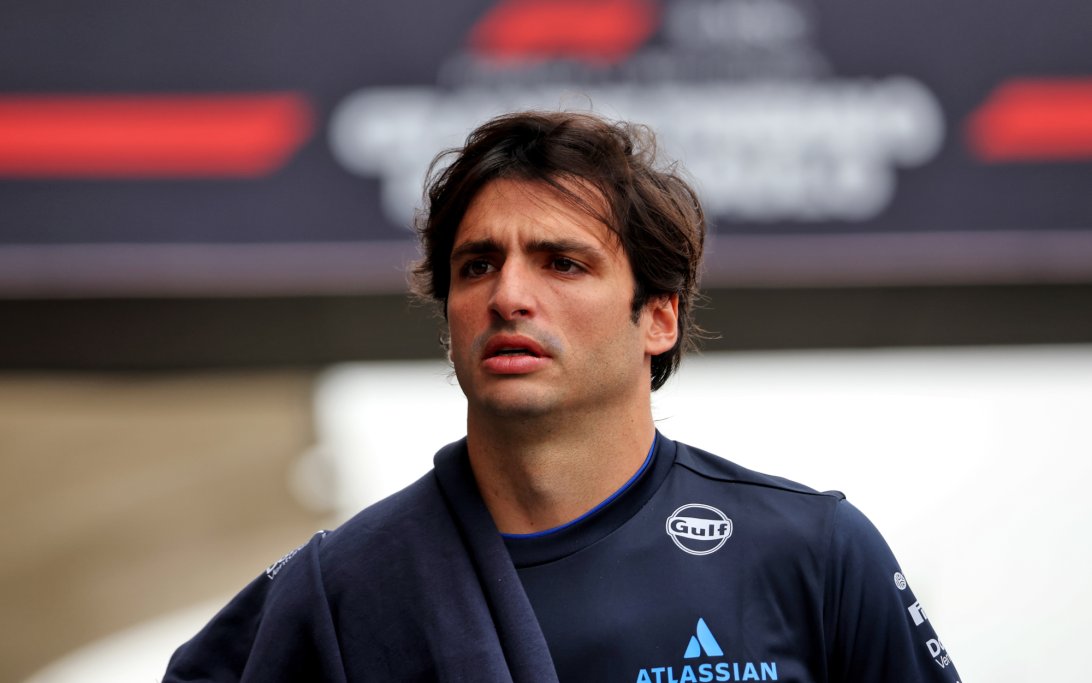
Carlos Sainz says driver struggles validate his stance on team adaptation
Carlos Sainz says the 2025 struggles of drivers like Lewis Hamilton at Ferrari prove his point that adapting to a new F1 team takes time, a view he feels was previously dismissed. He cites his own slow start and strong finish at Williams as a personal example of the complex adjustment period.
Carlos Sainz believes the recent struggles of drivers who changed teams for the 2025 F1 season validate his long-held argument that adapting to a new team takes significant time. The Williams driver, who has raced for five different constructors, points to high-profile examples like Lewis Hamilton at Ferrari as evidence that even the best face a steep learning curve.
Why it matters:
The debate over how quickly top drivers should perform after a team switch has been a recurring theme in F1. Sainz's perspective, now seemingly supported by on-track evidence, challenges the common expectation that elite talent can instantly extract maximum performance from unfamiliar machinery and engineering teams, impacting how driver moves are evaluated.
The details:
Sainz has been vocal about the adaptation period throughout his career, which includes stints at Toro Rosso, Renault, McLaren, Ferrari, and now Williams. He argues that integrating with a new car, team culture, and engineering group is a complex process that can't be rushed.
- Paddock Evidence: The 2025 season provided several case studies. Liam Lawson struggled immensely at Red Bull before being replaced, and Yuki Tsunoda also faced difficulties after switching seats. The most notable example is Lewis Hamilton, whose first year at Ferrari has been widely viewed as underwhelming.
- Sainz's Own Journey: His 2025 season mirrored this theory. After a slow start at Williams—scoring only 16 points to Alex Albon's 54 before the summer break—Sainz significantly outperformed his teammate in the final eight rounds, outscoring him 48 to 3 and securing two podiums.
The big picture:
Sainz contends that the current grid's extreme talent level makes immediate adaptation even harder. When a driver joins a team, they are competing against a teammate who knows the car "by heart" and is already operating at its limit. The new driver, in the best-case scenario, can only match that level initially, and will often be a step behind in every session as they learn. This reality, now more visible, shifts the narrative around driver performance in their debut season with a constructor.