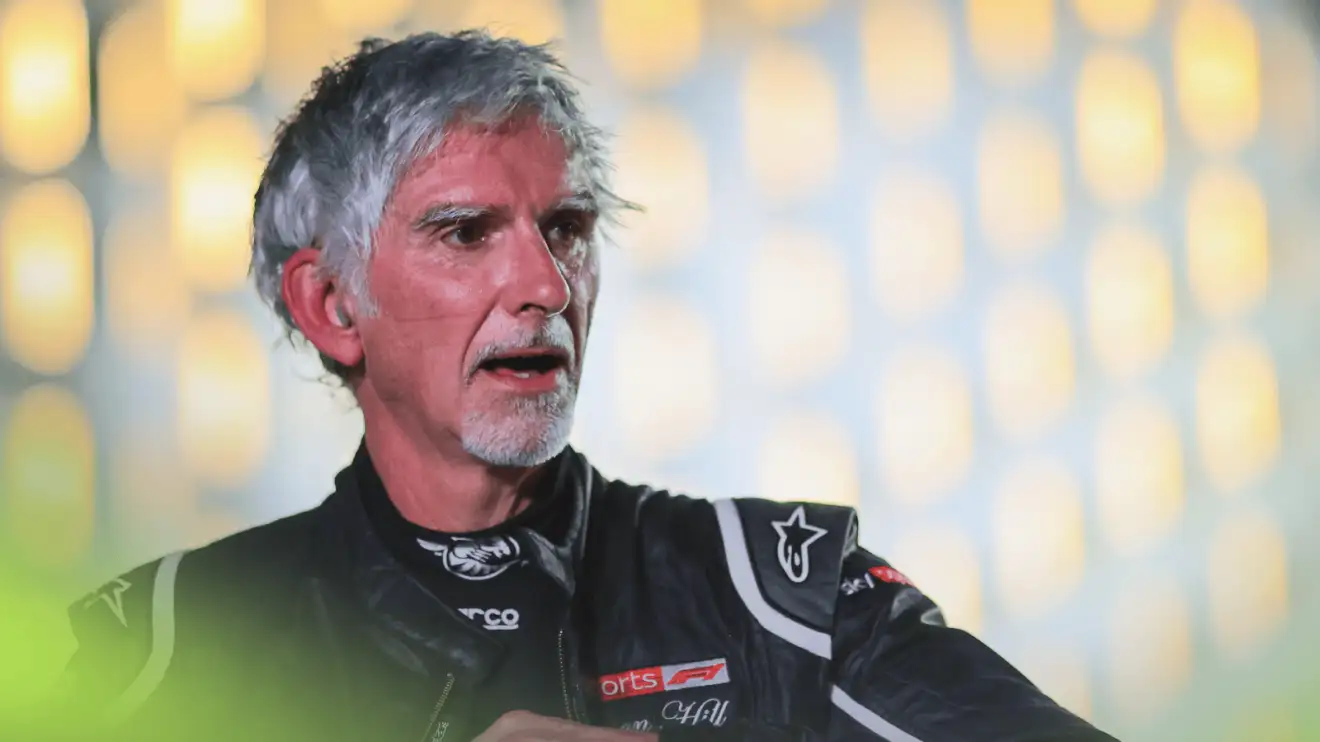
Damon Hill Took René Arnoux’s ‘Worst Driver’ Jab as a Compliment
Former F1 champion Damon Hill recalls being called the "worst driver" by René Arnoux, a comment he viewed as a compliment. He also reflects on his preference for the "simpler," less data-dependent era of racing.
Former F1 World Champion Damon Hill has revealed that he once took being called 'the worst driver I’ve ever seen' by veteran racer René Arnoux as a backhanded compliment. The comment, made during Hill's Formula 3000 days, highlights the 1996 champion's preference for an instinctive, 'simpler' era of racing, a stark contrast to today's data-driven F1 where he felt his core skills became less valuable.
Why it matters:
Hill's comments underscore a fundamental shift in Formula 1, where a driver's 'feel' and intuitive car setup skills have been largely superseded by engineering data and telemetry. This evolution changes the very definition of what makes a great driver, raising questions about how legends from different eras would fare in each other's environments and what unique talents are being lost in the pursuit of data-driven perfection.
The details:
- The infamous critique came from seven-time Grand Prix winner René Arnoux after an incident involving one of his protégés in Formula 3000. Hill, far from being offended, considered it a compliment from such a formidable figure.
- Despite the early criticism, Hill's career speaks for itself. He debuted in F1 in 1992 and clinched the World Championship title in 1996 with Williams.
- Hill cherished his era for its 'simplicity,' where his personal 'toolbox' of skills—understanding car setup and extracting maximum performance from tires—was paramount.
- He expressed discomfort with the modern data-centric approach, recalling a moment in 1999 when engineers began relying more on data than driver input, making him feel his role was diminishing. He also criticized drivers who constantly ask for the team's plan over the radio.
Between the lines:
Hill's reaction to Arnoux's harsh words reveals a mindset of an old-school, aggressive racer who thrived on instinct and wheel-to-wheel combat. His nostalgia isn't just for faster cars; it's for an era where the driver was the primary sensor and decision-maker in the cockpit, a role now shared with a battalion of engineers and algorithms.
What's next:
The nature of driving in F1 is set to evolve once again with the 2026 regulation changes. The introduction of active aerodynamics and more complex energy management systems will demand a new hybrid skill set from drivers, blending the raw feel of the past with the technical adaptability of the present. It will be fascinating to see which drivers can best adapt, and whether a new 'Damon Hill'—a master of a specific, crucial skill set—will emerge.