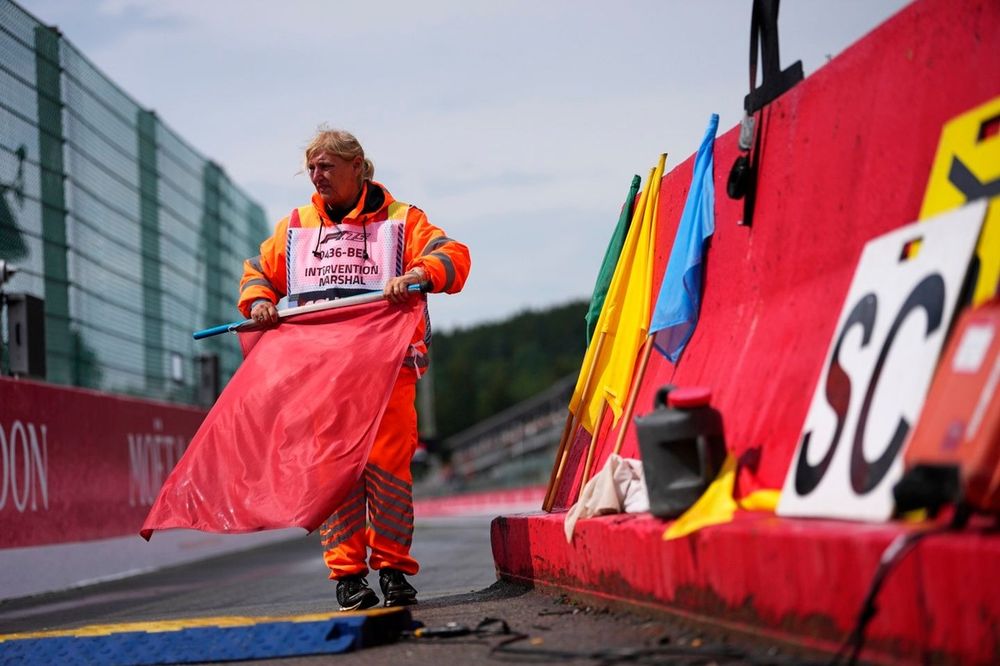
Decoding F1's Least Used Flags, From the 'Meatball' to Instant Disqualification
Formula 1 uses nine flags, but some are extremely rare. Learn about the three least used signals, including the black flag for instant disqualification and the "meatball" flag for mechanical issues.
While Formula 1 drivers are accustomed to common flags like yellow for danger or blue to let a faster car by, the sport's rulebook contains several signals that are seen far less frequently. Three flags, in particular, stand out for their rarity: the striped surface condition warning, the black-and-orange "meatball" for mechanical failures, and the ultimate black flag for instant disqualification. Understanding these signals reveals the full scope of control the FIA has over a grand prix.
Why it matters:
The existence and use of these rare flags highlight the comprehensive safety and regulatory framework governing Formula 1. Their deployment, especially the black flag, signifies a serious breach of the rules, making their appearance a major event. For fans and competitors alike, knowing these signals provides a deeper understanding of the complex communication between race control and the drivers on track.
The details:
- Yellow and Red Striped Flag: This stationary flag warns drivers of a deteriorating track surface ahead, such as oil or water, reducing grip. Unlike a yellow flag, it does not require drivers to slow down, serving only as a cautionary advisory.
- Black and Orange Flag: Known as the "meatball," this flag is shown to a driver with a mechanical problem that could endanger others, like a fluid leak or a loose part. The driver is instructed to pit immediately for repairs. After being overused in 2022, its application has become rare, with some teams now advocating for its more consistent use.
- Black Flag: The most severe penalty in F1, resulting in immediate disqualification. Stewards alone have the authority to show this flag, and the driver must return to the pits at once.
- It has been used only 16 times in the championship's 75-year history.
- The most recent instance was at the 2024 São Paulo Grand Prix, when Nico Hülkenberg was disqualified for receiving outside assistance.
Looking Ahead:
The use of these rare flags remains a powerful but infrequent tool for the FIA to manage race proceedings. As F1 cars grow in complexity, the potential for mechanical issues could see the "meatball" flag become more relevant. For now, spotting one of these signals on track is a clear indicator that something dramatic and significant is unfolding during the grand prix weekend.