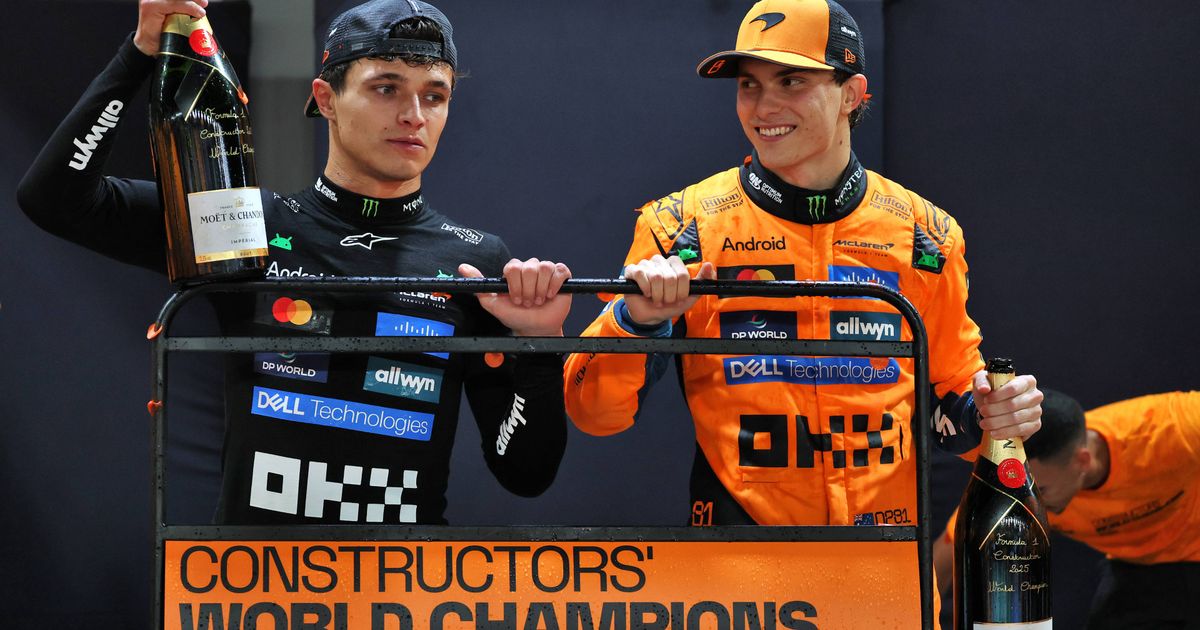
Ex-Mercedes driver pinpoints McLaren's 2026 wind tunnel challenge
Sam Bird warns McLaren's 2025 title win comes with a major 2026 cost: the least wind tunnel time of any team. As new F1 rules arrive, this restriction could challenge their title defense, though an early switch to 2026 development may help offset the disadvantage.
Former F1 driver Sam Bird warns that McLaren's championship-winning success in 2025 could become a significant handicap in 2026, as the team will have the least wind tunnel development time of any constructor under Formula 1's sliding scale aerodynamic testing regulations.
Why it matters:
Wind tunnel time is a critical and finite resource in modern F1 car development, directly impacting a team's ability to innovate and refine its aerodynamic package. With sweeping new technical regulations set for 2026, all teams are starting from a relatively clean slate, making efficient development paramount. McLaren entering this new era with the biggest regulatory restriction could hinder their ability to defend their titles.
The details:
- As the 2025 Constructors' Champions, McLaren will be allocated just 70% of the baseline wind tunnel allowance for the 2026 season.
- The Aerodynamic Testing Restrictions (ATR) operate on a sliding scale, where each position lower in the championship standings grants a team 5% more testing time. This system is designed to promote competitive balance.
- Bird highlighted the particular challenge this poses for a new regulatory cycle: "When there's a new era of Formula 1 dawning, it's going to be quite challenging for them."
- However, Bird also noted a potential strategic offset, suggesting McLaren halted development on their 2025 car "pretty early on in the season... not long after Silverstone" to reallocate resources toward their 2026 project ahead of their rivals.
The big picture:
McLaren's situation underscores the double-edged sword of success in Formula 1's current era. While the team has built a dominant car and operation, the sport's success-handicap systems mean they must now work smarter with fewer resources. Their early pivot to the 2026 car indicates an awareness of this challenge and an attempt to get a head start on the conceptual work before the wind tunnel time reduction fully bites. The effectiveness of this strategy will be a key narrative in the lead-up to the 2026 season.
What's next:
All eyes will be on how McLaren manages its limited development resources. The team's performance in the first half of the 2026 season will be the clearest indicator of whether their early planning and off-tunnel simulation work can compensate for the reduced aerodynamic testing time. If they can maintain a competitive package, it will be a testament to the efficiency and strategic foresight of the entire technical organization at Woking.