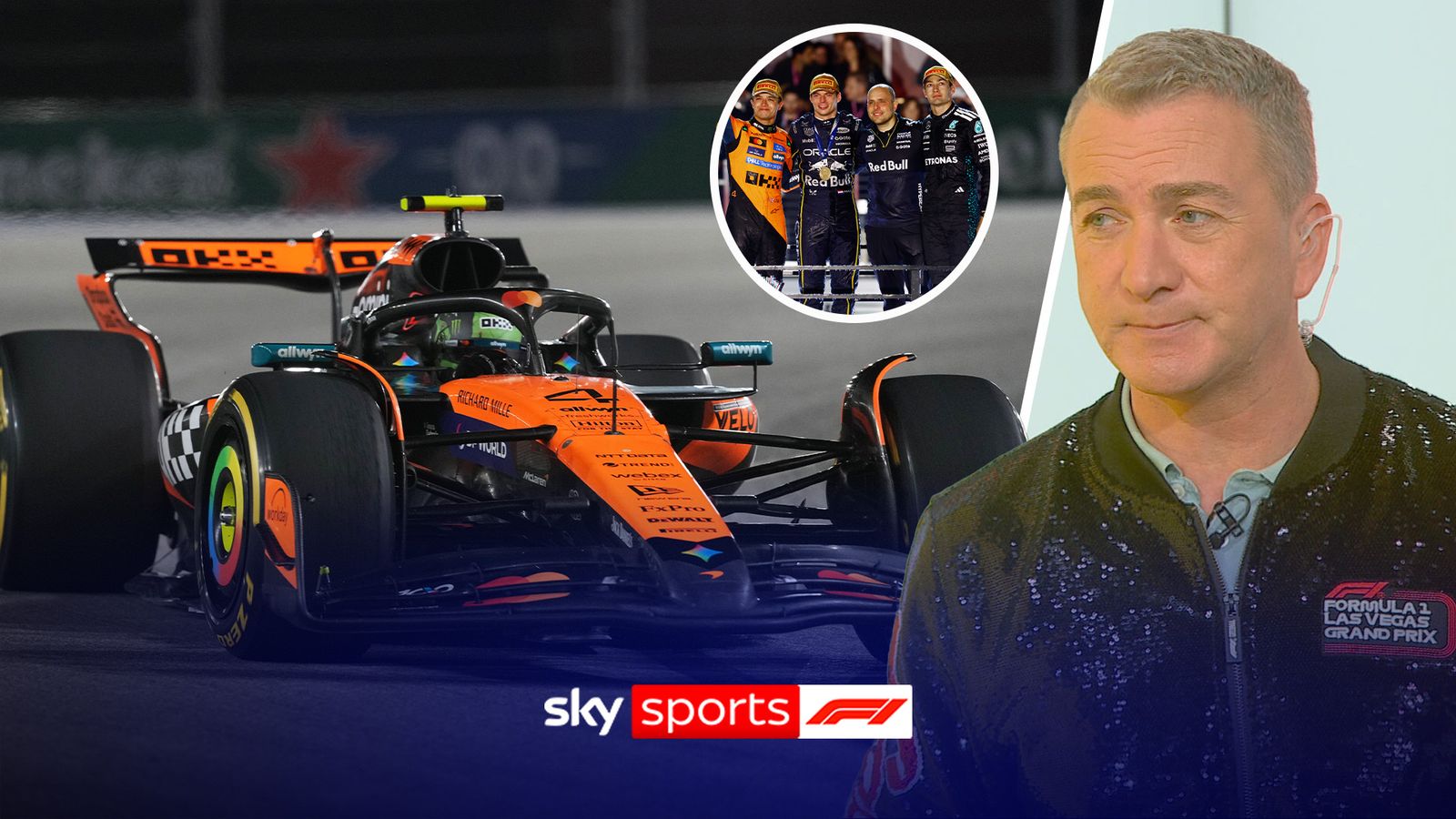
Explained: Why McLaren Drivers Faced Las Vegas GP Disqualification Risk and Title Race Impact
McLaren drivers Lando Norris and Oscar Piastri faced potential disqualification from the Las Vegas Grand Prix due to alleged rule infringements. Although ultimately cleared, the incident underscored F1's stringent regulations and the immense impact even minor infractions can have on the Constructors' and Drivers' Championships, emphasizing the constant pressure on teams and drivers to operate within the rules.
Speculation arose around Lando Norris and Oscar Piastri's potential disqualification from the Las Vegas Grand Prix due to alleged rule breaches, which could have significantly altered the F1 Drivers' Championship outcome. Although not ultimately disqualified, the incident highlighted the razor-thin margins and strict regulations governing Formula 1, where even minor infractions can carry substantial consequences.
Why it matters:
In a sport as tightly contested as Formula 1, every point, every position, and every penalty can swing the balance of a championship. A double disqualification for McLaren would have not only cost the team crucial constructors' points but also directly impacted the drivers' standings, potentially shifting momentum and advantage to rivals at a critical stage of the season. This incident underscores the immense pressure on teams and drivers to operate within the stringent technical and sporting regulations.
The Details:
- Initial Concerns: Reports suggested that both Lando Norris and Oscar Piastri were under scrutiny for potential technical infringements related to their cars during the Las Vegas Grand Prix weekend. While specific details were initially vague, such rumors often involve car components, parc fermé regulations, or procedural breaches.
- Potential Rule Breach: F1 regulations are incredibly detailed, covering everything from car dimensions and weight to fuel flow and tire usage. Violations often relate to: * Technical Compliance: Ensuring the car strictly adheres to the technical directives and specifications published by the FIA. Even a millimeter out of spec can lead to penalties. * Parc Fermé: Rules dictating what changes can and cannot be made to cars between qualifying and the race, designed to ensure fairness and prevent unauthorized performance enhancements. * Sporting Regulations: Broader rules covering track limits, dangerous driving, pit lane procedures, and driver conduct.
- Investigation Process: When a potential infringement is flagged, the FIA stewards launch an investigation. This involves collecting evidence, reviewing telemetry, interviewing team personnel, and hearing submissions from the affected teams. Their decision can range from a warning to time penalties, grid drops, or, in severe cases, disqualification.
- Impact on Title Race (Hypothetical): Had a disqualification occurred, especially for a points-scoring finish, it would have immediately reshaped the drivers' championship permutations. For example, if Norris or Piastri had taken points from a rival, their disqualification would effectively hand those points back or distribute them differently among other competitors, potentially boosting another driver's championship hopes.
The Big Picture:
This event, despite ultimately not leading to disqualifications, serves as a stark reminder of the constant vigilance required in F1. Teams push the boundaries of design and strategy to gain any competitive edge, and the FIA rigorously enforces rules to maintain a level playing field. The intensity of championship battles means that every decision by the stewards is magnified, and even a rumor of non-compliance can send ripples through the paddock, highlighting the high stakes involved in every race weekend.
What's next:
While McLaren's drivers avoided disqualification in Las Vegas, the underlying pressure to perform within the rules remains constant. Teams continue to analyze their operations, design choices, and race strategies to ensure full compliance while maximizing performance. Incidents like these reinforce the need for meticulous attention to detail from engineers, strategists, and drivers alike, as future races will undoubtedly feature similar high-stakes scrutiny as the championship battles intensify.