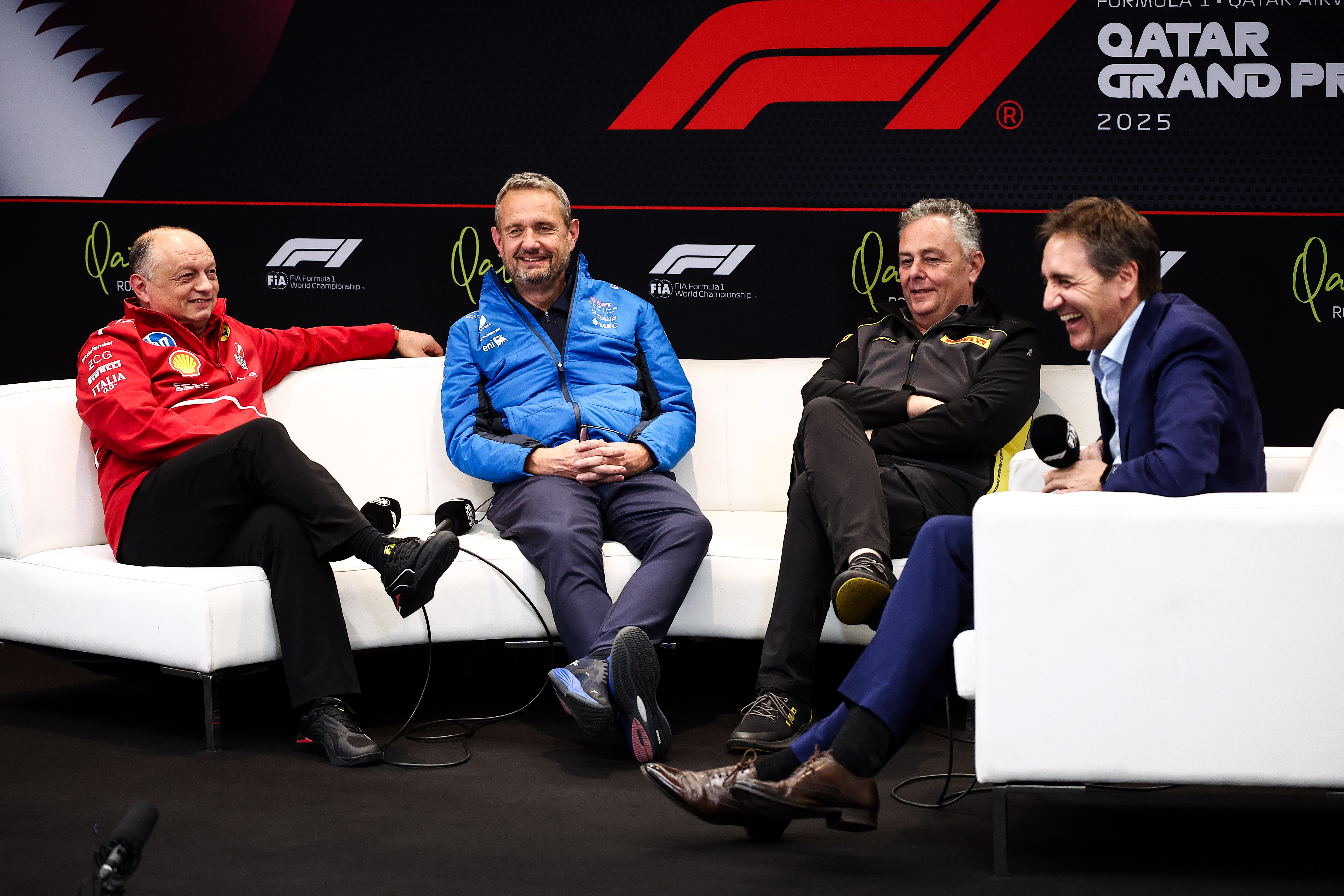
F1 2025 Qatar Grand Prix: Team Principals and Pirelli Discuss Key Challenges
Pirelli has imposed a 25-lap limit for each tire set at the 2025 Qatar Grand Prix due to severe wear issues, while also finalizing five new, narrower compounds for the 2026 season. Ferrari and Alpine team principals, Fred Vasseur and Steve Nielsen, discussed the immense pressure of developing 2026 cars under an extremely tight winter break and the psychological challenges of managing teams during strategic shifts. Driver frustration and the need for human judgment in stewarding decisions were also key topics.
In the lead-up to the 2025 Qatar Grand Prix, top figures from Ferrari, Alpine, and Pirelli addressed critical topics ranging from tire limitations to 2026 car development and the psychological toll on teams. Pirelli's Mario Isola explained the 25-lap tire limit, citing excessive wear and puncture risks from previous races. Meanwhile, Ferrari's Fred Vasseur and Alpine's Steve Nielsen shed light on the immense pressure of developing next-generation cars under compressed timelines, emphasizing the human element in Formula 1's relentless pursuit of performance.
Why it matters:
The 2025 season is proving to be a pivotal year, with teams already heavily focused on the radical regulation changes set for 2026. Pirelli's strict tire limits highlight ongoing safety concerns and strategic complexities in races, while the intense development cycles underscore the immense operational and psychological strain on F1 teams and their personnel. These discussions reveal the underlying challenges faced by the sport as it pushes technological boundaries and maintains high-octane racing.
The Details:
- Pirelli's Tire Strategy: Mario Isola detailed the rationale behind the 25-lap tire limit for the Qatar Grand Prix. This decision stems from the 2024 event, where tires showed 100% wear (or more) after extended stints, leading to punctures and compromised structural integrity. The increased limit from 18 laps two years prior (which addressed sidewall damage from kerbs) reflects a different issue: excessive wear, particularly on the front left.
- 2026 Tire Development: Pirelli has finalized its 2026 tire construction and selected five compounds (C1 to C5) after extensive virtual and mule car testing. These compounds offer a wider delta lap time and better degradation spacing, providing flexibility as the performance characteristics of 2026 cars remain unknown. Testing of these new compounds will occur in Abu Dhabi.
- Compressed Development Timeline: Steve Nielsen of Alpine described the 2026 car development as unprecedented. With only 36 days between the 2025 Abu Dhabi checkered flag and the 2026 car's first track appearance—including a mandatory winter shutdown—teams are compressing months of work into weeks. Enstone, Alpine's base, is already fully dedicated to the 2026 project.
- Managing Driver Frustration: Fred Vasseur of Ferrari acknowledged and understood his drivers' frustrations following crashes or poor performances. He views this as a natural part of F1's DNA, emphasizing the importance of reacting positively and refocusing for future races and development efforts. He dismissed public comments as a "drama," stating he is aligned with their passion and frustration.
- Psychological Impact of Early Switch: Vasseur admitted underestimating the psychological challenge of Ferrari's decision in April to halt 2025 aerodynamic development and focus entirely on 2026. This move, made due to McLaren's early dominance, required significant team management to maintain morale and collective effort through the remainder of the 2025 season.
The Big Picture:
The F1 landscape is in constant flux, with 2026 serving as a major inflection point due to new regulations. Teams like Ferrari and Alpine are already making strategic sacrifices in the current season to gain an advantage in the future. Pirelli's continuous tire development is critical to both safety and performance, while the human element—managing driver emotions, team morale, and staff well-being—remains central amidst the technical and logistical pressures of the sport. The tight winter break underscores the escalating demands on every individual involved, particularly the mechanics.
What's next:
Teams will continue to battle fiercely for constructor points in the remaining races of the 2025 season, while simultaneously pouring resources into their 2026 projects. The upcoming Abu Dhabi tire tests will provide the first real-world insights into Pirelli's new compounds. The incredibly short off-season will place immense pressure on teams to finalize their 2026 designs and commence production, with concerns about staff well-being, especially for mechanics, becoming increasingly prominent. The outcome of these off-track efforts will largely determine early performance in the crucial 2026 season.