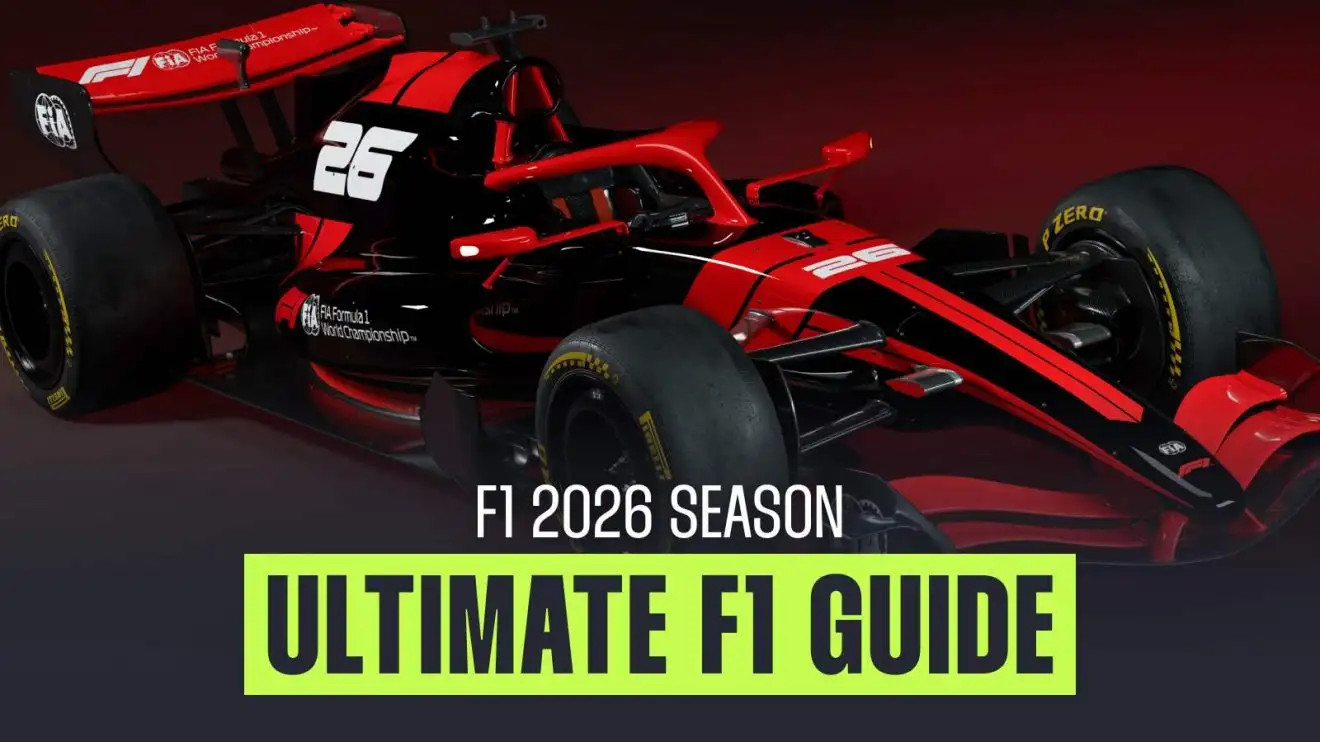
F1 2026: Your Guide to a New Era of Racing
The 2026 F1 season brings huge rule changes for cars and engines, a new team, and a shuffled driver lineup, marking a new era for the sport.
Formula 1 is set to enter a new era in 2026 with the most significant regulatory overhaul in recent memory. Both chassis and power unit regulations have been rewritten, introducing lighter, more agile cars with active aerodynamics and a greater emphasis on electric power. This reset is designed to shake up the competitive order and redefine the on-track product for fans worldwide.
Why it matters:
The simultaneous overhaul of technical regulations presents a rare opportunity for teams to break the current competitive order, potentially creating a new pecking order. The shift to active aerodynamics and a significantly more powerful electrical component marks a fundamental change in F1's engineering philosophy, moving away from the ground-effect era. With the removal of DRS and a focus on sustainable fuels, the 2026 season promises a different style of racing, challenging drivers and teams to adapt their strategies.
The details:
- New Cars, New Tech: The 2026 machines will be lighter and feature active aerodynamics with movable front and rear wings, replacing DRS. Power units will have nearly triple the electrical output, paired with a 1.6L V6 engine running on 100% sustainable fuels, with a reduced fuel capacity.
- A New Entrant: Cadillac joins the grid as the 11th team, bringing Valtteri Bottas and Sergio Perez back to full-time racing seats.
- Driver Shuffle: Red Bull promotes Isack Hadjar to partner Max Verstappen, while rookie Arvid Lindblad joins Racing Bulls. Lewis Hamilton begins his highly anticipated tenure at Ferrari.
- Expanded Testing: Pre-season testing has been expanded to 11 days to help teams adapt to the new machinery, including a five-day shakedown in Barcelona and two three-day tests in Bahrain.
What's next:
All eyes will be on the pre-season tests in Bahrain, where the first glimpses of the new competitive hierarchy will emerge. With the power unit development freeze lifted, expect an intense "development war" between manufacturers, potentially leading to rapid performance evolution throughout the season. The season opener in Melbourne will be the ultimate litmus test, revealing how the new cars perform in wheel-to-wheel combat and if the goal of closer, more exciting racing has been achieved.