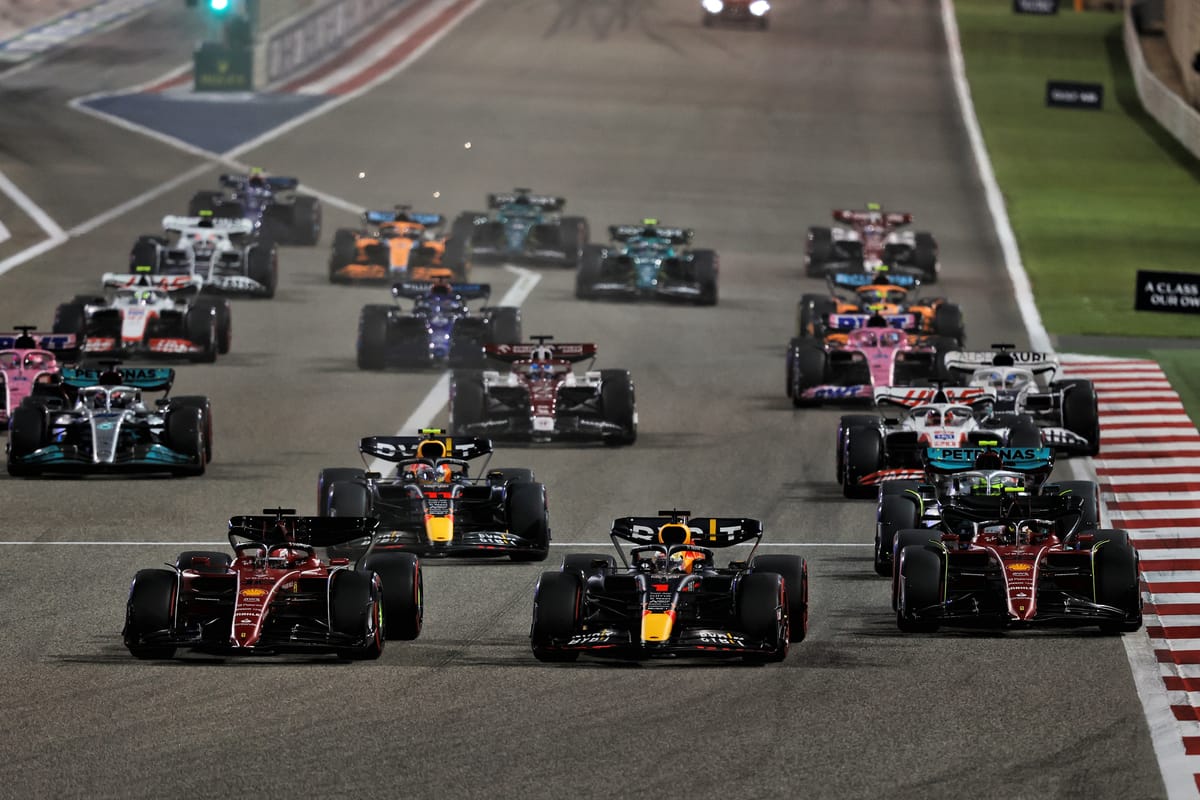
F1's Ground-Effect Era, Ranked: Worst to Best
As F1's ground-effect era concludes, a definitive ranking shows Red Bull's dominance, McLaren's stunning resurgence to the top, and Ferrari's underperformance despite early promise. The four-year period reshaped the competitive order.
With the ground-effect regulations now in the rearview mirror, a definitive ranking of the 10 F1 teams reveals Red Bull's overwhelming dominance but also a dramatically reshaped competitive order. While Red Bull set the benchmark, the era will be remembered for McLaren's stunning resurgence to championship glory and the surprising struggles of traditional powerhouses like Ferrari and Mercedes, who failed to capitalize on their early promise.
Why it matters:
This four-year period was a true test of adaptability and engineering prowess, providing a clear picture of which teams can master a new ruleset. As F1 prepares for another massive regulatory overhaul in 2026, this ranking serves as the final report card, highlighting the winners and losers and setting the stage for the next battle for supremacy.
The big picture:
The era wasn't just about Red Bull's dominance; it was defined by the shifting fortunes of the entire grid.
- The Unquestioned King: Red Bull's 55 wins across four seasons, including a record-breaking 2023, make it the undisputed #1. Its early mastery of the regulations created a legacy of dominance that even its late-era struggles couldn't erase.
- The Great Resurgences: McLaren and Williams showcased incredible turnarounds. McLaren went from a midfield backmarker to a championship double-winner, while Williams climbed from having the slowest car in 2022 to a solid fifth by 2025, laying the foundation for a brighter future.
- The Underachievers: Despite massive resources, Ferrari and Mercedes fell short. Ferrari challenged for titles but ultimately underperformed, ending the era winless in 2025. Mercedes, by its own lofty standards, failed to produce a single title-contending car after years of dominance.
- The Midfield Story: Aston Martin emerged as the highest-scoring team outside the top four, while Alpine's story is one of stagnation, sliding from a strong fourth in 2022 to the back of the pack by 2025, proving that in F1, standing still is the same as going backwards.
What's next:
The 2026 regulations represent a clean slate and a chance for redemption. Teams like McLaren and Williams will look to carry their momentum forward, while Ferrari and Mercedes are undoubtedly motivated to leave this era behind and return to the front. The final standings of the ground-effect era are the starting grid for the next great F1 rivalry.