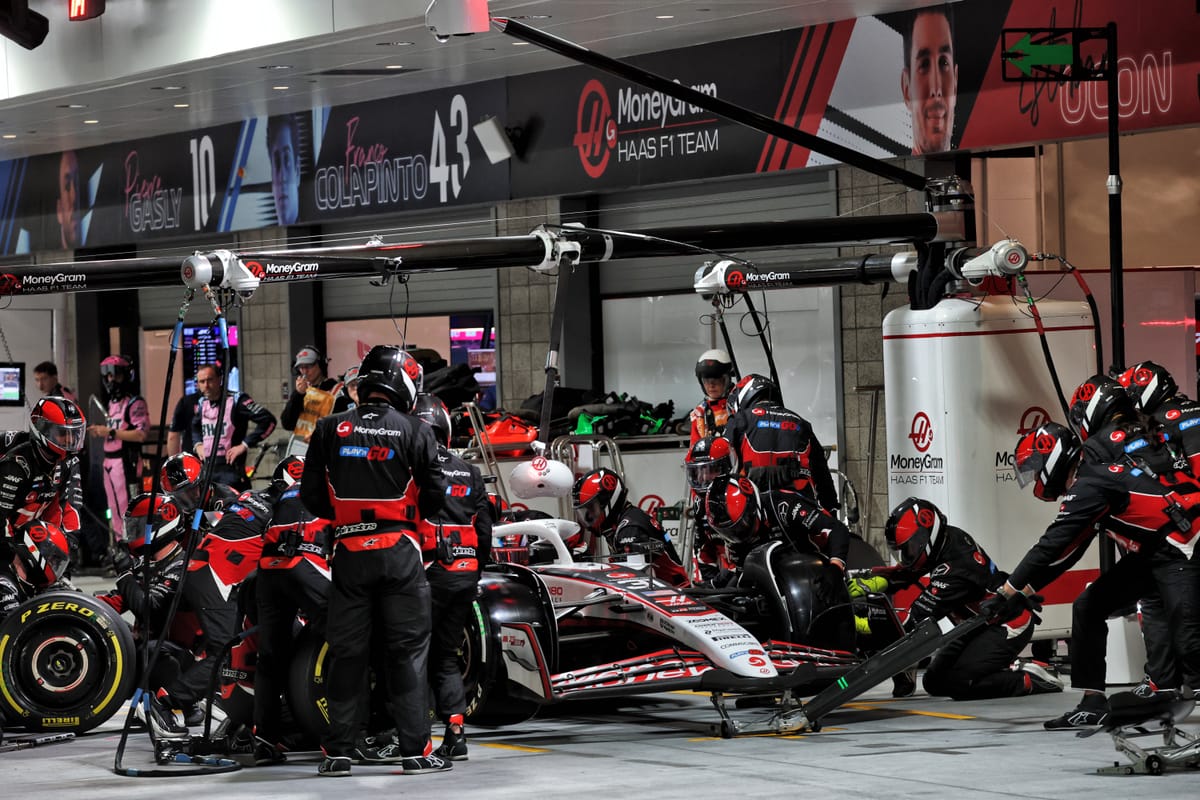
F1's Qatar GP Faces Strategic Concerns Over Mandatory Pit Stop Rule
Pirelli's 25-lap tyre limit for the Qatar Grand Prix is stirring strategic concerns among F1 teams. Implemented for safety due to the demanding Losail circuit's high tyre wear, the rule aims to prevent failures. However, critics fear it will eliminate strategic diversity, leading to a predictable and less exciting race, potentially undermining the thrill of on-the-edge decisions and strategic gambles. The outcome will be a key test for future mandatory pit stop debates.
Pirelli's controversial 25-lap tyre limit for the Qatar Grand Prix has ignited debate among F1 teams, who fear it could stifle strategic variation and lead to a predictable race. While implemented for safety, some team principals argue artificial restrictions can diminish excitement, drawing parallels to past races where similar rules backfired.
Why it matters:
After recent races showcased thrilling strategic battles, the imposition of a mandatory pit stop window due to tyre wear concerns could remove a key element of F1's appeal. The risk is that all teams will converge on identical strategies, leading to a less engaging spectacle for fans and undermining the competitive ingenuity that often defines Formula 1.
The Details:
- Safety First: Pirelli's 25-lap limit per tyre set is a safety measure, distinct from last year's kerb-related issues in Qatar. The primary concern is excessive tyre wear on the demanding Losail circuit.
- Losail's Challenge: The circuit is exceptionally hard on tyres, with high energy loads comparable to Suzuka but lacking long straights for cooling. High-speed corners, especially Turns 12-14, punish the rubber, and the smooth surface increases sliding, leading to both graining and rapid wear.
- Past Precedent: Pirelli's 2023 post-race analysis revealed some tyres experienced 100% wear, leaving only the carcass. This poses a significant safety risk from debris or kerb impacts, prompting the pre-emptive 2024 rule.
- Proactive Approach: Pirelli preferred to establish this rule well in advance (notifying teams in March) rather than implementing emergency measures during the race weekend, aiming for fairness across all teams.
How the Rule Works:
- Lap Count: The 25-lap limit applies to each tyre set, excluding non-performance laps like those to the grid, formation laps, and post-chequered flag laps.
- Mixed Sets: For mixed tyre sets, the lap count is determined by the tyre with the highest mileage.
- FIA Oversight: The FIA will issue a document before the Grand Prix detailing each tyre set's mileage to prevent accidental breaches.
- Tyre Availability: Pirelli is confident that teams have sufficient tyre sets and practice time (typically 25 laps per two sets in an hour) to manage the new limit without compromising preparation or running out of tyres during the race.
The Big Picture:
Team principals, like Haas's Ayao Komatsu, voiced strong opposition, arguing that artificial restrictions, as seen in Monaco and 2023's Qatar race, can 'destroy the race' by eliminating the strategic tension that arises when multiple pit stop strategies are viable. The fear is a procession where every team follows the same predictable path, rather than dynamic, 'on-the-edge' decision-making.
What's Next:
Pirelli's Mario Isola believes the 25-lap limit still offers flexibility, potentially encouraging varied strategies like shorter stints on soft tyres. However, the outcome will be a crucial test for the ongoing debate about mandatory pit stops. If the race devolves into a uniform strategy, it will strengthen arguments against such artificial interventions. Even if initial variability is observed, Isola cautions that teams tend to converge on optimal strategies over time, meaning initial excitement might not be sustained in future races with similar rules.