Ferrari Defends Early 2026 F1 Car Development Shift Despite Performance Dip
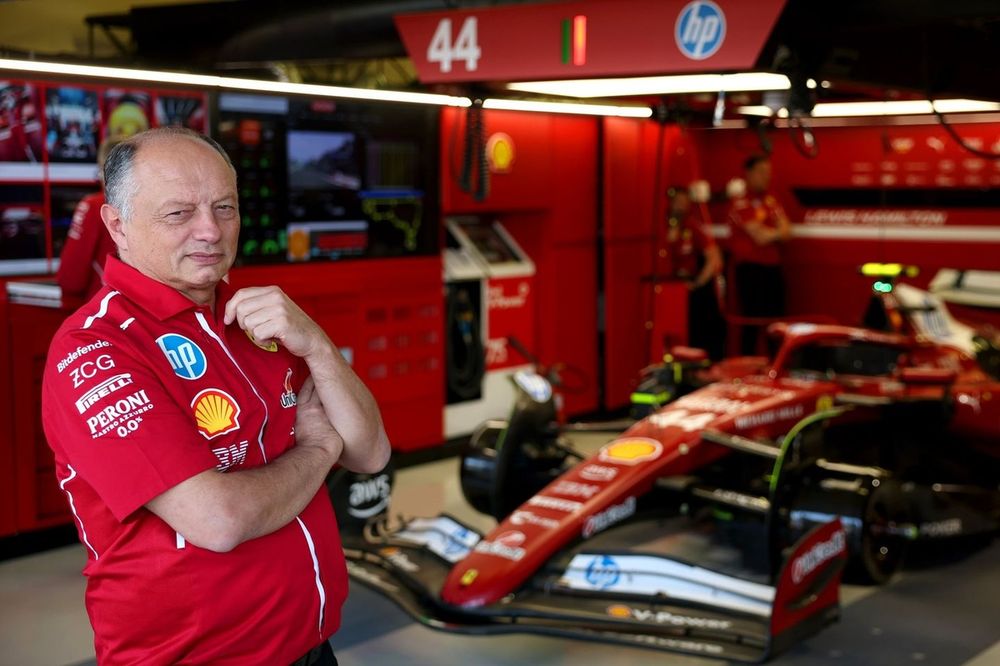
Ferrari team principal Frederic Vasseur is defending the team's early decision to halt 2025 F1 car development by April, prioritizing resources for the 2026 regulations. This strategic shift, while aimed at long-term success, has coincided with a performance slump, dropping Ferrari to fourth in the constructors' championship and frustrating drivers like Charles Leclerc and Lewis Hamilton. Vasseur maintains the decision was rational, despite the immediate challenges to morale and on-track results, betting on a strong start in the new technical era.
Ferrari team principal Frederic Vasseur has defended the Scuderia's controversial decision to halt development on its 2025 Formula 1 car as early as April, prioritizing resources for the new 2026 regulations. This strategic pivot comes amid a recent slump in performance that saw Ferrari drop from second to a now-guaranteed fourth place in the constructors' championship.
Why it matters:
Ferrari's early commitment to the 2026 regulations, a full season and a half in advance, is a high-stakes gamble. It reflects the immense challenge and potential reward of the new technical era in F1. While the move aims for long-term championship contention, it has clearly impacted current performance and driver morale, highlighting the tough balance teams must strike under budget caps and testing restrictions.
The Details:
- Early Transition: Ferrari made the strategic decision to shift all development resources to the 2026 car by the end of April. This was a rational choice based on development gradients, concluding that continued 2025 development wouldn't close the gap to rivals like McLaren in time.
- Performance Impact: The decision has coincided with a noticeable dip in Ferrari's performance, particularly in the last three Grands Prix, including a dismal showing in Qatar.
- Driver Frustration: Drivers Charles Leclerc and Lewis Hamilton have openly expressed their frustration, struggling to extract performance from the 'unpredictable' SF-25. Vasseur acknowledges their emotional responses, understanding that pushing hard for low-point finishes is tough for any driver.
- Motivation Challenges: Vasseur admits he 'underestimated' the difficulty of maintaining motivation and 'expectation' among the team when further development on the current car ceased.
- Set-up Sensitivity: Recent struggles are attributed to set-up issues, with Vasseur noting that the current F1 field is so tight that being a few tenths off the optimal window can drastically alter track position. This narrow operating window makes finding the right set-up crucial.
The big picture:
Formula 1's budget cap and aerodynamic testing restrictions force teams to make difficult trade-offs between current season performance and future regulatory cycles. Ferrari's aggressive move to 2026 signals their belief that a strong start in the new era is more critical than maximizing the remaining potential of the current regulatory cycle. This strategy is similar to what Mercedes and Red Bull have done in previous regulation changes, albeit with less overt public acknowledgment of early stoppage.
What's next:
Ferrari will continue to navigate the remainder of the 2025 season with a static car, hoping to optimize existing packages and refine race weekend set-ups. The true test of this decision will come in 2026, when the new regulations debut. If their early focus yields a championship-contending car, Vasseur's controversial call will be vindicated. If not, the scrutiny will intensify.