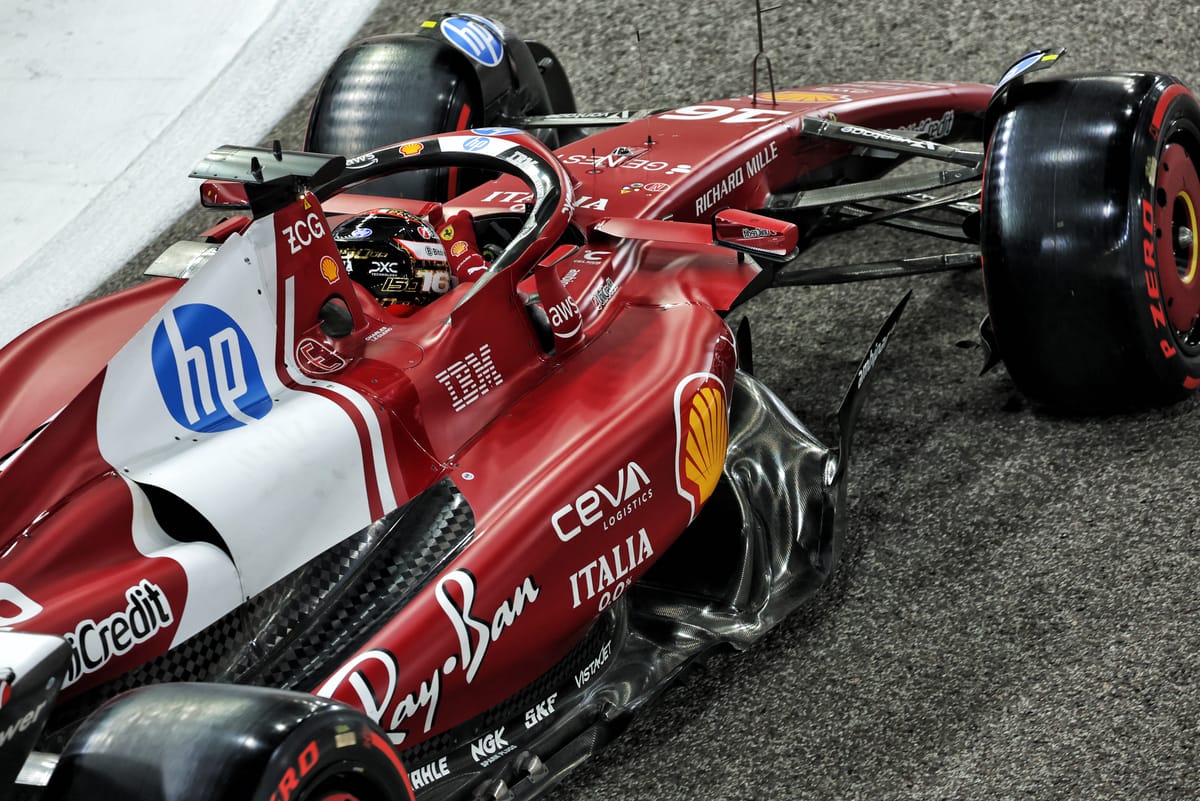
Ferrari's 2025 Development Failure Sets Stage for Crucial 2026 Comeback Bid
Ferrari sacrificed its 2025 season, halting development on the SF-25 early to pour all resources into its 2026 car. This high-risk strategy, born from a disappointing fourth-place finish, grants the team bonus wind-tunnel time but places immense pressure on its new-era project to succeed where the old one failed.
Ferrari finished a disappointing fourth in the 2023 constructors' championship, a result that forced the team to abandon its 2025 car early and bet everything on a successful 2026 project. The Scuderia stopped developing the SF-25 in the wind tunnel by mid-season to focus entirely on its 2026 challenger, a gamble that left its current car uncompetitive against rivals who continued to bring updates.
Why it matters:
Ferrari's strategic pivot represents a high-stakes gamble. By sacrificing the present season, the team is banking on a head start in the 2026 development race, a year featuring major new technical regulations. The success or failure of this aggressive reset will define the team's competitive standing for the next era of Formula 1 and determine if it can return to championship contention.
The details:
- The SF-25 project was effectively frozen in development after June, with its final major update—a revised rear suspension introduced in Belgium—failing to deliver a performance breakthrough.
- The car suffered from inherent rear instability, a trait exacerbated by its front-loaded design philosophy tailored to Charles Leclerc's driving style, which Lewis Hamilton struggled to adapt to.
- Technical Director Loic Serra's department made the conscious decision to cut R&D funding for the 2025 car, believing further development would not salvage its season. This included canceling a planned new floor for the Azerbaijan Grand Prix.
- While rivals Red Bull and Mercedes also worked on their 2026 cars, they maintained more active development programs for their 2025 challengers, utilizing CFD capacity until August without compromising their future projects.
The big picture:
The early switch highlights the immense pressure and long-term planning required in modern F1. Ferrari's fourth-place finish does come with a silver lining: it grants the team 15% more wind-tunnel time and CFD sessions than McLaren for the first half of 2026 under the FIA's Aerodynamic Testing Restrictions (ATR). This bonus time is a critical resource as all teams tackle the clean-sheet design challenge of the 2026 regulations.
What's next:
All focus is now on the 'Project 678' 2026 car. The team will gather initial data on its new power unit during private tests in Barcelona in late January, with the car's official launch expected in mid-January.
- The 2026 machine will share little with its predecessor, requiring drivers to adapt to a hybrid driving style that blends techniques from the pre-2022 and current ground-effect eras.
- The key battleground will be engine reliability and the efficiency of the electrical recovery system, areas where the FIA has introduced new development allowances (ADUO).
- With just over a month until the first shakedown, Ferrari's gamble to write off 2025 will soon be judged on the track.