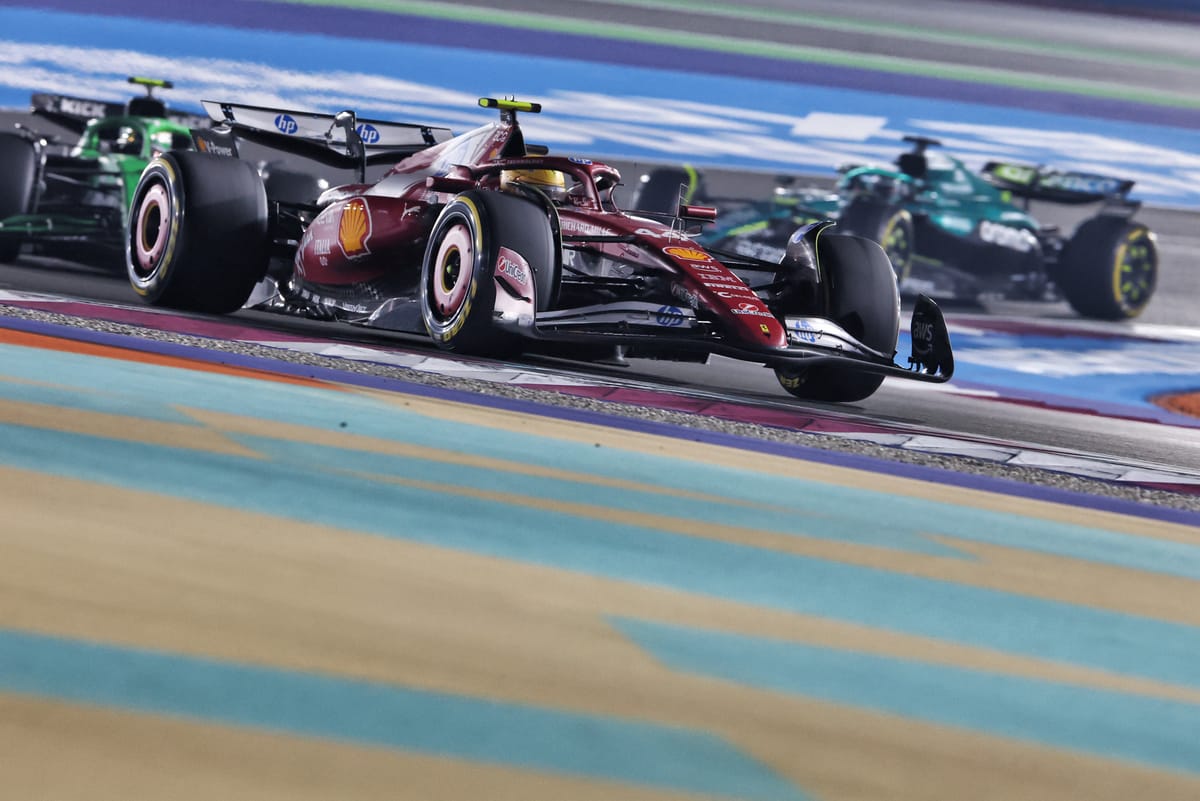
Ferrari's Qatar GP Woes: High Tire Pressures Blamed for Abysmal Performance
Ferrari attributes its disastrous Qatar Grand Prix, where both cars struggled to score points, to set-up complications caused by unusually high tire pressures mandated by Pirelli. While a lack of development was a factor, team principal Fred Vasseur believes the extreme tire conditions uniquely impacted their sensitive SF-25, highlighting a crucial area for improvement.
Ferrari suspects its dismal Qatar Grand Prix performance was due to set-up issues triggered by unusually high tire pressures, rather than just a lack of development. Both cars finished outside the points in the sprint, with Charles Leclerc salvaging a meager eighth in the main race, while Lewis Hamilton endured Q1 exits and poor finishes.
Why it matters:
Ferrari's inconsistent performance has been a recurring theme, and understanding the specific factors behind an "atrocious" weekend like Qatar is crucial for their future competitiveness. If high tire pressures significantly impacted their car, it highlights a critical sensitivity that needs addressing to avoid similar struggles in diverse track conditions and maintain any championship aspirations.
The details:
- Performance Drop: Charles Leclerc described his car as having "no confidence, no pace, and nothing." Lewis Hamilton, who typically fares better, also struggled significantly, finishing 17th and 12th in the races.
- Development Freeze: Ferrari openly admitted to halting aero upgrades on their SF-25, which Hamilton suggested allowed rivals to close the gap. He noted being almost overtaken by a Stake Sauber and unable to keep pace with a Williams.
- High Tire Pressures: Pirelli mandated unusually high tire pressures for the Qatar Grand Prix to counteract the high forces at the Lusail track. Front tires were set at a minimum of 28psi (compared to 25psi at a typical track like Interlagos), with rears at 23.5psi, and both increased by 1psi on Saturday.
- Ferrari's car is known for its sensitivity to ride height, and such elevated pressures could easily push its balance out of optimal performance window.
- Team's Acknowledgment: Team boss Fred Vasseur conceded, "We struggled to deal with it... we did a worse job than the others." He emphasized that being "out of the window" on a track with zero degradation and a mandatory two-stop strategy made overtaking nearly impossible.
The big picture:
Ferrari's recent performances, including competitive outings in Mexico and Brazil, suggest that the lack of development alone isn't the sole culprit for the Qatar disaster. The unique conditions, particularly the tire pressure regulations, exposed a specific vulnerability in Ferrari's car setup. This highlights the importance of adaptability and understanding how the car reacts to extreme parameters, a lesson that could be vital for future seasons.
What's next:
Ferrari cannot afford complacency heading into the final race in Abu Dhabi. Leclerc stressed the importance of a strong performance there to avoid ending the season on a "depressing" note. A solid showing would provide much-needed confidence and insights as they prepare for the challenging 2025 campaign and beyond.