Ferrari's Stealthy 2026 Front Wing System Outpaces Mercedes in Abu Dhabi Test
Ferrari tests a more advanced active front wing system than Mercedes during Abu Dhabi mule car runs, bypassing speed limits to simulate F1's revolutionary 2026 drag-reduction technology. The developments signal a fundamental shift from current DRS limitations to continuous active aerodynamics that will reshape racing dynamics.
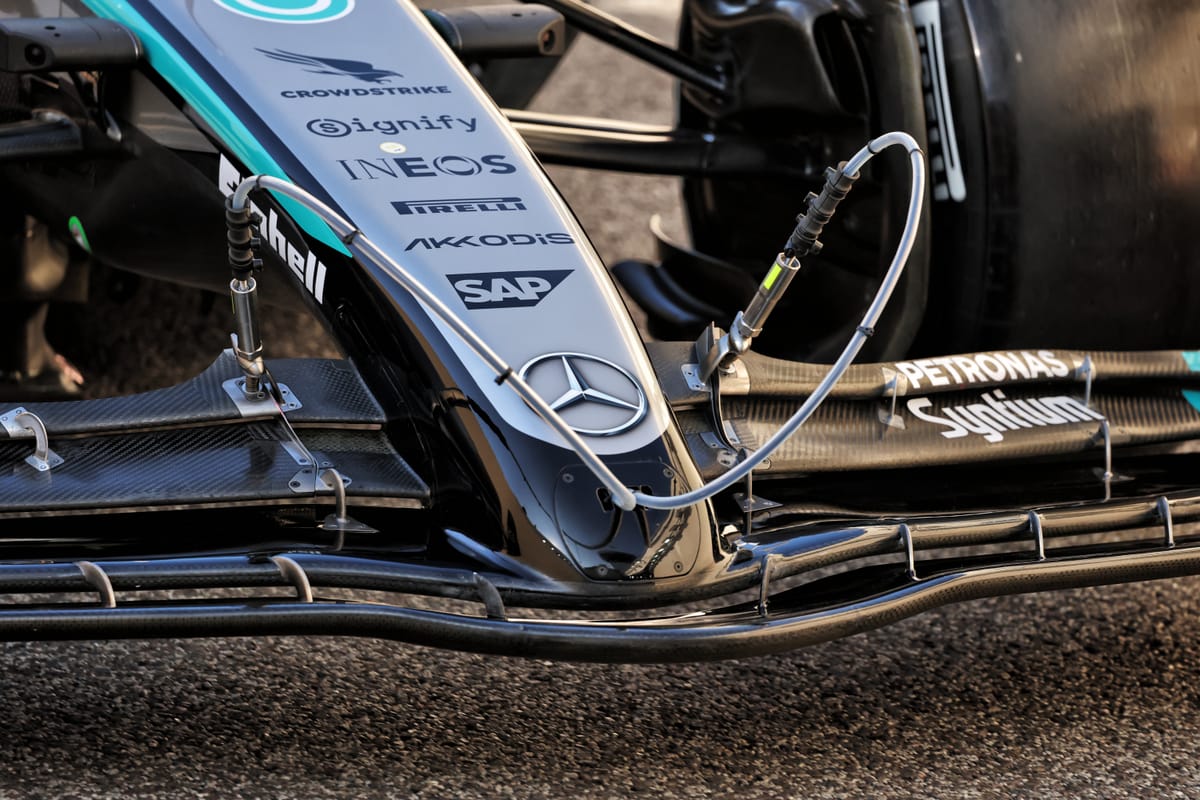
Ferrari has deployed a more mature active front wing system than Mercedes during Abu Dhabi's post-season testing, revealing a critical technological race for F1's 2026 regulations. While Mercedes showed a visibly crude prototype with external tubing on Kimi Antonelli's mule car, Ferrari's "less invasive" design—already validated in private Pirelli tests—is now entering public view, signaling the Scuderia's early advantage in developing the sport's most transformative aerodynamic change since DRS.
Why it matters:
The 2026 active aerodynamics system represents F1's boldest move yet to eliminate artificial overtaking aids. Unlike today's DRS—which restricts drag reduction to specific straights and requires proximity to another car—the new system will automatically "open" both front and rear wings on non-traction-limited track sections. This continuous drag reduction could fundamentally alter racing strategies and car performance envelopes, making early development progress crucial for competitive positioning.
The details:
- Technical divergence: Mercedes' prototype uses bulky external tubing connecting the front wing's upper elements to an internal nosecone mechanism—a temporary solution permitted under testing rules. Ferrari's system, developed through prior Pirelli collaboration, integrates components more cleanly with minimal visual disruption.
- Testing advantage: Cars running active front wings bypass the 300km/h (186mph) speed limit imposed on standard mule cars. This exception allows teams to accurately simulate 2026's reduced aerodynamic loading, which will decrease tire stress during high-speed sections.
- Regulatory context: The FIA designated specific track zones where wings will auto-adjust based on GPS data, eliminating driver activation. This shift from driver-controlled DRS to system-managed aerodynamics aims to increase overtaking opportunities while maintaining racing integrity.
- Tire implications: Pirelli's testing focuses on validating how reduced downforce during drag reduction affects tire performance—a critical factor given the 2026 tires' expected 15% wider profile.
What's next:
The Abu Dhabi test marks just the beginning of a two-year development sprint. Teams will now refine these systems through 2025's private testing, with Ferrari's head start potentially influencing early 2026 pecking order dynamics. Crucially, the FIA will monitor whether active aero delivers its promised racing improvements without creating dangerous instability during close combat—a key concern voiced by drivers during regulation discussions. As teams integrate these systems with new power units and wheel designs, the true competitive impact will crystallize during pre-season testing, where the first full-specification 2026 cars will finally hit the track.