FIA Addresses Las Vegas GP Marshal Incident, Citing Proper Management
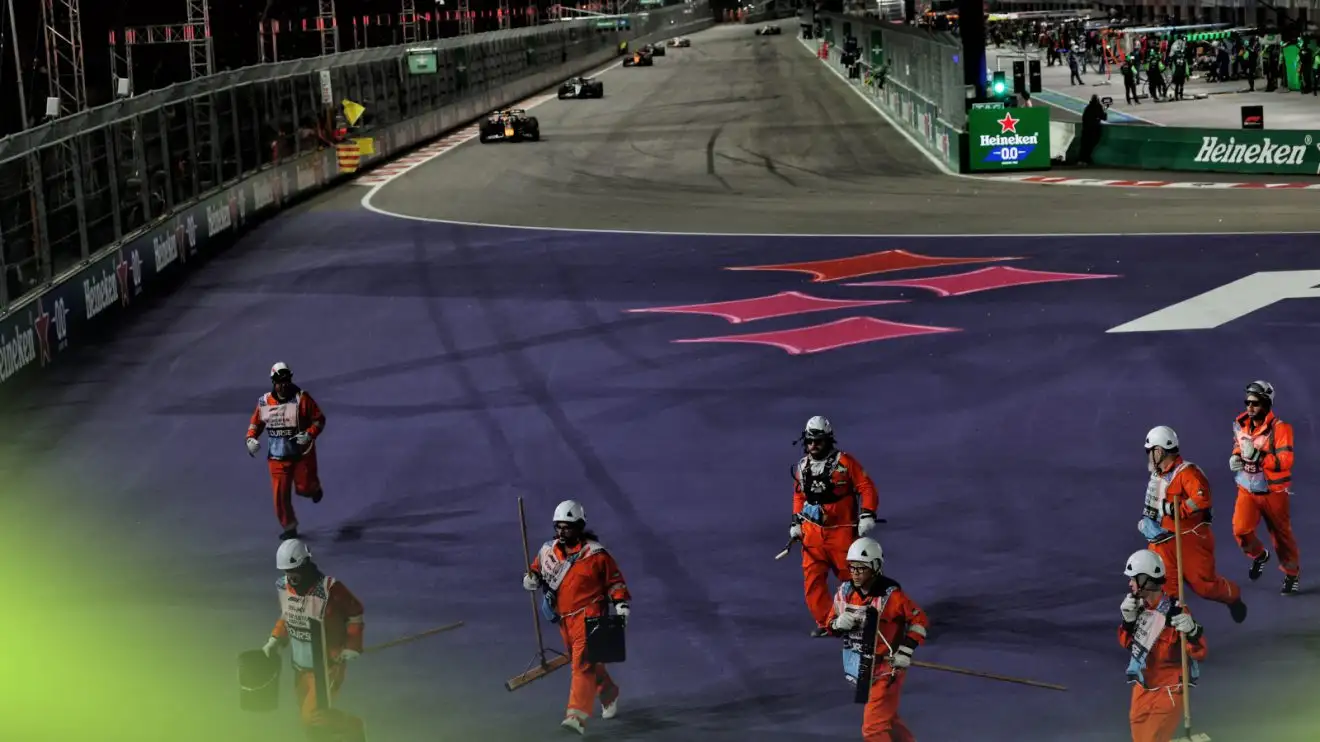
The FIA has affirmed that the marshal presence in the Turn 1 run-off area during the Las Vegas Grand Prix was managed appropriately under double-waved yellow flags, despite concerns raised by broadcast footage. This follows previous safety incidents involving marshals at the Mexico City GP, prompting ongoing internal investigations to refine procedures and ensure trackside personnel safety.
The FIA has confirmed that marshals in the Turn 1 run-off area during Lap 2 of the Las Vegas Grand Prix were handled appropriately, despite broadcast footage showing them retreating from oncoming cars. This comes after multiple opening-lap clashes left debris requiring swift clearance under double-waved yellow flags.
Why it matters:
Safety incidents involving track marshals have been a recurrent concern in recent F1 seasons, particularly following high-profile moments in Mexico City. The FIA's clarification on the Las Vegas incident is crucial for maintaining confidence in race management procedures and ensuring the well-being of trackside personnel, especially as the sport continues to push boundaries in urban and temporary circuits.
The Details:
- Incident Overview: Following first-lap contact involving Liam Lawson, Oscar Piastri, Gabriel Bortoleto, Pierre Gasly, and Alex Albon, debris littered the Turn 1 run-off area. Marshals were deployed to clear it under double-waved yellow flags.
- On-Track Retreat: As leaders commenced Lap 2, broadcast footage showed marshals running away from the corner, raising immediate safety questions from viewers.
- FIA's Stance: The FIA stated that the situation was "appropriately managed in line with standard operating procedures" due to the double-waved yellow flag conditions covering the section.
- Mexico City Context: This incident follows two separate marshal-related concerns at the Mexico City Grand Prix: two workers crossing the track as Liam Lawson approached Turn 1, and a Virtual Safety Car (VSC) deployment for Carlos Sainz's car, where marshals were in a run-off area under double-waved yellows.
- Ongoing Investigation: The Lawson incident in Mexico remains under investigation by the FIA, highlighting the seriousness with which these events are treated.
- VSC/Safety Car Protocols: It's understood that a VSC or full Safety Car isn't automatically deployed for officials in a run-off area under double-waved yellows. Instead, prolonged exposure to risk triggers such decisions, as was the case for Sainz's car in Mexico due to the time needed to clear it.
- However, if a marshal must enter or cross the actual racing surface (as seen at Turn 4 in Vegas), a VSC or Safety Car is automatically deployed.
- Vegas Turn 1 vs. VSC: In the specific Turn 1 incident at Las Vegas, marshals did not enter the racing surface and were retreating. A VSC was eventually deployed due to debris on the racing line, requiring a marshal to retrieve it, not solely for the marshals in the run-off.
The big picture:
Ensuring marshal safety while efficiently clearing debris is a constant balancing act for race control. The unique challenges of street circuits like Las Vegas, with their tight run-off areas and high-speed sections, amplify these considerations. The FIA's continuous review of these protocols underscores a commitment to refining safety measures across all Grand Prix events, particularly in light of recent incidents that have drawn public scrutiny.
Looking Ahead:
While the FIA is confident in its handling of the Las Vegas Turn 1 marshaling, ongoing investigations from previous events suggest a continuous effort to refine safety procedures. The distinction between marshals in run-off areas versus those on the racing surface, and the 'prolonged exposure' factor, will likely remain key considerations in future race control decisions. The ultimate goal is to minimize risk for personnel while maintaining the flow and excitement of racing, a balance that requires constant vigilance and adaptation.