FIA Defends Las Vegas Marshal Incident Despite Criticism
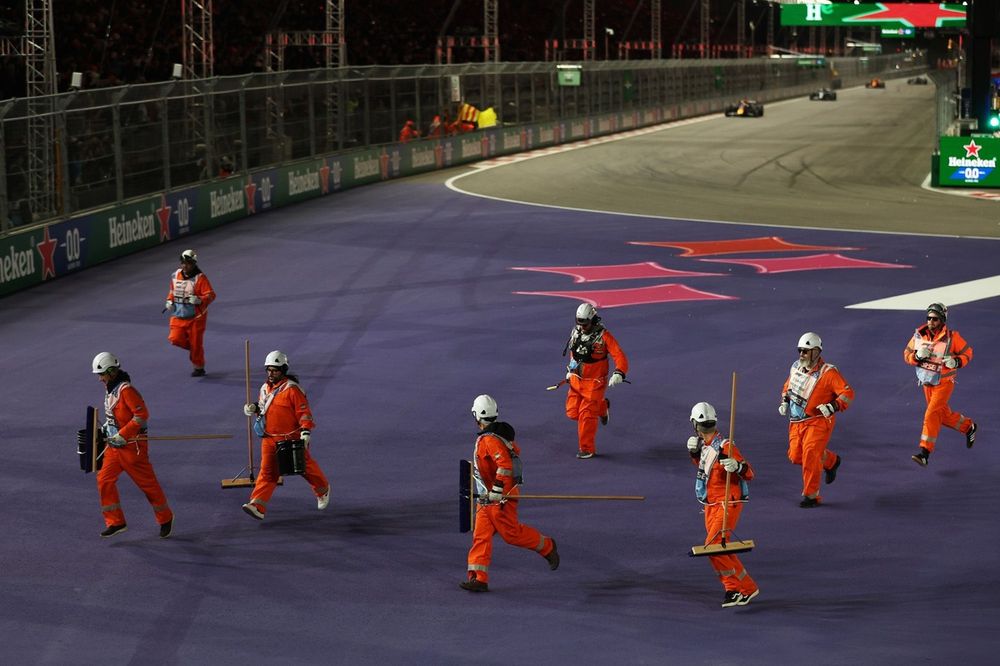
A controversial marshal intervention in Las Vegas, where marshals were still clearing debris as cars returned at speed under double yellow flags, has drawn criticism. Despite former race director Niels Wittich calling it 'unacceptable,' the FIA has defended its decision, citing the debris location being off the racing line and marshals not crossing the track. This follows a similar incident in Mexico, highlighting ongoing concerns about marshal safety protocols and race control judgments.
A controversial marshal intervention at the start of the Las Vegas Grand Prix has sparked debate, just two races after a similar incident in Mexico. While pundits, including former FIA race director Niels Wittich, slammed the timing as 'unacceptable,' the FIA maintains its decision was justified due to the specific circumstances of the debris location and the safety protocols implemented.
Why it matters:
Safety remains paramount in Formula 1, and repeated incidents involving marshals on a live track raise serious concerns. Clear and consistent safety protocols are crucial to prevent accidents and maintain driver confidence, especially as F1 pushes for faster cars and tighter racing. The FIA's differing interpretation of similar events highlights a need for greater transparency and universally understood guidelines.
The details:
- Following a multi-car collision at Turn 1 in Las Vegas, marshals were deployed to clear debris from the run-off area on the outside of the track.
- Marshals were still returning to safety as leader Max Verstappen approached the start-finish line on Lap 2, under double yellow flags, not a Virtual Safety Car (VSC).
- Criticism: Former FIA Race Director Niels Wittich called the incident 'absolutely unacceptable,' arguing that double yellow flags were insufficient given the marshals' prolonged presence on track.
- FIA's Stance: Motorsport understands the FIA views this incident differently from the Mexico Grand Prix event where Liam Lawson encountered marshals.
- In Las Vegas, the FIA was comfortable with the double yellow flag deployment because:
- The debris was entirely off the racing line in the Turn 1 run-off zone.
- Marshals did not need to cross the live track to retrieve the debris, as their post was on the same side.
- The double yellow flag zone was extended before the blind, flat-out final corner to ensure drivers would slow down in time.
- Review: The FIA's review of Max Verstappen's onboard camera footage confirmed, in hindsight, that the decision was correct.
- A Virtual Safety Car was deployed one lap later for debris at Turn 2, as that piece of front wing was closer to the racing line and required marshals to cross the track.
Between the lines:
While the FIA has provided a rationale for its decision in Las Vegas, the underlying question of why marshals took so long to clear the debris at Turn 1 remains partially unanswered. The incident reignites discussions about the real-time judgment calls made by race control and whether a more cautious approach, like deploying a VSC when marshal presence is prolonged, should be standard practice. The differing perspectives between the FIA and former officials underscore the complexities of ensuring safety in high-speed racing environments.
What's next:
The full explanation for the Mexico Grand Prix incident, where Liam Lawson narrowly avoided marshals, is still pending and expected soon. These discussions will be crucial for refining marshal deployment protocols and ensuring incidents like these are minimized in future races, reinforcing safety as a non-negotiable aspect of Formula 1.