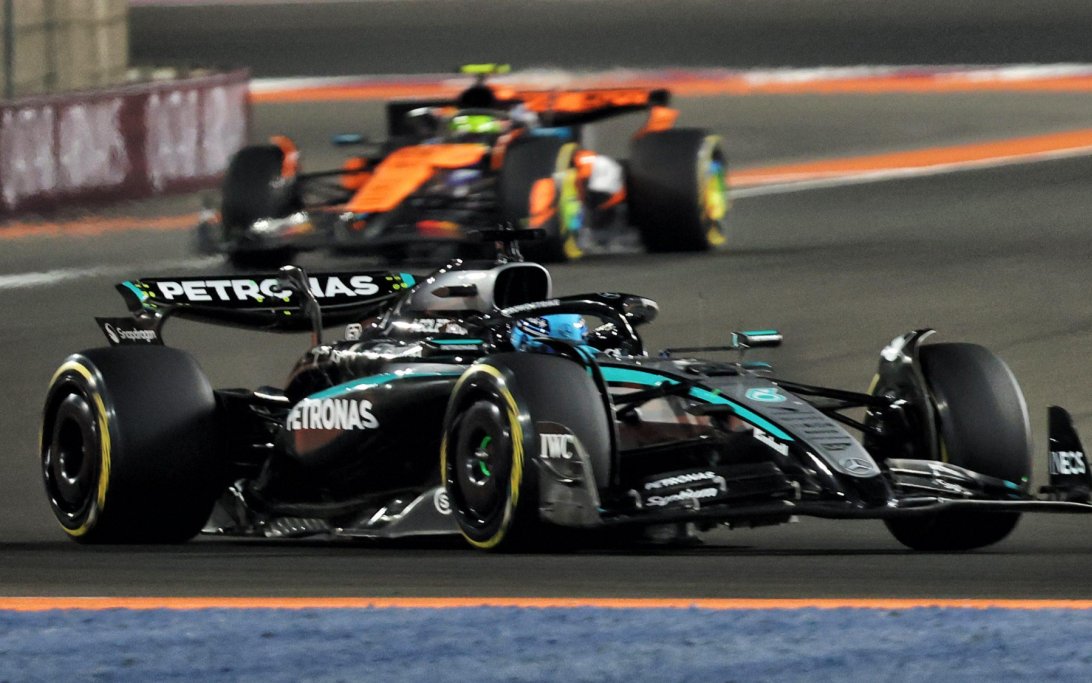
George Russell on 'Brutal' Qatar Sprint Conditions
George Russell called the Qatar Sprint conditions "pretty brutal," despite securing second place. The Lusail circuit's high-speed, G-force heavy layout, combined with intense heat, makes it one of the most physically demanding tracks. With a mandatory two-stop strategy for the Grand Prix, drivers face an even greater endurance challenge, pushing car and body to the limit.
George Russell described the conditions during the final sprint race of the 2025 season in Qatar as "pretty brutal." Despite the challenging environment, he secured a comfortable second-place finish, though admitting to struggling in the closing laps.
Why it matters:
The Lusail International Circuit is notorious for its physically demanding nature, characterized by fast-flowing, medium-to-high-speed corners and the intense Middle Eastern heat. With no heavy braking zones, drivers are subjected to sustained G-forces, pushing their endurance to the limit. These conditions not only test the drivers' physicality but also highlight the strenuous demands placed on the cars and tires, offering a glimpse into the extremes of modern F1 racing.
The Details:
- Demanding Circuit: The Lusail International Circuit lacks heavy braking zones, making it a high-speed, physically taxing track. Drivers endure sustained G-forces through its numerous medium and high-speed corners.
- Sprint Performance: Russell converted his second-place grid start into a P2 finish in the sprint, acknowledging the rapid pace of competitors and the struggle in the final laps due to the demanding conditions.
- Driver Experience: Russell emphasized the track's enjoyment despite its brutality, stating it's "one of the most fun tracks to drive." He highlighted the sustained G-forces, likening the triple right-hand corners to "5G for about... feels like forever."
- Grand Prix Impact: For the main Grand Prix, Pirelli's strict 25-lap rule per tire mandates a minimum two-stopper strategy. This allows drivers to push harder on their tires, given their shorter lifespan, which could intensify the race pace and physical toll.
The big picture:
The Qatar Grand Prix consistently presents one of the most significant physical challenges on the F1 calendar. Drivers frequently battle extreme heat and sustained G-forces, pushing their physical conditioning to the absolute limit. These races often become as much a test of endurance as they are of raw speed, making strategic management of both the car and the driver crucial for success. The unique demands of Lusail underscore the comprehensive athleticism required to compete at the pinnacle of motorsport.
What's next:
Drivers will need to recuperate quickly and prepare for the full Grand Prix, where the demands will be even greater over a longer distance. The mandatory two-stop strategy, driven by Pirelli's tire rules, means drivers will likely push harder in each stint, intensifying the physical challenge. The race will serve as another critical test of endurance and car reliability in one of F1's most punishing environments.