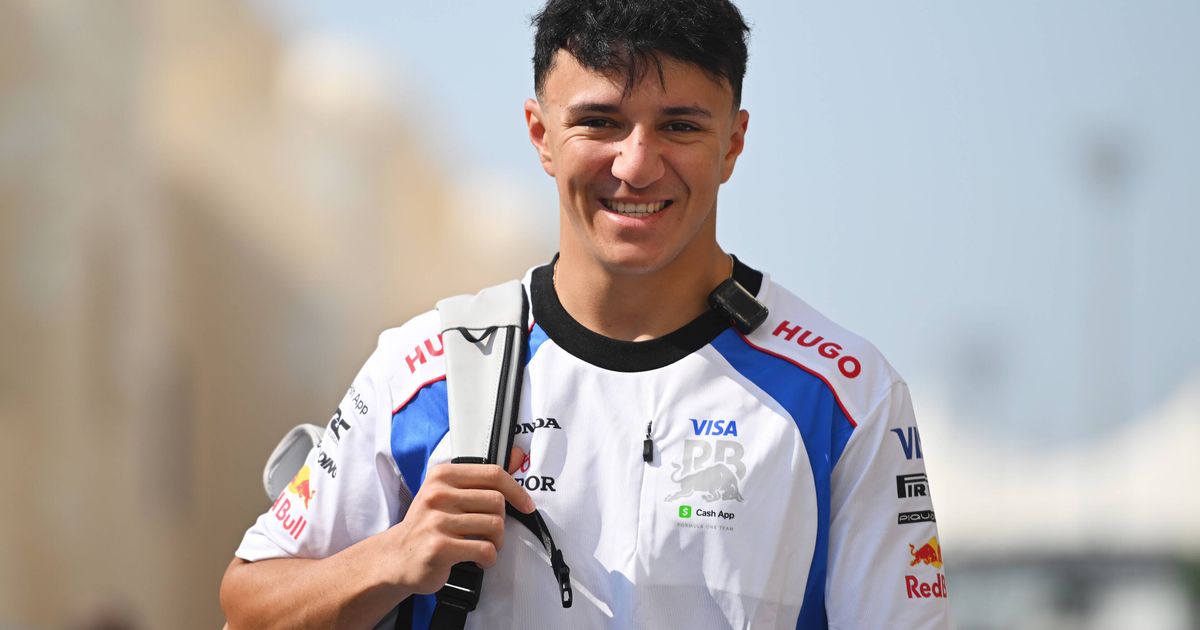
Hadjar's Strategic Approach to Teaming with Verstappen
Isack Hadjar reveals a strategic and realistic approach to partnering Max Verstappen at Red Bull in 2026, aiming to avoid the pitfalls of predecessors by accepting an initial speed deficit. He plans to leverage the new regulations for a fresh start, believing this timing is crucial for a successful integration into the team and challenging the dominant champion.
Isack Hadjar believes he has a unique, more realistic approach to becoming Max Verstappen's teammate at Red Bull Racing in 2026, aiming to avoid the pitfalls that have hindered his predecessors. His strategy centers on accepting an initial speed deficit and leveraging the new regulations for a fresh start.
Why it matters:
Isack Hadjar's perspective offers a potential blueprint for success alongside a dominant champion like Max Verstappen. Previous teammates have struggled under the immense pressure, often trying to match Verstappen from day one. Hadjar's stated intention to 'accept being slower in the first month' could be a psychological advantage, allowing him to adapt without the immediate burden of expectation, which has historically led to a 'snowball effect' of underperformance for others.
The details:
- Timely Debut: Hadjar sees his 2026 Red Bull debut as ideally timed due to the completely new technical regulations. Unlike previous teammates who entered a car already optimized around Verstappen, the 2026 season will see all drivers start from scratch with new car designs and power units.
- New Car Advantage: "It's a new car. It's not like Max knows the car. We all start from scratch," Hadjar stated, emphasizing that this levels the playing field to some extent and allows his input to potentially influence the car's development direction.
- Learning from Predecessors: Hadjar views the struggles of Pierre Gasly, Alexander Albon, and Sergio Perez as crucial lessons. He believes their mistake was secretly thinking they could immediately beat Verstappen.
- Mental Preparation: His strategy involves mentally preparing for initial difficulties. "The goal is to accept that I'm going to be slower the first month," he said. This mindset aims to mitigate frustration when confronted with data showing Verstappen's immediate pace.
- Verstappen's Adaptability: Hadjar acknowledges Verstappen's strength lies in his adaptability, noting, "He doesn't have a driving style. He adapts to what he's given and that's what is his strength." This indicates an understanding of the challenge he faces, rather than underestimating it.
- Self-Driven Approach: Hadjar confirmed that this pragmatic strategy is entirely his own, not influenced by Red Bull management.
The big picture:
Red Bull has struggled to find a consistent number two driver since Daniel Ricciardo's departure, with multiple talents failing to match Verstappen's pace or adapt to the team's environment. Hadjar's approach, which combines humility with strategic patience, could be a refreshing change. The 2026 regulation reset presents a rare opportunity for a new driver to integrate without the disadvantage of joining an already established car concept.
What's next:
As 2026 approaches, the focus will be on Hadjar's preparation and how effectively he can translate his mental approach into on-track performance. If he can genuinely embrace a learning curve and leverage the new regulations, he might just break the cycle of drivers struggling alongside Max Verstappen and carve out a successful career at Red Bull. His ability to contribute to the car's development from a blank slate could be pivotal for both him and the team.