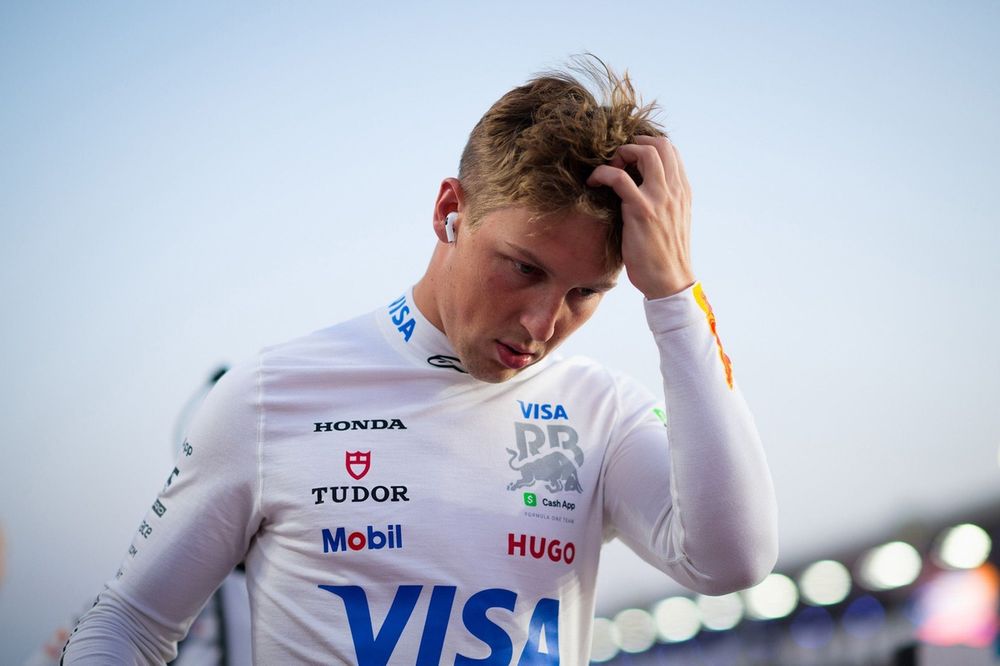
Hamilton and Lawson Criticize Qatar GP's Restrictive Tire Strategy
Lewis Hamilton and Liam Lawson have heavily criticized the Qatar Grand Prix's restrictive 25-lap tire limit, which, compounded by an early safety car, forced most drivers into an identical two-stop strategy. Hamilton called it one of the "worst" races for strategic flexibility, while Lawson described it as "pretty pointless," highlighting how regulations can inadvertently diminish competitive racing.
Seven-time champion Lewis Hamilton and Racing Bulls driver Liam Lawson have vocalized strong dissatisfaction with the strategic limitations imposed by the 25-lap tire limit at the Qatar Grand Prix. A lap 7 safety car incident effectively locked most of the field into identical two-stop strategies, leading to what Lawson called a "pretty pointless" race and Hamilton one of the "worst" grands prix for strategic flexibility.
Why it matters:
The Qatar Grand Prix's mandatory 25-lap tire limit, intended to address safety concerns, inadvertently stifled strategic diversity, drawing heavy criticism from drivers. This lack of strategic freedom not only made for a less engaging race but also highlighted the potential for regulations to inadvertently diminish the competitive spectacle of Formula 1. When drivers feel their on-track performance is nullified by rigid rules, it impacts the sport's appeal.
The Details:
- The safety car was deployed on lap 7 following a collision between Alpine's Pierre Gasly and Sauber's Nico Hulkenberg.
- Drivers who pitted under this early safety car were subsequently forced into a predetermined second pit stop on lap 32, eliminating any strategic variation.
- Liam Lawson, who finished ninth, expressed frustration despite having good pace, stating, "We're just stuck in traffic like everybody. I think it's very difficult to overtake." He added, "It's a pretty pointless race, to be honest," as everyone followed the same strategy.
- Lewis Hamilton, finishing 12th, likened the strategic inflexibility to Monaco, noting, "Everyone's just stopping at the same time, and there's no flexibility."
- Hamilton further elaborated, "And then on top of that, you can't overtake, and it's a fast track, it's a phenomenal track to drive, and it's very, very fast, it's just, unfortunately, like Monaco." His comments underscore the frustration of racing on a high-speed track with limited strategic options and overtaking opportunities.
The Big Picture:
The Qatar Grand Prix's strategic deadlock contrasts sharply with the dynamic, unpredictable racing Formula 1 aims to deliver. While safety is paramount, especially after tire degradation concerns at previous events, the unintended consequence of homogenizing strategies raises questions about balancing driver safety with the competitive essence of the sport. The frustration voiced by both seasoned champions like Hamilton and emerging talents like Lawson indicates a broader discontent within the paddock regarding races that offer little room for strategic ingenuity or on-track battles.
What's next:
The focus now shifts to the season finale in Abu Dhabi, where the drivers' title will be decided. While the tire limit was a one-off measure for Qatar, discussions around future race regulations and their impact on strategic diversity will likely continue. F1 authorities will need to consider how to implement safety measures without inadvertently neutering the strategic element that makes races compelling.