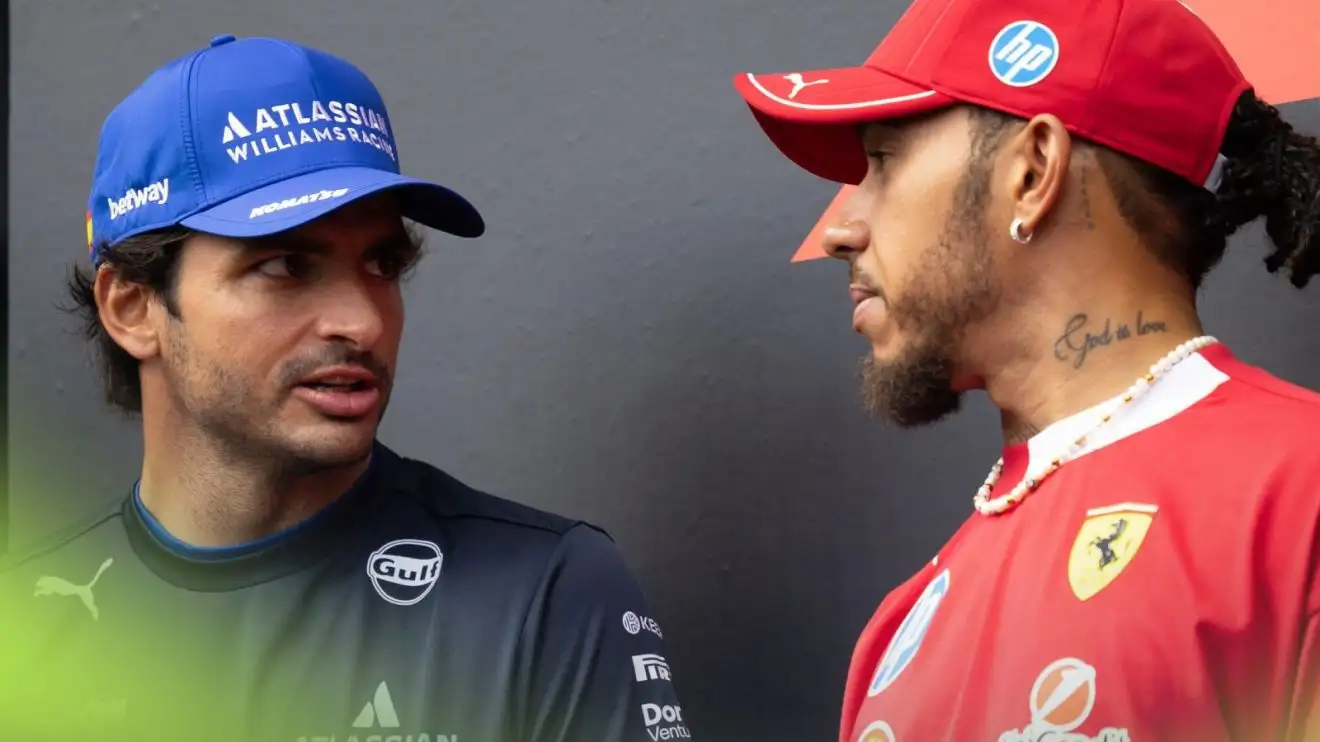
Hamilton and Sainz united in relief as ground effect era ends in F1
Lewis Hamilton and Carlos Sainz have openly welcomed the end of F1's ground effect era, with Hamilton stating he won't miss a single thing about the current cars. Sainz echoed the sentiment, citing the need to adopt an unnatural driving style. The criticism highlights driver dissatisfaction ahead of the 2026 regulatory overhaul, which promises lighter cars and active aerodynamics.
Lewis Hamilton and Carlos Sainz have both expressed relief that Formula 1's current generation of ground effect cars is coming to an end, with the seven-time champion stating there is "not a single thing" he will miss about them. The drivers agree that the cars require an unnatural driving style, a sentiment not entirely shared by Nico Hülkenberg, who offered a more neutral perspective.
Why it matters:
The vocal criticism from top drivers highlights a significant disconnect between the current car philosophy and driver preference. As F1 prepares for a major regulatory shift in 2026, this feedback underscores the importance of designing cars that are not only fast but also rewarding and natural for the world's best drivers to handle, which is crucial for the quality of racing and competition.
The details:
- Hamilton's Stark Assessment: Lewis Hamilton was unequivocal in his dislike for the current cars, declaring, "There is not a single thing I will miss about these cars. Literally, there’s nothing. I haven’t enjoyed it." He first expressed this view in Qatar and reiterated it in Abu Dhabi, stating the grid is "excited to see the back end of these ones."
- Sainz's Struggle and Adaptation: Carlos Sainz fully agreed with Hamilton, revealing he had a significant struggle adapting to the ground effect cars in 2022. "It’s not in my nature to drive these cars the way I have to drive them," Sainz said. He explained he had to relearn skills he didn't anticipate needing and is "glad it’s over," hoping for a return to a more natural driving style with the 2026 regulations.
- A Diverging Opinion: Not all drivers share the harsh critique. Nico Hülkenberg offered a more measured take, stating, "I think a bit more neutral for me. I don’t mind it." He acknowledged the cars are heavy and that following another car has become "very, very bad" this year, but noted that in qualifying trim, "they’re pretty quick."
What's next:
The 2026 regulations promise a fundamental change, moving away from the current ground effect philosophy. The new cars are slated to be smaller and approximately 30kg lighter. A major aerodynamic shift will see the Drag Reduction System (DRS) replaced by active aerodynamics on both the front and rear wings. Furthermore, the power units will utilize a 50/50 split between electrical energy and an internal combustion engine running on fully sustainable fuel. The collective driver feedback suggests these changes are not only welcome but necessary to realign car performance with driver satisfaction.