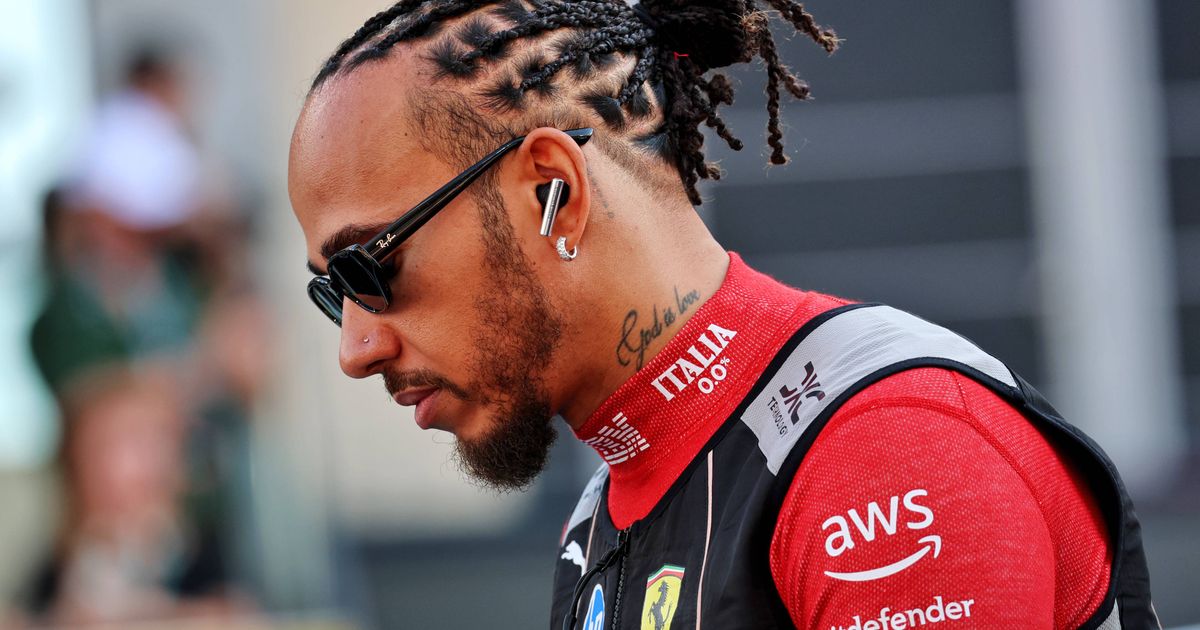
Hamilton's Ferrari Struggles Linked to Engineer 'Miscommunication'
F1 pundit Karun Chandhok links Lewis Hamilton's podium-less 2025 season at Ferrari to ongoing 'miscommunication' with race engineer Riccardo Adami, contrasting it with his former gold-standard partnership at Mercedes.
Lewis Hamilton's difficult debut season with Ferrari has been partly attributed to communication issues with his new race engineer, Riccardo Adami, according to former F1 driver Karun Chandhok. The seven-time champion failed to score a podium in 2025, a first in his 19-year career, with the partnership struggling to find its rhythm.
Why it matters:
The driver-engineer relationship is a critical, often underrated component of success in Formula 1. Hamilton's move from the ultra-synchronized partnership with Peter 'Bono' Bonnington at Mercedes to a new dynamic at Ferrari highlights how cultural and communicative adjustments can significantly impact on-track performance, even for the most experienced drivers.
The details:
- Chandhok pinpointed "miscommunication" as a recurring theme, citing examples from as early as the season opener in Melbourne.
- He contrasted Ferrari's approach with the "gold standard" set by Mercedes, which he described as concise, precise, and highly effective in delivering the right information.
- The shift involved navigating cultural and language differences within the Scuderia, a challenge Hamilton has not yet fully overcome.
- Other voices, like ex-Ferrari driver Rubens Barrichello, have also commented, suggesting such issues are typically resolved privately, away from the public team radio.
Between the lines:
Chandhok's analysis suggests the issue may be systemic within Ferrari's engineering communication style, not just a personal clash. His advice for Hamilton—to study how other successful pairings like George Russell and Marcus Dudley at Mercedes or Max Verstappen and Gianpiero Lambiase at Red Bull operate—indicates a need for Ferrari to adapt its methodology. The call is for a more personalized, efficient dialogue that matches Hamilton's driving style and feedback preferences, something that was perfected over years with Bonnington.
What's next:
For Hamilton and Ferrari to rebound in 2026, fast-tracking this crucial working relationship is imperative. Chandhok concludes that proactive steps, such as detailed post-race reviews of communication, are necessary to build a shared understanding and develop their own effective "equation." The success of Ferrari's competitive package next season may hinge as much on this human partnership as on the car's technical performance.