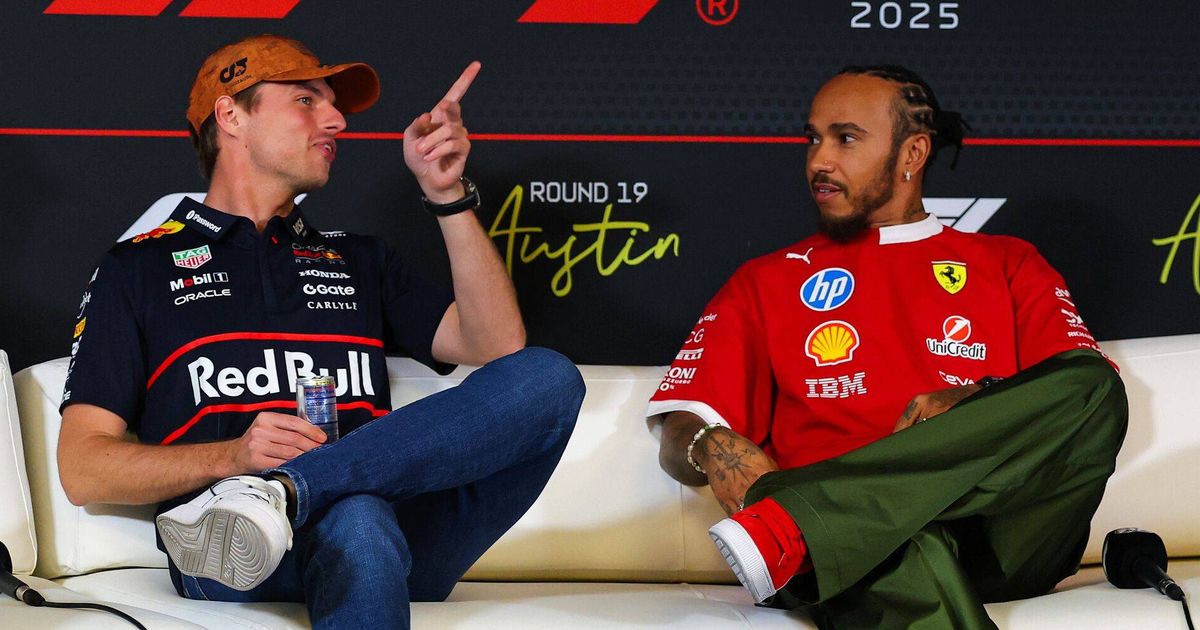
Hamilton's Verstappen-esque title comeback that fell just short
Lewis Hamilton's failed 2016 title comeback against Nico Rosberg, where he won the final four races but fell five points short, directly parallels Max Verstappen's 2025 charge against Lando Norris. Verstappen won the last three races yet finished two points adrift, illustrating how late-season surges often prove insufficient against a consistent rival.
Lewis Hamilton's dramatic late-season charge to nearly snatch the 2016 title from Mercedes teammate Nico Rosberg mirrors Max Verstappen's 2025 comeback bid against Lando Norris, with both drivers falling agonizingly short despite flawless final-race performances. The historical parallel highlights how championship deficits in the final stages, while surmountable, demand perfection from the chaser and no mistakes from the leader.
Why it matters:
These near-identical comeback stories, separated by nine years, underscore the fine margins that define Formula 1 championships. They demonstrate that a significant points gap with few races remaining is not an insurmountable obstacle, but closing it requires an unprecedented run of form combined with fortune favoring the pursuer—a combination that ultimately eluded both seven-time world champions.
The details:
- The 2016 Scenario: After a catastrophic engine failure while leading in Malaysia and a podium in Japan, Hamilton entered the final four races 33 points behind Rosberg.
- The 2025 Scenario: Verstappen trailed Norris by 49 points after Brazil, a deficit later reduced by Norris's disqualification in Las Vegas for a technical infringement related to plank wear.
- The Comeback Charge: Both drivers mounted near-perfect responses. Hamilton won the final four Grands Prix (USA, Mexico, Brazil, Abu Dhabi), each from pole position. Verstappen won the final three races in Las Vegas, Qatar, and Abu Dhabi.
- The Final Outcome: Despite these heroic efforts, the drivers ahead managed the gap. Rosberg clinched the 2016 title by just five points. In 2025, Verstappen came up two points short of Norris after the Abu Dhabi finale.
The big picture:
These episodes are textbook examples of ‘too little, too late’ in F1. They highlight the critical importance of consistency across an entire season. A single reliability failure or major strategic error in the early or middle phases can create a deficit that even a dominant end-of-season run cannot overcome if the rival maintains a steady, points-scoring presence. For teams and drivers, the lesson is clear: championships are won by minimizing mistakes over 21-24 races, not just by having the fastest car at the end.
What's next:
For Verstappen and Red Bull, the 2025 near-miss will fuel motivation for 2026, a season of major regulatory change. The historical precedent set by Hamilton in 2016 shows that such a defeat can be a powerful catalyst; Hamilton returned to win four of the next five driver's championships. The focus now shifts to whether Verstappen and his team can channel their frustration into constructing a title-winning campaign under the new rules, turning a heartbreaking near-miss into a distant memory.