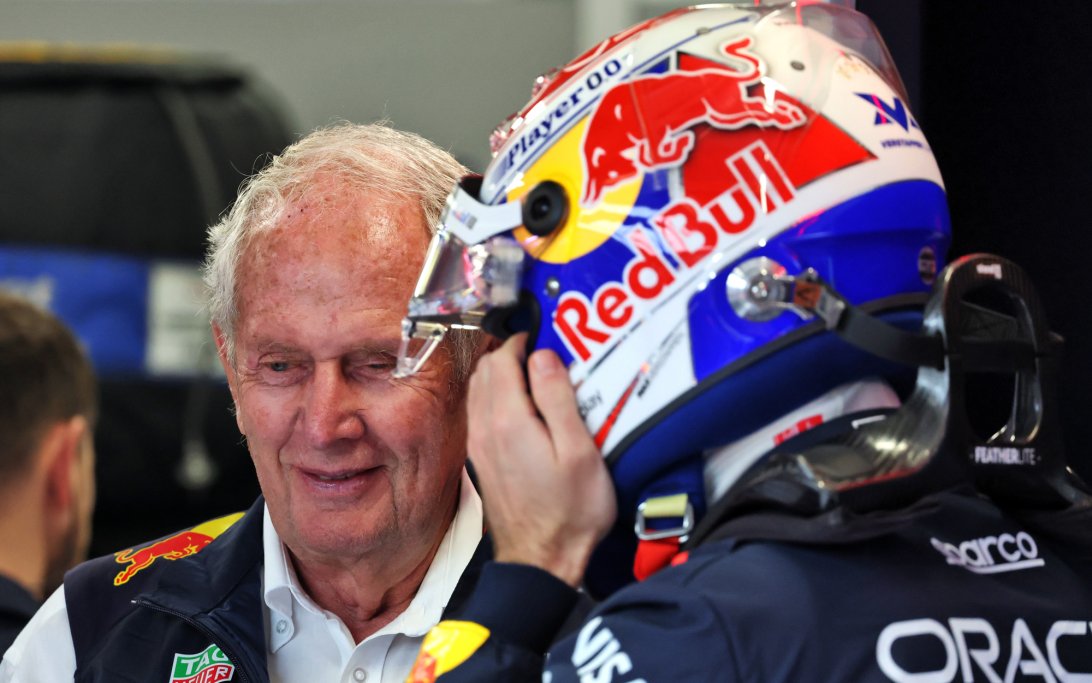
Helmut Marko's Red Bull exit marks end of an era for F1's most influential driver scout
Helmut Marko has left Red Bull after more than two decades, concluding a tenure that saw him shape the careers of multiple world champions and define the team's ruthless driver development philosophy. His departure, following other key exits, signals a profound cultural shift within the championship-winning organization.
Helmut Marko has departed Red Bull after more than 20 years, marking the end of an era for one of Formula 1's most influential and controversial figures. The Austrian executive was the architect of the team's famed driver development program and played a decisive role in bringing future champions like Max Verstappen and Sebastian Vettel into the sport. His exit, following the recent departures of Christian Horner and Adrian Newey, completes a dramatic leadership overhaul at the reigning constructors' champions.
Why it matters:
Marko's influence extended far beyond a typical executive role; he was the ideological heart of Red Bull's racing philosophy. His departure removes a central pillar of the team's identity—its cutthroat approach to driver management and talent scouting—and raises fundamental questions about the future culture and decision-making process within the squad. The timing, amidst a period of significant technical and managerial change, adds another layer of uncertainty for a team accustomed to stability at the top.
The details:
- Marko's tenure was defined by his pivotal role in driver line-up decisions and his oversight of the Red Bull Junior Team, one of the sport's most prolific talent pipelines.
- He was instrumental in fast-tracking the careers of four-time champion Sebastian Vettel and three-time champion Max Verstappen, alongside other notable drivers like Daniel Ricciardo and Carlos Sainz.
- His management style was famously direct and uncompromising, making him a polarizing but undeniably effective figure in the paddock. This approach cultivated a high-pressure environment that yielded exceptional performance but also led to public fallouts with several drivers.
- The Abu Dhabi Grand Prix served as his final race with the team, closing a chapter that began with Red Bull's entry into F1 as a full constructor.
The big picture:
Marko's exit is not an isolated event but part of a wider exodus of Red Bull's old guard. The consecutive losses of Team Principal Christian Horner, legendary designer Adrian Newey, and now Marko represent a complete turnover of the leadership trio that built and sustained the team's dynasty. This creates a vacuum of institutional knowledge and a stark break from the operational model that delivered seven drivers' and six constructors' championships. The challenge for Red Bull's new hierarchy will be to establish a new, cohesive identity without losing the competitive edge that defined the Marko era.
What's next:
All eyes will be on how Red Bull's driver development strategy evolves. The Junior Team, once Marko's personal domain, will now operate under new management, potentially altering its philosophy and selection criteria. Furthermore, with Max Verstappen's long-term future occasionally a topic of speculation, the absence of Marko—a key ally and advocate for the Dutch driver—could subtly influence the dynamics within the team. The 2026 season, with its major regulatory shift, will be the first true test of Red Bull's new era, both on and off the track.