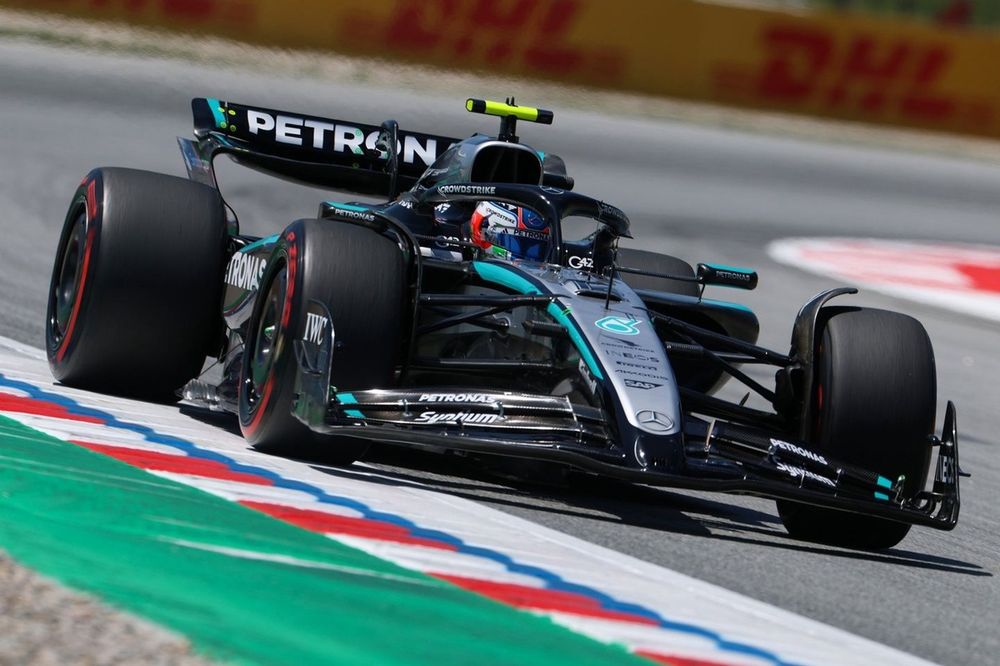
How Mercedes' Flexi-Wing Solution Hit an FIA Roadblock
Mercedes used flexible wings to fix handling issues, but an FIA clampdown forced the team to adapt. The episode highlights the team's ongoing struggle to master the ground-effect era.
Mercedes turned to flexible wings to solve persistent handling issues with its ground-effect car, a solution that proved effective until the FIA intervened with a technical clampdown. The team was forced to adapt, highlighting a broader struggle to find performance since the 2022 regulation overhaul and prompting a closer look at what rivals like McLaren were doing right.
Why it matters:
This technical battle underscores the fine line between innovation and regulation in F1. For a team of Mercedes' stature, struggling to adapt to rule changes and then having a key development path curtailed is a significant setback. It reveals the depth of their challenges in the current era and shows how quickly a competitive advantage can be neutralized, forcing them to play catch-up by studying their competitors.
The details:
- The team's zero-pod concept struggled with slow-corner rotation, forcing drivers to use the throttle to turn the car and creating rear tire temperature problems.
- Flexible front wings were developed to improve low-speed turn-in while maintaining high-speed stability, a path trackside engineering director Andrew Shovlin said "worked quite well."
- The FIA introduced stricter load tests for wings, implemented around the Spanish Grand Prix, which significantly limited Mercedes' design.
- Post-clampdown, Mercedes had to "adapt," studying McLaren's rear suspension design to understand how to maximize rear grip and cornering stability.
- The focus was on McLaren's anti-lift suspension, which helps keep the car low and stable through corners.
- Shovlin admitted the team "didn't put enough effort" into carrying over the strengths of their pre-2022 cars, leading to a fundamental imbalance in through-corner performance.
What's next:
Mercedes is now looking ahead to the next major regulation change in 2026, which will introduce new cars and power units. While Shovlin acknowledges there's still "a lot of work to do" with the current car, the challenge of the 2026 reset is reportedly becoming "less daunting." The team's ability to learn from its current struggles and adapt its development philosophy will be crucial for its future success.