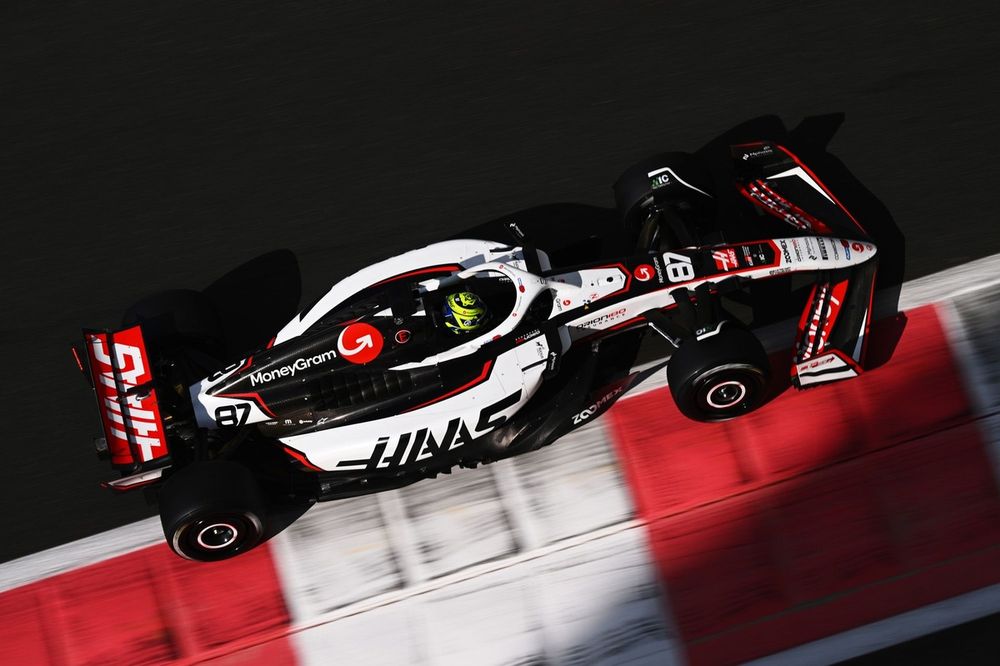
How Oliver Bearman Transformed His F1 Rookie Campaign
Haas rookie Oliver Bearman transformed his 2025 F1 season by implementing a structured mental preparation routine before sessions, leading to six point finishes after the summer break. He credits this shift, alongside car improvements, for turning around an early season struggle and establishing crucial rhythm for his long-term career.
Haas driver Oliver Bearman credits a more structured, mentally-focused approach to race weekends for his significant second-half improvement during his 2025 Formula 1 rookie season. The 20-year-old finished 13th overall, ahead of experienced teammate Esteban Ocon, with six of his nine points finishes coming after the summer break—a stark contrast to a nine-race pointless streak earlier in the year.
Why it matters:
A rookie's ability to adapt and find a sustainable process is often more telling than raw speed. Bearman's mid-season transformation from struggling to consistently scoring points demonstrates the critical mental and procedural learning curve required to succeed in F1, beyond just car upgrades. His experience underscores that early struggles are a necessary part of the development path for a long-term career at the top.
The details:
Bearman identified that his initial focus was almost entirely on extracting pure performance from himself and the car, leaving no mental preparation time. His pivotal change was instituting a clear pre-session routine.
- Structured Preparation: He now deliberately stops all technical and driving analysis 30 minutes before a session begins to focus solely on his mental state and set clear goals for the upcoming run.
- The Consequence of a Better Car: He admits the process was easier to implement once the Haas became more competitive post-summer break, freeing him from the constant pressure of fighting just to escape Q1.
- Learning Through Error: Bearman views his inconsistent first half not as a failure, but as an essential exploratory phase. He states, "The only way of knowing what to do is by doing those mistakes... You have to do mistakes to learn from them."
The big picture:
Bearman's season arc is a classic rookie narrative of adaptation. He entered F1 with three grand prix starts in 2024, but a full campaign presented a different challenge entirely. His progress highlights that Formula 1 is a distinct discipline from the junior categories, requiring drivers to build a complete professional framework around their talent. Finding a personal "rhythm" and "momentum," as he describes it, becomes a powerful tool for consistency.
What's next:
Armed with a refined process and hard-earned experience from 21 races, Bearman heads into his second full season with a stronger foundation. The key will be maintaining and evolving this structure over a winter break and carrying the momentum into 2026. For Haas, having a driver who has demonstrably learned how to learn is a valuable asset as the team aims to move further up the grid under the new regulations.