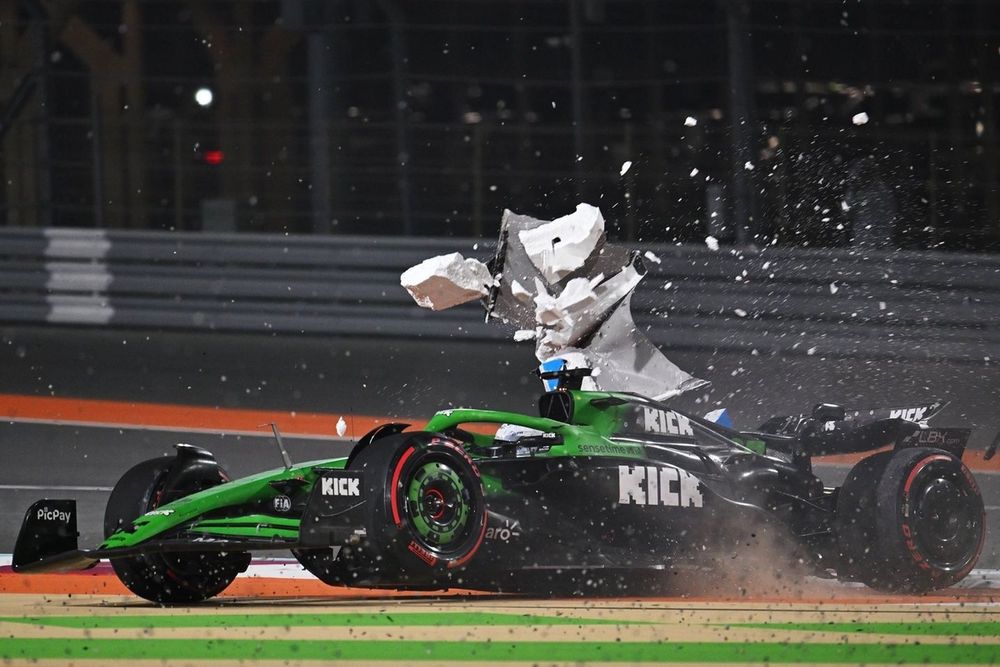
Hulkenberg's Qatar GP Crash and McLaren's Pit Stop Strategy Under Scrutiny
Nico Hulkenberg's crash at the Qatar Grand Prix brought out a safety car, leading to a controversial strategic blunder by McLaren. While most competitors pitted, McLaren kept Oscar Piastri and Lando Norris out, a decision that was heavily criticized and severely compromised their race, forcing them onto a difficult tire strategy. This incident highlights the critical role of split-second decisions in F1.
Nico Hulkenberg's Qatar Grand Prix came to an early end on Lap 7 after a collision with Pierre Gasly, bringing out the safety car and triggering a controversial strategic decision from McLaren. While most frontrunners pitted under the safety car, McLaren chose to keep Oscar Piastri and Lando Norris out, a move that drew immediate criticism and reshaped the race dynamics.
Why it matters:
McLaren's decision not to pit under the safety car, a move designed to potentially gain track position, ultimately backfired, highlighting the razor-thin margins and high-stakes nature of Formula 1 strategy. This incident dramatically shifted the race order and put their drivers on a compromised tire strategy, raising questions about team communication and pre-race planning.
The Details:
- The Incident: Nico Hulkenberg (Haas) attempted to overtake Pierre Gasly (Alpine) on the outside at Turn 2. The contact sent Hulkenberg spinning into the gravel, ending his race prematurely. He had started 11th and was running 10th.
- Hulkenberg's Pre-Race Comments: Following qualifying, Hulkenberg had anticipated a "static" race with limited overtaking opportunities due to the Losail International Circuit's high-speed corners and minimal tire degradation. "It's not the most, you know, racing-friendly circuit, let's say."
- Safety Car Deployment: The safety car was deployed after Hulkenberg's crash.
- McLaren's Decision: Race leader Oscar Piastri and his teammate Lando Norris stayed out, while Max Verstappen, running second, and most other drivers pitted for fresh tires.
- Expert Criticism: Sky Sports F1 commentator Martin Brundle immediately reacted, stating, "This has worked out horribly for McLaren. Those behind have pitted and they have not." He later added, "It feels to me as though McLaren have missed a trick!"
- Driver Discontent: Lando Norris questioned the decision, asking his race engineer, "We should have just followed him in, no? If we knew the car ahead was staying out." His engineer explained, "They have lost all flexibility for the remainder of the race."
- Tire Regulations: Drivers were limited to a maximum of 25 laps on a single set of tires during the Qatar Grand Prix, making strategic calls even more critical.
- Potential Reasoning: One theory for McLaren's double-stack avoidance was to prevent disadvantaging Norris or showing a clear strategic preference between their two drivers, a sensitive issue in team dynamics.
The Big Picture:
This incident underscores how quickly fortunes can turn in Formula 1. A single crash can trigger a safety car, forcing teams to make split-second strategic decisions that can either win or lose a race. McLaren's choice to prioritize track position over fresh tires under the safety car proved costly, allowing rivals who pitted to gain a significant advantage and highlighting the inherent risks of aggressive strategies.
What's next:
McLaren will undoubtedly review their strategic call in the aftermath of the race, especially given the clear disadvantage it put their drivers in. This event will likely fuel further debate on optimal safety car strategies and team communication under pressure. The team will be keen to learn from this experience to avoid similar pitfalls in future races, particularly with the tight championship battles ahead.