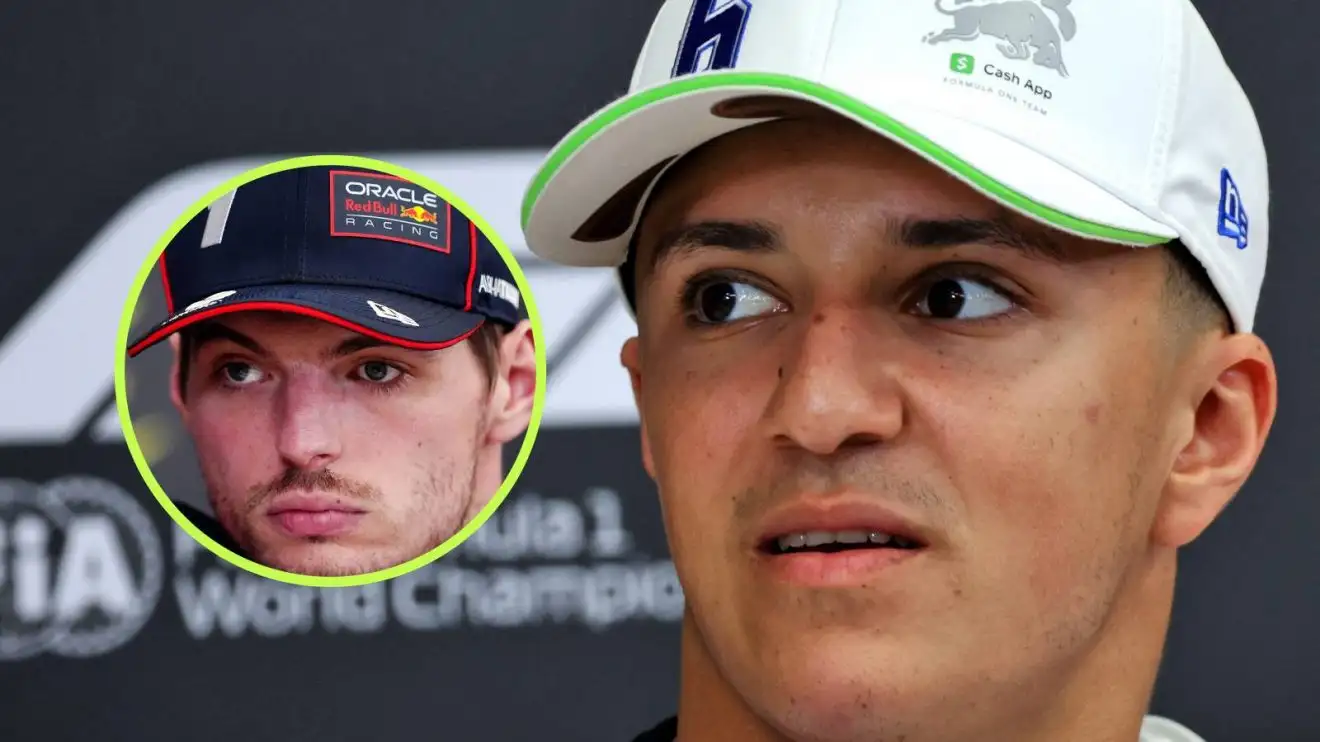
Isack Hadjar's Realistic Approach to Teaming with Max Verstappen at Red Bull
Isack Hadjar, slated to be Max Verstappen's Red Bull teammate in 2026, is adopting a remarkably realistic strategy: accepting he'll initially be slower. He aims to avoid the pitfall of previous drivers who struggled by trying to match Verstappen from day one, believing this mindset will allow him to adapt and improve without being 'stomped over'. This approach could redefine how drivers handle the immense pressure of racing alongside a generational talent.
Isack Hadjar, set to join Max Verstappen at Red Bull Racing in F1 2026, reveals a pragmatic approach to avoid being 'stomped over' by his formidable teammate. Rather than aiming to immediately match Verstappen's pace, Hadjar plans to accept an initial performance gap, believing this mindset will help him adapt and improve without succumbing to frustration.
Why it matters:
- The Red Bull second seat has historically proven challenging for drivers paired with Max Verstappen, leading to inconsistent performance and eventual departures.
- Hadjar's unique mental preparation could offer a different outcome, potentially breaking the cycle of drivers struggling under the pressure of immediately competing with a generational talent.
- This strategy might allow Hadjar to develop steadily and contribute effectively to Red Bull, rather than burning out quickly.
The Details:
- Hadjar will replace Yuki Tsunoda in F1 2026, stepping into a role that has seen drivers like Pierre Gasly, Alex Albon, and Sergio Perez struggle to maintain pace and consistency alongside Verstappen.
- This season, Tsunoda scored 30 points, while Verstappen accumulated 396 points in the same car, highlighting the performance disparity that often occurs.
- Hadjar, a rookie in F1 this season, has shown promising form with regular points finishes and a maiden podium, earning his promotion from Racing Bulls.
- His "subdued mentality": Hadjar explicitly stated, "If anything, the goal is to accept that I’m going to be slower the first month."
- He believes that previous teammates might have approached the challenge with an overly confident mindset, thinking "He’s a human, I’m gonna beat him," only to be overwhelmed.
- By acknowledging the high probability of being slower initially, Hadjar aims to manage expectations and focus on a gradual improvement process.
- Hadjar considers signing the contract not an achievement in itself, but rather "living up to the expectations at Red Bull, doing the job" as the true measure of success.
What's next:
Hadjar's tenure with Red Bull in 2026 will be a significant test of his unique psychological approach.
- His ability to integrate and perform, even if initially slower than Verstappen, will be closely watched as a potential new model for drivers joining top teams.
- If his strategy proves successful, it could influence how young drivers are prepared for high-pressure F1 roles, emphasizing gradual adaptation over immediate contention.
- Ultimately, his long-term success will depend on his capacity to not only accept an initial speed deficit but also to close that gap effectively over time, contributing to Red Bull's championship ambitions.