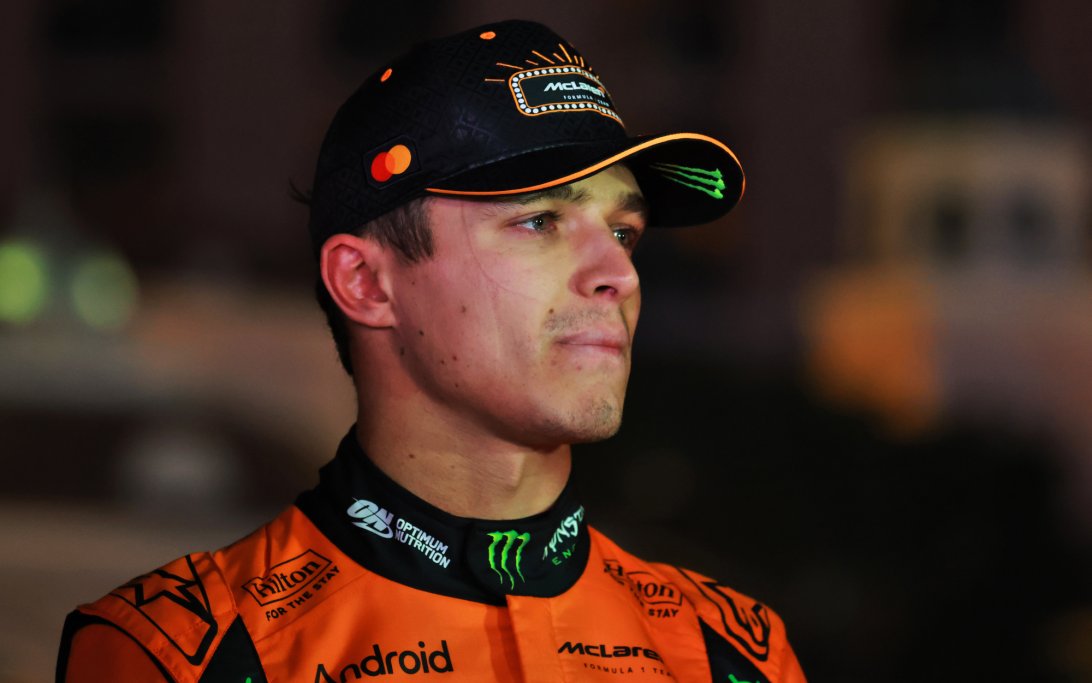
Lando Norris on Las Vegas DSQ: "Not a complete shock"
Lando Norris admitted McLaren's Las Vegas GP disqualification for excessive plank wear was "expected," not a "shock," due to unforeseen porpoising. The decision, which also affected Oscar Piastri, has drastically tightened the championship fight, with Norris now just 24 points ahead of rivals heading into the Qatar GP. Norris dismissed suggestions of preventing it by 'lifting and coasting,' citing the complex nature of porpoising issues.
Lando Norris revealed that McLaren's disqualification from the Las Vegas Grand Prix was "expected" and not a "complete shock," as both he and Oscar Piastri were removed from the results due to excessive plank wear on their MCL39s. McLaren identified greater-than-expected porpoising as the root cause, leading to a significant shift in the drivers' championship standings heading into the penultimate race in Qatar.
Why it matters:
McLaren's double disqualification in Las Vegas has not only cost Norris a valuable second-place finish but also significantly tightened the drivers' championship battle. This incident highlights the critical balance F1 teams must strike between performance and compliance, especially with ground-effect regulations. It also underscores the unpredictable nature of street circuits and their impact on car setup and wear, demonstrating how technical infringements can dramatically alter championship narratives.
The details:
- Both Lando Norris and Oscar Piastri were disqualified from the Las Vegas Grand Prix after their MCL39s failed post-race scrutineering. Their car planks exceeded the 1mm tolerance, falling below the permitted 9mm thickness.
- McLaren attributed the excessive plank wear to higher-than-anticipated porpoising during the race, a common aerodynamic phenomenon that can cause the car to bounce and repeatedly hit the track surface.
- Championship Impact: The disqualification has major implications for the drivers' title race. Norris, who was initially 30 points ahead of Piastri and 42 points clear of Max Verstappen, now finds himself only 24 points ahead of both rivals. He needs to out-score them by just two points over the Sprint weekend in Qatar to secure the 2025 championship.
- Norris confirmed that the decision was not a surprise, stating, "There was some small expectation of it already, so it wasn't a complete shock."
- He dismissed the idea of mitigating the issue by 'lifting and coasting' earlier in the race, explaining that the problem was related to porpoising, not simply running the car too low. He noted, "It is certainly not that simple... sometimes if you lift more, you get more porpoising, and it is a worse effect."
Between the lines:
Norris's calm acceptance of the disqualification suggests a level of transparency and preparedness within McLaren, indicating they were aware of the potential issue during the race. His rejection of 'lifting and coasting' as a solution also highlights the complex aerodynamic challenges presented by current F1 regulations, particularly concerning porpoising and its impact on car components. This incident serves as a stark reminder that even top teams can fall afoul of technical regulations when pushing the limits of performance.
What's next:
All eyes will now be on the Qatar Grand Prix, the penultimate race of the season, where Norris will aim to secure the championship. The team will undoubtedly be meticulously scrutinizing car setups and ride heights to avoid a repeat of the plank wear issues, especially given the high-speed nature of the Losail International Circuit. McLaren's engineering team will be under pressure to fine-tune the MCL39 to ensure both compliance and competitive performance, as any further technical setbacks could jeopardize their title aspirations.