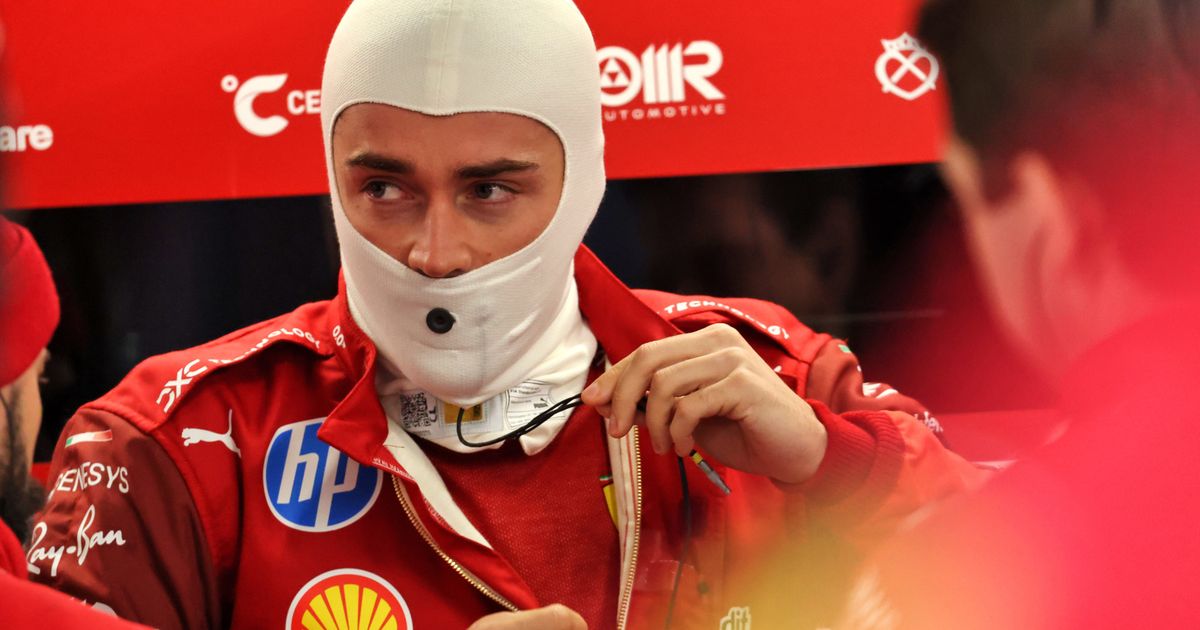
Leclerc Details Ferrari's Ground Effect Era Struggles: 'A Very Difficult Car to Understand'
Charles Leclerc explains Ferrari's championship drought in F1's ground effect era, citing a fundamental struggle to understand the cars and a recurring failure of factory-developed parts to perform as expected on track. He acknowledges rivals Red Bull and McLaren mastered the regulations better, while hoping Ferrari's early focus on the 2025 car will finally pay off.
Charles Leclerc has pinpointed correlation issues and a fundamental difficulty in understanding the ground effect generation of cars as key reasons for Ferrari's failure to win a championship since 2022. The Monegasque driver, who was Max Verstappen's early title rival that year, explained that the team was often surprised when parts developed at the factory failed to perform as expected on track, a problem rivals like Red Bull and McLaren managed to solve more effectively.
Why it matters:
Ferrari's inability to consistently challenge for the title since the 2022 regulation overhaul represents a significant competitive failure for the sport's most historic team. Leclerc's candid assessment reveals systemic technical challenges that go beyond simple performance deficits, touching on core development processes that have left the team playing catch-up to its rivals for three consecutive seasons.
The details:
- 2022's Missed Opportunity: Ferrari started the ground effect era strongly but was immediately hampered by severe porpoising issues. Red Bull, despite beginning the season overweight, had a more stable car platform and gained a decisive advantage once they removed the excess weight.
- The Correlation Problem: Leclerc highlighted a recurring theme where parts and upgrades that showed promise in Maranello's simulations failed to deliver the expected performance on the actual race track. This disconnect between factory predictions and on-track reality became a major developmental hurdle.
- Strategic Gambles: For the 2024 season, Ferrari made the conscious decision to focus resources early on the following year's car (the 2025 challenger). This strategic bet, which Leclerc hopes will pay off, contributed to a lack of in-season upgrades and more pronounced struggles in the final two-thirds of the 2024 campaign.
- Acknowledged Superiority: The driver openly conceded that other teams, specifically naming Red Bull and McLaren, simply did a better job of understanding and mastering the complexities of the ground effect aerodynamic regulations.
The big picture:
Leclerc's comments underscore a period of frustration for Ferrari, where flashes of speed—particularly at the start of 2022—were never transformed into sustained championship contention. The team's journey through the ground effect era has been defined by initial promise, followed by technical puzzles they could not solve as efficiently as their competitors. The early shift in focus to the 2025 car, dubbed Project 678, represents a clear attempt to break this cycle and start afresh with a new regulatory understanding.
What's next:
All eyes are now on the 2025 Ferrari, the first car fully developed under the leadership of incoming Technical Director Loic Serra. The success or failure of this machine will be the ultimate test of whether Ferrari has finally decoded the ground effect puzzle and can mount a legitimate, season-long challenge to Red Bull and McLaren. Leclerc's hope is that the strategic sacrifice made in 2024 will prove to be a winning long-term bet.