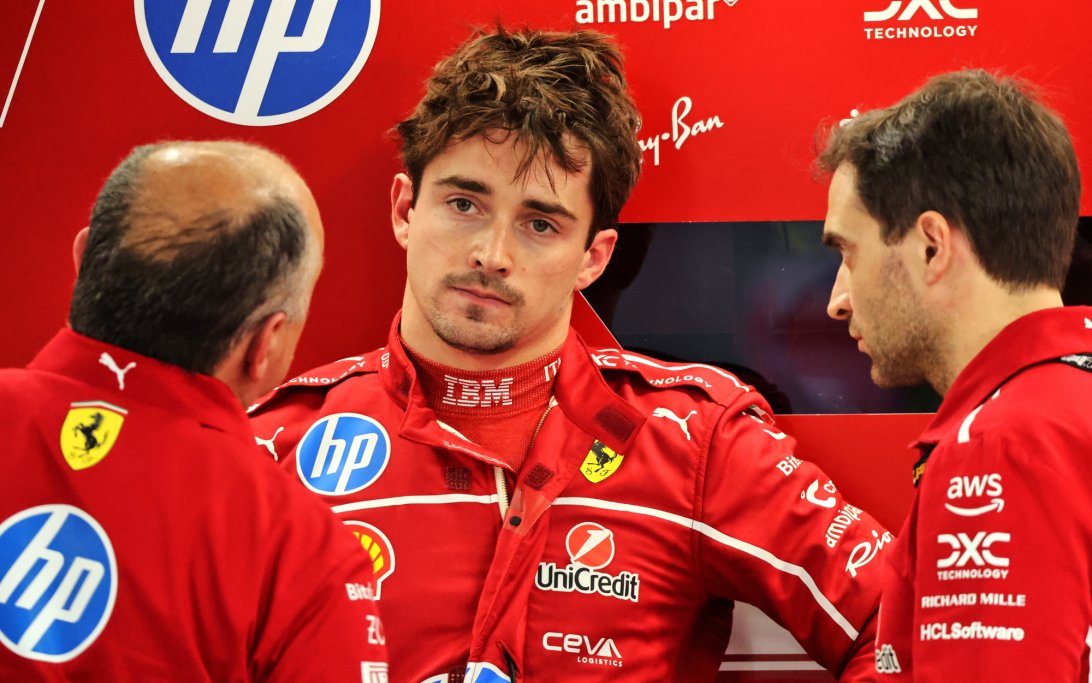
Leclerc: F1's 2026 pecking order will be clear by mid-season
Ferrari's Charles Leclerc believes the 2026 F1 season will reveal its long-term competitive order within the first six to seven races. He suggests the teams that emerge on top by the Miami and Canadian Grands Prix could be positioned to dominate the new regulatory era until 2030.
Charles Leclerc predicts the competitive hierarchy for Formula 1's new 2026-2030 regulatory era will be established by the sixth or seventh race of next season. The Ferrari driver believes the initial rounds will reveal which teams are positioned to dominate the championship for the coming years.
Why it matters:
The 2026 season introduces a major overhaul of both chassis and power unit regulations, representing a rare reset opportunity for the entire grid. Leclerc's timeline suggests teams will have a very narrow window to correct fundamental flaws before the competitive order solidifies for a multi-year period, making the development race over the winter and early season critically important.
The details:
- All 11 teams will debut completely new cars, with the first track action expected at a private test in Barcelona in late January, followed by official pre-season testing in Bahrain.
- Leclerc pinpointed the first American leg of the calendar—the Miami and Canadian Grands Prix—as the races where the true pecking order will become apparent.
- Regarding Ferrari's own prospects, Leclerc admitted significant uncertainty, stating he has "no idea" where the Scuderia stands relative to rivals after a 2024 season where the team failed to win a race.
- He emphasized the importance of focusing on the internal project until concrete on-track evidence emerges in the early races.
The big picture:
Leclerc's assessment acknowledges that while the initial balance of power may become clear early, recent history shows the competitive order can shift within a rules cycle. Ferrari started the last regulatory era in 2022 as the strongest package but was soon overtaken by Red Bull's sustained dominance, which was later challenged by McLaren's mid-2024 surge. This precedent suggests that while a strong start is crucial, long-term development capability will ultimately determine success over the four-year period leading to the next rules change in 2030.
What's next:
The focus for all teams now shifts entirely to the winter development phase. With the first glimpses of the new cars coming in late January, the pressure is immense to arrive in Australia with a competitive package. According to Leclerc's forecast, by the time the circus reaches Montreal in June, the landscape of Formula 1 for the remainder of the decade could be largely set.