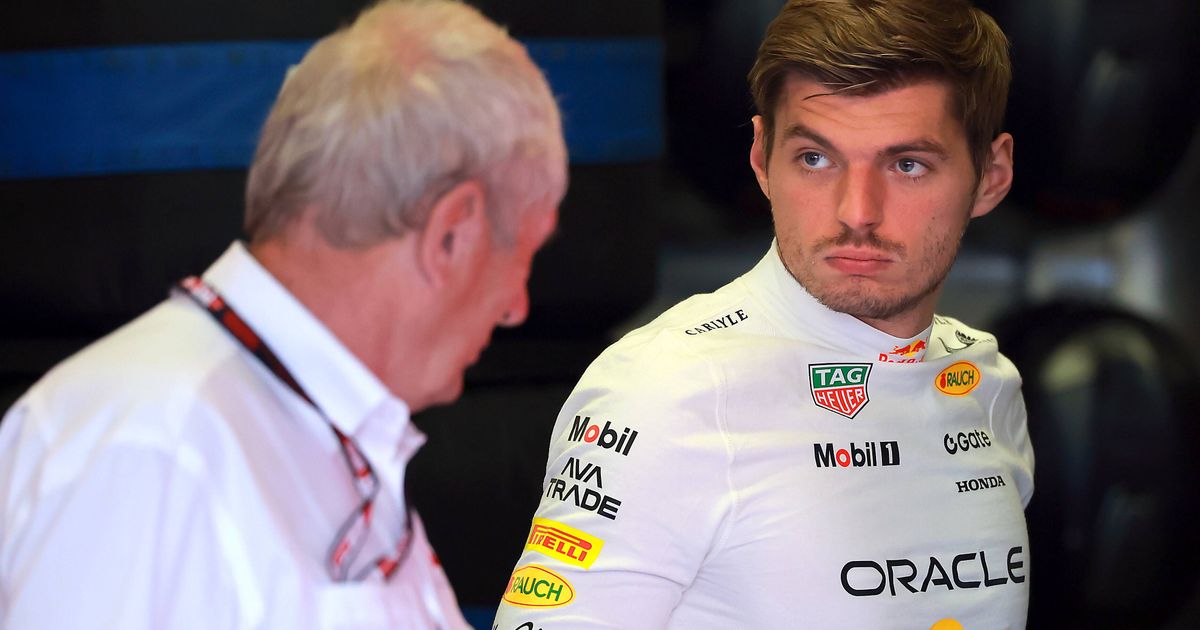
Marko Compares Verstappen to F1 Legend Rindt, Highlighting Key Differences
Helmut Marko compares Max Verstappen to legend Jochen Rindt, noting their shared speed but contrasting Verstappen's analytical mind with Rindt's adventurous, feel-driven style from a bygone era.
Helmut Marko has drawn a fascinating parallel between three-time world champion Max Verstappen and the late Jochen Rindt, F1's only posthumous champion. While acknowledging their shared, blistering pace, Marko highlights a fundamental difference in their approaches: Verstappen is the analytical "elegant son-in-law," whereas Rindt was the cigarette-smoking adventurer who relied purely on feel. The comparison underscores Verstappen's unique blend of modern technical mastery and raw talent.
Why it matters:
Marko's comparison isn't just trivia; it's a high-level assessment of what makes Verstappen a generational talent. By contrasting him with a legend from a different era, Marko emphasizes Verstappen's unique ability to combine raw speed with the deep analytical skills required to dominate in modern Formula 1. It also serves as a reminder of how the sport has evolved from pure instinct to a data-driven science.
The details:
- Shared Trait: Marko states both drivers are "incredibly fast and willing to push to the limit."
- Contrasting Styles: He describes Verstappen as the "elegant, young 'favourite son-in-law'," while Rindt was "more of an adventurer... always had a cigarette in his mouth."
- Analytical vs. Instinct: Marko recalls a 15-year-old Verstappen having "the mind of a 25-year-old" who knew exactly what he wanted. In contrast, Rindt raced in an era where "the 'butt' was still decisive," with no simulators or sensors.
- Modern Mastery: Marko believes Verstappen has surpassed even Lewis Hamilton as a "tire expert," a crucial skill for winning races in a car that isn't the absolute best.
Between the lines:
The subtext of Marko's comments is clear: he views Verstappen as a complete driver, perfectly suited for any era. He concludes that Verstappen's analytical prowess would have made him a champion in the 1970s, while Rindt's adventurous, feel-based approach would likely struggle to adapt to the data-heavy, simulator-dependent environment of modern F1. It's a testament to how Verstappen has mastered both the art and science of driving.