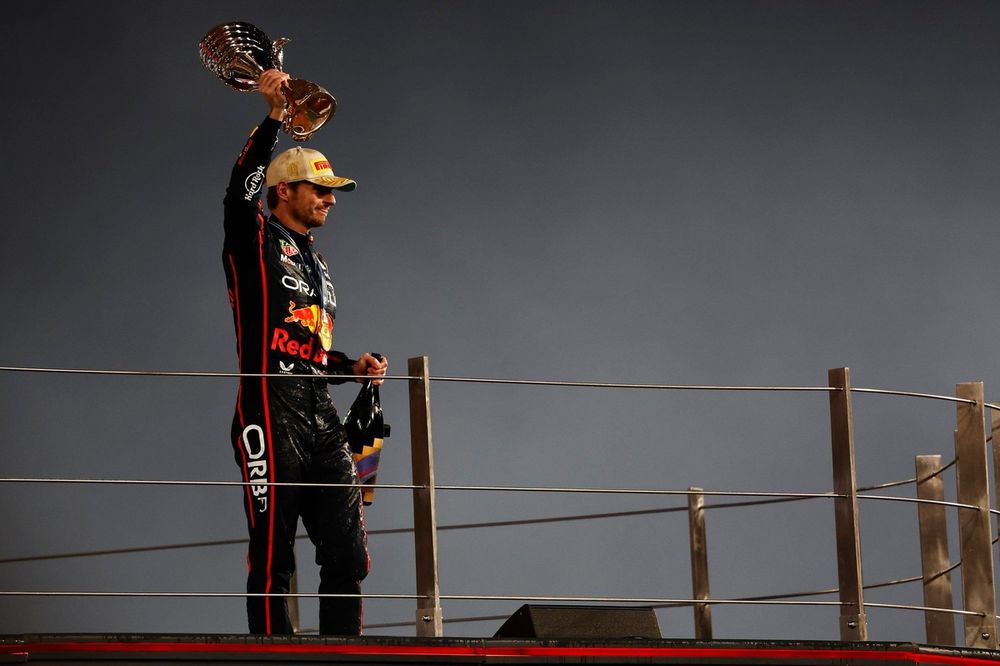
Max Verstappen's 2025 Season: A Career-Best Performance Without the Title
Max Verstappen considers 2025 his best F1 season yet, despite not winning the title. Starting with an uncompetitive Red Bull, he mounted a stunning late-season charge, winning five of the last eight races to slash a 104-point deficit and enter the final round just 12 points behind, showcasing his peak driving form.
Max Verstappen delivered what he and many observers consider the best season of his Formula 1 career in 2025, despite his four-year championship streak ending. His remarkable comeback from a significant mid-season deficit to nearly snatch the title in the final round showcased a driver at the peak of his powers, even without the ultimate prize.
Why it matters:
Verstappen's performance reaffirmed his status as the grid's benchmark driver, proving his excellence isn't solely dependent on having the fastest car. His ability to extract maximum performance from an initially uncompetitive Red Bull and mount a historic late-season charge provides a compelling narrative about driver skill versus machinery, setting a high bar for what constitutes a 'great' season beyond just winning the championship.
The details:
- Red Bull started the season with an unpredictable and unstable RB21, putting Verstappen immediately on the back foot against the dominant McLaren.
- Despite the car's limitations, Verstappen consistently extracted more performance than any other driver likely could have, keeping himself in points contention during the early rounds.
- His season highlights included a stunning pole position lap at Suzuka—breaking McLaren's streak and setting a track record—and a brave outside pass on Oscar Piastri at Imola's Tamburello chicane, which earned the FIA Action of the Year Award.
- The turning point came at Monza (Round 16), where major upgrades, particularly to the floor, transformed the RB21 into a consistent front-runner for the final nine races.
By the numbers:
Verstappen's comeback was fueled by a blistering late-season run:
- He arrived at Monza with a 104-point deficit to then-championship leader Oscar Piastri.
- In the final eight Grands Prix, he won five races plus the Austin Sprint.
- A combination of his wins and McLaren's errors—including Piastri's struggles in Baku, a team strategy error in Qatar, and a double disqualification in Las Vegas—slashed the gap.
- He entered the Abu Dhabi finale in second place, just 12 points behind new leader Lando Norris.
The big picture:
This season served as a powerful reminder of Verstappen's unique talent. For the first two-thirds of the year, he battled an inferior car, yet his performances left no doubt about who was the best driver on the grid. When finally given competitive machinery, he unleashed a run of form that no other driver could match, winning five of the last eight races. The final third of the season was one of the greatest comebacks in F1 history; had he completed the turnaround, it would be remembered as one of the best title-winning campaigns ever. Instead, it stands as perhaps the greatest non-title-winning season, a testament to relentless performance under adversity.