McLaren Reveals Sensor Failure in Piastri's Car Behind Vegas DSQ
McLaren attributed its Las Vegas GP disqualification of both Oscar Piastri and Lando Norris to unexpected porpoising and a critical sensor failure on Piastri's car, hindering accurate data on plank wear. Despite attempts to mitigate the issue, the unique circuit conditions and car's operating window led to excessive plank degradation. The team is confident this won't recur in Qatar but will leverage the insights for future performance.
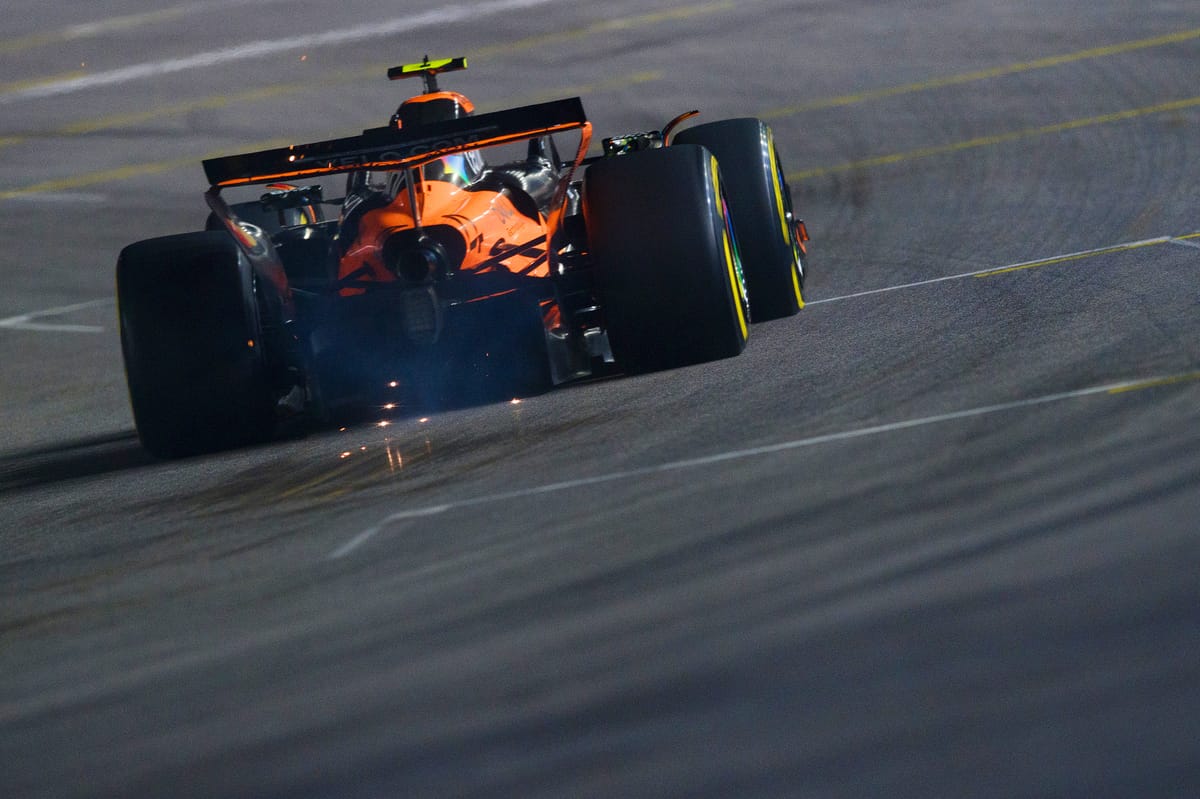
McLaren's analysis of its double disqualification at the Las Vegas Grand Prix has revealed a failed sensor on Oscar Piastri's car, which prevented the team from accurately measuring the oscillations that ultimately led to excessive plank wear. Both Lando Norris and Piastri were disqualified after finishing second and fourth respectively, due to their cars breaching technical regulations concerning the plank beneath the floor.
Why it matters:
This incident, while not impacting the constructors' championship as much, had significant implications for the drivers' standings, allowing Max Verstappen to draw level with Piastri and close the gap to Norris. It highlights the fine margins in F1 technical compliance and the critical role of real-time data in managing car performance and reliability, especially under unexpected track conditions. For McLaren, understanding and rectifying such issues is crucial for maintaining its competitive edge and title aspirations in future races.
The Details:
- Unexpected Porpoising: McLaren's immediate post-race analysis pointed to unexpected and excessive porpoising during the Las Vegas race, which had not been anticipated based on limited dry practice running.
- Sensor Malfunction: Team principal Andrea Stella confirmed that monitoring was significantly harder on Piastri's car due to the loss of a key sensor used to establish the level of grounding. This meant the team had less accurate data to manage the situation for Piastri.
- Remedial Actions: Both drivers attempted remedial actions, such as 'lift and coast,' in various parts of the circuit to protect the plank. However, these actions proved largely ineffective due to the car's operating window and specific circuit characteristics.
- Counterproductive Measures: Stella noted that reducing speed was effective in some parts of the track but "counterproductive" in others, further complicating the team's ability to mitigate the issue.
- Safety Margin Negated: McLaren had added a safety margin for ride height compared to practice, but this was "negated by the unexpected onset of the large vertical oscillations," causing the car to touch the ground more than anticipated.
The Big Picture:
While McLaren felt it hadn't taken "excessive risks in terms of ride height" and even added a safety margin, the unique characteristics of the Las Vegas street circuit combined with unforeseen porpoising caught them out. The fact that no other team among the top ten suffered similar plank wear issues, despite low ride heights being a common necessity in modern F1 cars, underscores the specific challenges McLaren faced. This incident provides valuable lessons for the team regarding the car's operating window and porpoising dynamics, especially on unconventional circuits.
What's next:
McLaren does not anticipate a repeat of these issues at the upcoming Qatar Grand Prix due to the vastly different circuit characteristics. The team's immediate focus will be on applying the learned information about the car's operating window. Despite the setback, McLaren remains confident in its drivers and strategy, with Stella reaffirming that both Norris and Piastri will continue to be allowed to race freely for championship contention in the remaining races, as the team aims for a strong finish to the season.