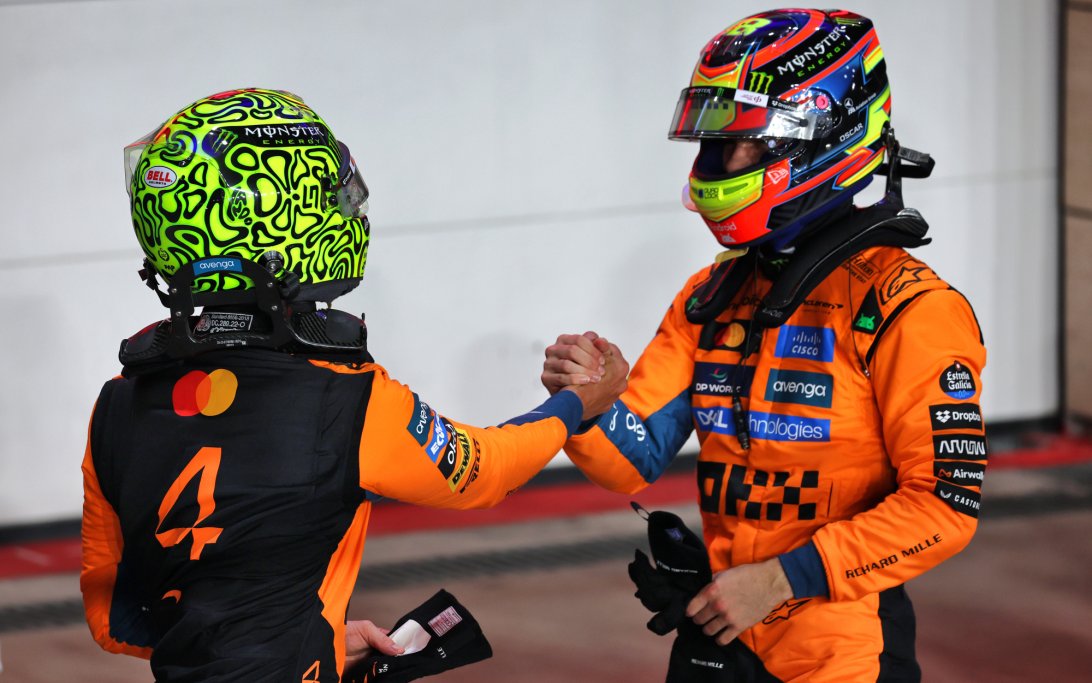
McLaren's 2026 Driver Policy: Equal Treatment or Strategic Priority?
McLaren's equal-treatment policy for Norris and Piastri secured the 2025 drivers' title, but the team must decide whether to maintain that approach for F1's new regulatory era in 2026, balancing competitive fairness against the strategic benefits of backing a single contender.
McLaren's commitment to equal treatment for Lando Norris and Oscar Piastri was a defining feature of its 2025 title campaign, a strategy that ultimately delivered the drivers' championship by the narrowest of margins. As Formula 1 prepares for a major regulatory reset in 2026, the team faces a critical strategic decision: should it maintain its egalitarian philosophy or pivot towards a clear number-one driver if it remains a front-runner?
Why it matters:
A team's driver management strategy is a fundamental pillar of its championship aspirations, directly influencing on-track tactics, resource allocation, and team harmony. McLaren's 2025 success with equality proves the model can work, but the high-stakes pressure of a new era often tempts teams to consolidate efforts behind a single contender. The decision will reveal McLaren's confidence in both its drivers and its car's competitiveness under the new rules.
The details:
- The 2025 policy saw McLaren refuse to implement team orders, even when Red Bull's Max Verstappen emerged as a late title threat. Norris clinched the title by just two points over Verstappen, with Piastri finishing third.
- The 2026 technical regulations represent a complete reset, potentially scrambling the competitive order and placing a premium on early development understanding.
- An equal treatment policy fosters intense internal competition, which can accelerate car development but also risks intra-team conflict and points-sharing that benefits rival teams.
- Designating a priority driver can streamline strategy and focus development feedback but may demotivate the second driver and is often publicly untenable for a top team with two elite talents.
The big picture:
McLaren's choice is not made in a vacuum. It must consider the driver market dynamics for 2027 and beyond, the specific strengths of Norris and Piastri in adapting to a new car concept, and the historical precedent that most constructor championships in the hybrid era have been won by teams with a de facto lead driver. The team's decision will signal whether it views its 2025 success as a replicable blueprint or a unique circumstance.
What's next:
All eyes will be on the early performance of the 2026 McLaren. If the car is clearly the class of the field, the pressure to maintain equality will be immense. However, if the championship becomes a multi-team fight or if one driver adapts to the new regulations significantly faster, the team may face irresistible pressure to optimize its strategy around one championship charge. The pre-season narrative will heavily focus on how team principal Andrea Stella navigates these questions.