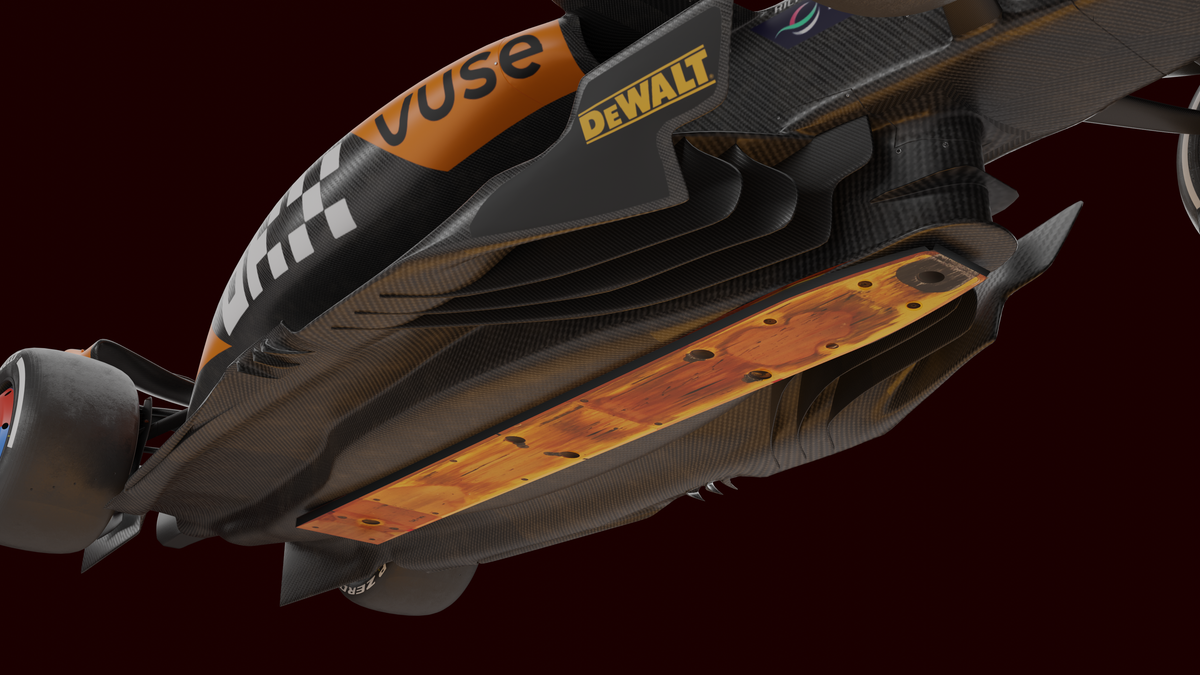
McLaren's Double DSQ in Vegas: Unpacking the Plank Wear Misjudgment
McLaren's double disqualification in Las Vegas for excessive plank wear has drastically reshaped the championship. What initially seemed like fuel saving by Norris was a hidden attempt to protect the car's underbody from track contact. This critical misjudgment by McLaren has not only cost them valuable points but also significantly tightened the Drivers' Championship, leaving Norris's lead vulnerable heading into the final races.
McLaren's double disqualification from the Las Vegas Grand Prix sent shockwaves through the paddock, stemming from excessive plank wear on both Lando Norris's and Oscar Piastri's cars. What initially seemed like a fuel management issue for Norris turned out to be a concerted effort to protect the car's underbody, highlighting a critical misjudgment by the team that carried significant championship implications.
Why it matters:
- This disqualification is a major blow to McLaren's Constructors' Championship aspirations and significantly alters the Drivers' Championship picture, making Lando Norris's lead considerably more vulnerable.
- It exposes a fundamental miscalculation in car setup or race strategy regarding plank wear, an area where consistent performance and adherence to regulations are paramount.
- The incident raises questions about real-time data interpretation and communication within the team, especially given the initial 'red herring' of fuel-saving messages.
The details:
- Initially, Lando Norris's aggressive "lift and coast" maneuvers in the final laps were widely interpreted as an attempt to save fuel to meet FIA sample requirements.
- Norris himself hinted at "some issues with the car" and a potential fuel usage discrepancy in post-race comments, further fueling speculation.
- However, McLaren's subsequent press release and Norris's confirmation revealed that the end-of-race management was due to car issues that led to the disqualification, implying plank wear rather than fuel.
- Plank Protection Strategy: By reducing speed at the end of straights, Norris aimed to limit the rear of the car from being pulled too close to the track surface, thereby preventing excessive contact and wear on the underbody plank.
- McLaren's team principal, Andrea Stella, canceled his post-race media session, and the team's official statement offered minimal details, suggesting a sensitive internal matter.
- The fact that Piastri was not similarly urged to protect his plank indicates that McLaren's concern likely developed during the race based on real-time data, suggesting an issue unique to Norris's car or its specific track performance.
- It's plausible that data inferred plank wear was less critical for Piastri, possibly due to running in DRS or other specific race conditions, making the risk-reward calculation different for him.
The big picture:
McLaren made a significant misjudgment regarding the marginality of their plank wear in a fast, dry race. This costly error not only led to a double disqualification but also allowed Max Verstappen to close the gap considerably in the championship standings. Norris's once seemingly comfortable lead of 30 points over Piastri and 42 points over Verstappen has now shrunk to a mere 24 points over both, with only 58 points remaining across the final two rounds (Qatar and Abu Dhabi, including a sprint race). This dramatic shift paints a very different and far more competitive championship scenario as the season draws to a close.
What's next:
McLaren has apologized to its drivers and promised a thorough investigation into the incident. The findings will be crucial for understanding the root cause of the misjudgment, whether it was a setup flaw, an in-race data misinterpretation, or a strategic oversight. The team will need to learn quickly from this setback to ensure such an issue doesn't recur and to regain momentum as they head into the final, critical races of the season.