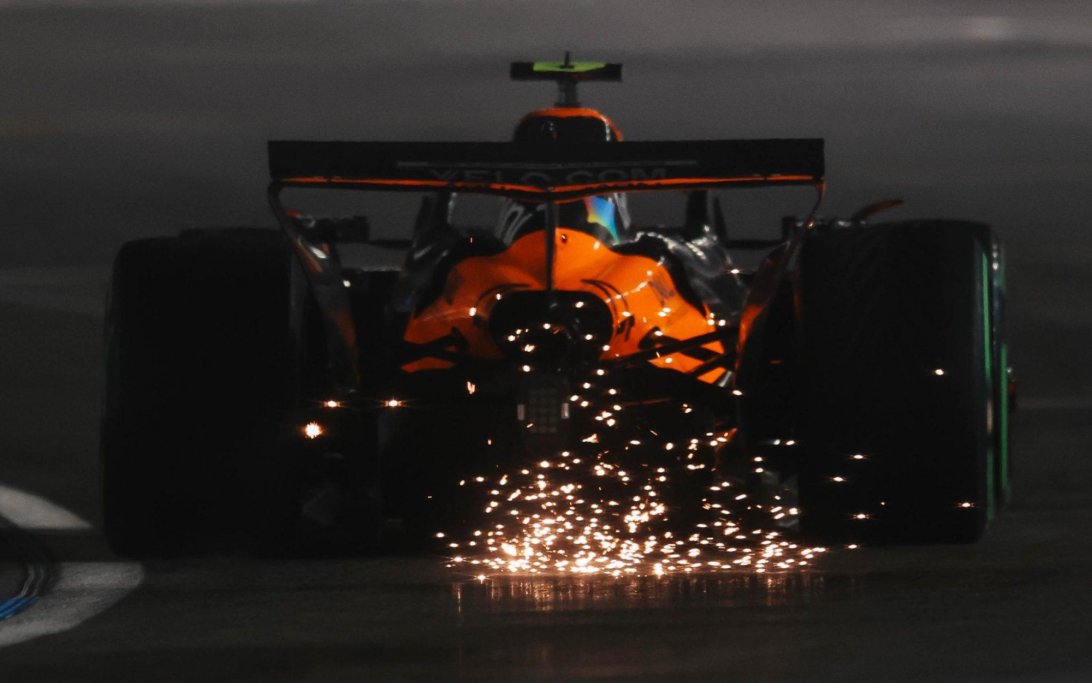
McLaren's Las Vegas Disqualification: The Porpoising Problem
McLaren's double disqualification at the Las Vegas Grand Prix, which cost Lando Norris 25 crucial points, was caused by an aggressive aerodynamic setup and insufficient torsion bar stiffness that led to severe porpoising during the dry race. A critical oversight was the failure to conduct long-run simulations on slick tires, preventing the detection of this issue in practice.
McLaren's double disqualification from the Las Vegas Grand Prix was a significant blow, narrowing the gap between Lando Norris and Max Verstappen to just 24 points in the drivers' standings. This unexpected setback stemmed from an aggressive aerodynamic setup that led to excessive porpoising during the race, a critical miscalculation that went undetected in practice.
Why it matters:
After a strong season, McLaren's unexpected double disqualification in Las Vegas has severely impacted their championship aspirations. The 25-point loss in a single race could prove decisive in the tight drivers' championship battle, putting Lando Norris under increased pressure from Max Verstappen and highlighting the fine margins teams operate within in modern Formula 1.
The Details:
- Aggressive Aerodynamic Setup: McLaren opted for a high-downforce wing configuration, similar to their Spa setup, aiming to generate more downforce and quickly bring tires up to temperature. This was an attempt to compensate for the MCL39's perceived unsuitability for the Las Vegas track.
- Unforeseen Porpoising: While not present in practice or qualifying, the aggressive low ride-height combined with the greater grip and higher speeds achieved in dry race conditions led to severe porpoising. This caused excessive 'scrapping' of the car's floor against the track.
- Insufficient Torsion Bar Stiffness: The stiffness of the MCL39's torsion bars proved inadequate to manage the frequent bottoming out, a crucial factor in exacerbating the porpoising phenomenon.
- Lack of Long Run Data: A critical error was not conducting long-run simulations on slick tires during practice. This meant that simulator predictions for porpoising, even if slightly off, had devastating consequences as the actual race conditions differed significantly from practice and qualifying (which were held in wet conditions).
- Risk-Taking Strategy: McLaren's decision was driven by a desire to overcome technical predictions and push the limits of their setup to improve performance on a track they anticipated would not suit them well. They aimed not just for damage limitation but to outperform expectations.
Between the lines:
McLaren's gamble to push the setup limits backfired dramatically. While a more conservative approach might have yielded a fifth or sixth-place finish, the team's ambition to maximize performance led to a complete loss of points. The incident underscores the inherent risks and rewards of aggressive car setups in Formula 1, especially when track conditions and simulation data do not perfectly align. This strategic misstep could serve as a valuable lesson on balancing ambition with prudence, particularly when a championship is on the line.
What's next:
The team will undoubtedly conduct a thorough review of their simulation processes and setup validation, especially concerning track condition changes. The focus will now shift to mitigating the points deficit in the remaining races and ensuring such an oversight does not reoccur. Lando Norris will need to deliver flawless performances to fend off Max Verstappen, and McLaren's engineers will be working overtime to understand and rectify the underlying issues that led to this significant setback.