McLaren's Las Vegas GP Double DSQ: The Real Reasons Explained
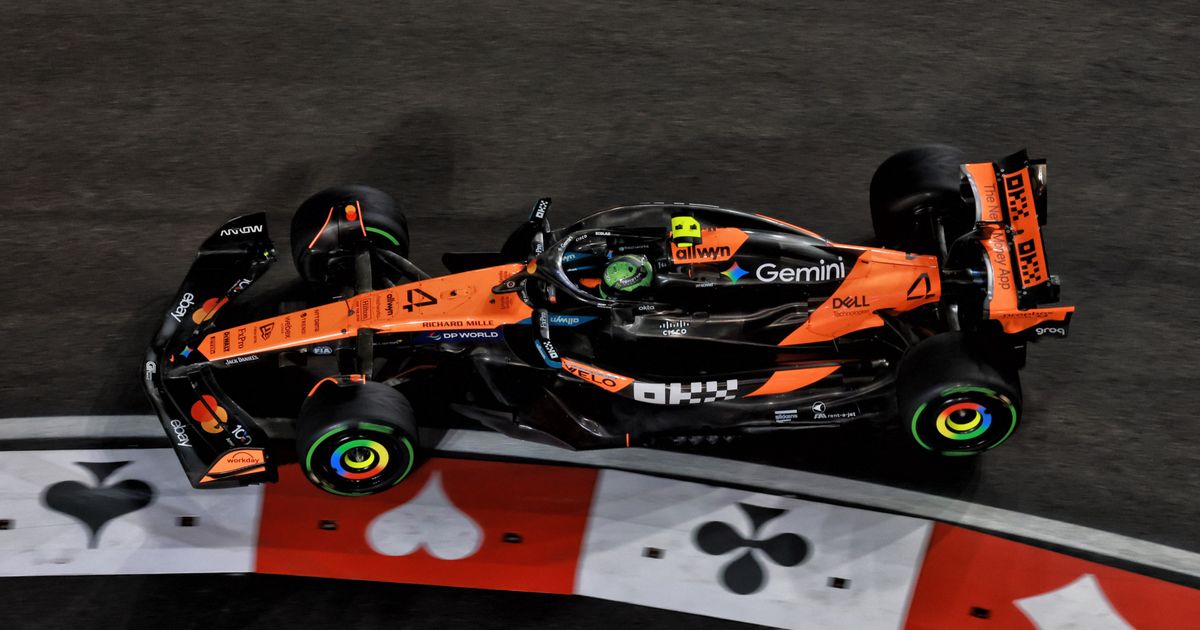
McLaren's double disqualification at the Las Vegas GP wasn't due to rumored 'trick' skid blocks, but rather a combination of disrupted practice sessions and an aggressive setup choice. Two red flags and rain in practice left teams, including McLaren, with insufficient data for race setup. McLaren's soft, low-riding car, designed for qualifying advantage, led to excessive skid block wear during the race, costing Norris and Piastri crucial points and dramatically tightening the championship battle with Red Bull.
McLaren's double disqualification at the Las Vegas GP caused a significant stir, with initial rumors pointing to a 'trick' involving titanium skid blocks for thermal expansion. However, the real story behind Lando Norris and Oscar Piastri's exclusion lies in the chaotic practice sessions and McLaren's aggressive setup choices.
Why it matters:
McLaren's disqualification didn't just cost them points; it had major championship implications. Had the results stood, Lando Norris would have secured the Drivers' Championship. Instead, the team's lead was halved, intensifying the battle with Red Bull and Max Verstappen in the final races. This incident highlights the razor-thin margins and high-stakes decisions teams face in Formula 1.
The details:
- Misleading Rumors: Initially, speculation linked McLaren's skid block wear to an unproven theory of 'expanding' titanium skid blocks, a rumor that emerged after the Brazilian GP. This theory was quickly debunked.
- Challenging Practice Sessions: The crucial factor was the disrupted practice sessions at the Las Vegas GP.
- FP2: Two red flags prevented teams from conducting proper race simulations, leaving them without essential data on tire degradation, plank wear, and fuel consumption.
- FP3: Rain further hindered data collection, forcing teams to make setup decisions with incomplete information.
- Aggressive Setup Choice: McLaren opted for a very soft rear setup for qualifying, prioritizing traction and cornering in slower turns, which proved effective in the wet conditions and earned Norris pole position.
- Race Day Backfire: This soft setup, combined with running the car lower for increased downforce in faster corners, caused the skid blocks to scrape excessively against the asphalt during the race, leading to severe wear.
- Porpoising and Instructions: The soft setup also triggered porpoising, which McLaren engineers likely anticipated. Norris was reportedly instructed to 'lift and coast' to mitigate this effect and reduce skid block wear, but it wasn't enough.
The big picture:
The intense championship battle with Red Bull likely pushed McLaren to take these aggressive risks with their setup, aiming to extract maximum performance. However, this strategy ultimately backfired, resulting in a halved championship lead and increased pressure on both Norris and Piastri. The incident underscores how critical every millimeter and every data point is in modern F1.
What's next:
With a significantly reduced points advantage, McLaren faces immense pressure in the remaining races. While Norris still holds a lead, the momentum is now firmly with Max Verstappen and Red Bull. The outcome of the championship could very well be decided by the narrowest of margins, making every setup decision and every on-track performance more critical than ever.