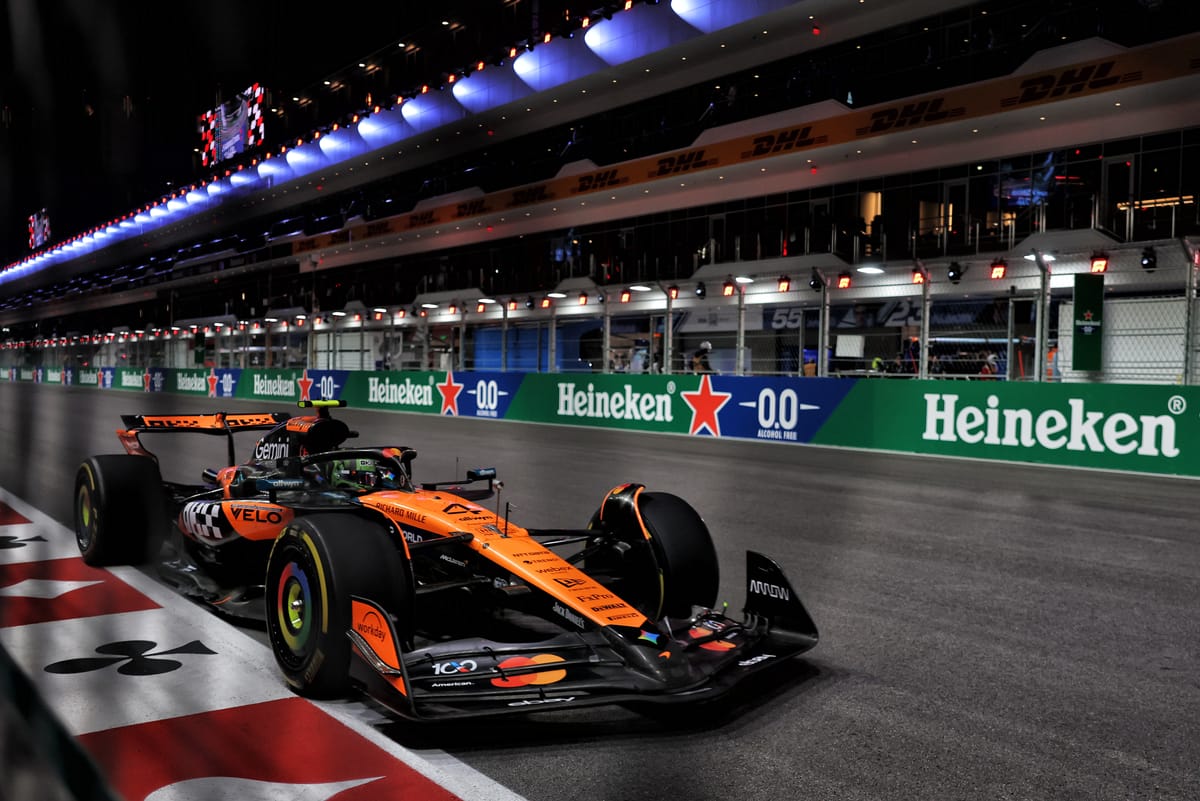
McLaren's Plea for Technical Rule Leniency is Critically Flawed
McLaren's recent disqualifications for minuscule technical breaches have ignited debate over F1's strict rule enforcement. While McLaren argues for more lenient penalties for minor infringements, the sport's governing body maintains that a black-and-white approach to technical regulations is crucial to prevent teams from exploiting loopholes and gaining unfair advantages, ensuring competitive integrity.
McLaren's double disqualification from the Las Vegas Grand Prix for excessive skid plate wear has reignited debate in Formula 1 about the harshness of penalties for minor technical breaches. While McLaren argues the penalties are disproportionate for negligible infractions, F1's long-standing 'black and white' approach to technical regulations is critical to prevent teams from deliberately operating outside the rules and gaining an unfair advantage.
Why it matters:
Formula 1's integrity hinges on strict adherence to technical regulations. McLaren's recent disqualifications, while seemingly minor in scale, underscore a fundamental tension: the desire for proportionality in penalties versus the need for clear, unambiguous rules to prevent exploitation. Any leniency could open a Pandora's Box, potentially leading to widespread rule-bending.
The Details:
- McLaren's cars were disqualified from the Las Vegas GP due to skid plate wear that was only fractions of a millimeter beyond the legal limit (0.12mm and 0.07mm respectively).
- McLaren team principal Andrea Stella suggested the FIA should address this 'lack of proportionality,' proposing that minor, accidental technical infringements without performance benefits should not lead to exclusion.
- The FIA's Stance: F1 has historically maintained that any technical regulation breach results in exclusion, regardless of the degree or perceived performance benefit.
- Unintended Consequences: Allowing even slight deviations, like 0.1kg underweight cars or 0.5mm excessive plank wear, could be seen by teams as new, acceptable limits to push.
- Examples given are minor speed limit breaches in the pitlane or false starts, which, if unpunished, would become new norms.
- Past Discussions: The topic of technical rule leniency has been raised in previous F1 Commission meetings but has consistently been voted down due to potential unintended consequences.
Between the lines:
The core issue lies in preventing teams from 'gaming the system.' If stewards had to judge the performance benefit of minor infringements, teams could claim ignorance or argue no advantage was gained, effectively challenging the rules. This subjective interpretation would create endless complications and dilute the clarity of the regulations. The current 'black and white' approach, though sometimes appearing harsh, serves as the most effective deterrent against deliberate rule-bending. The late Charlie Whiting's famous 'Article 0.0.0' — 'Thou shalt not take the p **s' — perfectly encapsulates the spirit of these strict regulations.
What's next:
While sources suggest the FIA is open to discussing the matter again if teams present a workable solution, it would require majority support from the grid, which is unlikely given the clear downsides. The consensus remains that technical regulations must be unambiguous, ensuring all teams operate under the same clear framework. Therefore, significant changes to the current strict enforcement of technical rules are improbable.