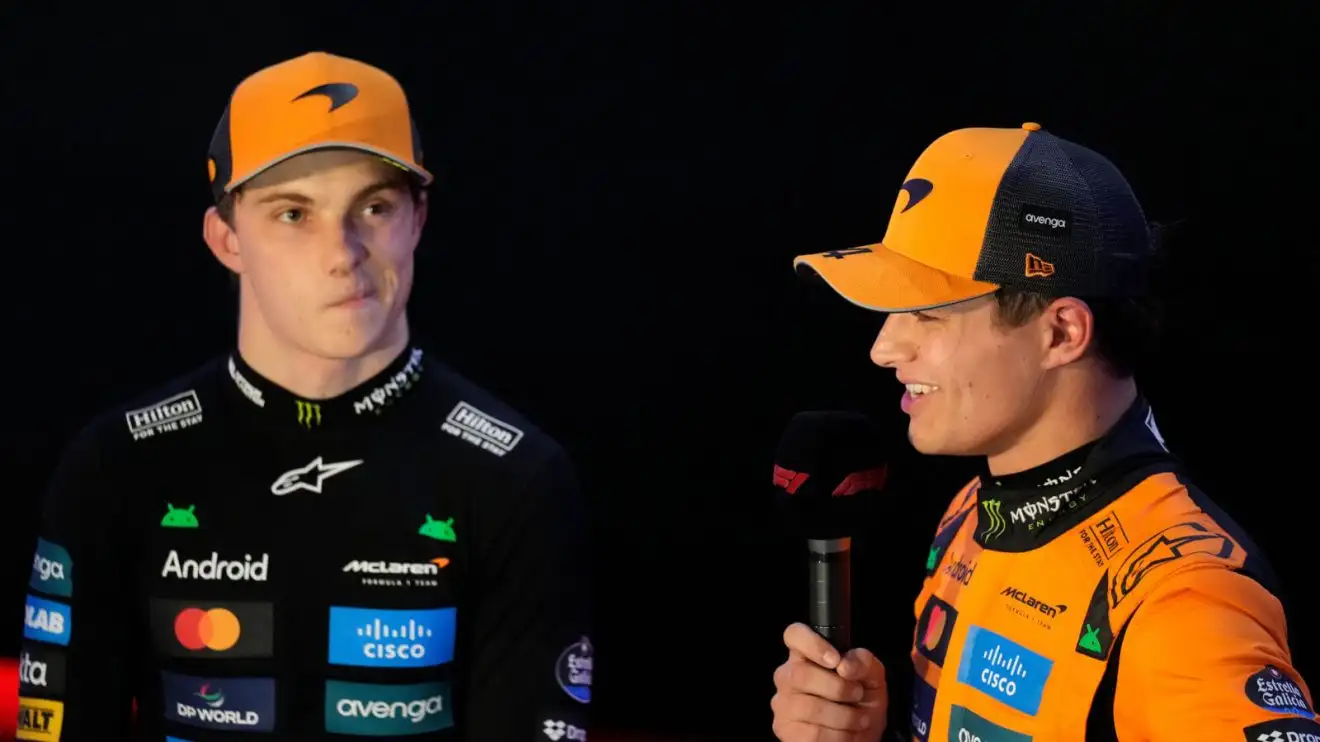
McLaren's Qatar GP Strategy Sparks Piastri 'Conspiracy Theories'
McLaren's controversial strategy call at the Qatar Grand Prix, where they failed to pit Oscar Piastri and Lando Norris under an early Safety Car, sparked renewed 'conspiracy theories' about team bias, particularly after Piastri lost a potential win to Max Verstappen. Team Principal Andrea Stella admitted the decision was a mistake, citing an incorrect assessment of potential traffic, and has vowed a thorough internal review to learn from the blunder and improve future strategic calls.
Conspiracy theories surrounding McLaren's treatment of Oscar Piastri have resurfaced after a critical strategic misstep at the Qatar Grand Prix seemingly cost the Australian a victory and significantly impacted his championship aspirations. The decision not to pit Piastri and Lando Norris under an early Safety Car, a move McLaren team principal Andrea Stella admits was a mistake, has reignited discussions about team bias.
Why it matters:
McLaren's strategy call in Qatar, which saw them remain on track while most of the field pitted under an early Safety Car, directly handed a competitive advantage to rivals, notably Max Verstappen. This blunder not only cost Piastri a potential victory but also fueled existing 'conspiracy theories' among fans and pundits about perceived favoritism towards Lando Norris within the team, raising questions about internal dynamics and fair competition.
The details:
- Early Lead and Safety Car: Piastri, starting from pole, led the opening laps ahead of Verstappen, with Norris in third. On Lap 6, a Safety Car was deployed due to an incident involving Nico Hulkenberg and Pierre Gasly.
- Strategic Blunder: With the race scheduled for 57 laps and a maximum stint length of 25 laps (mandated by Pirelli's two-stopper rule), the Safety Car offered a 'free stop'. However, McLaren was one of only two teams (along with Esteban Ocon) not to pit their cars.
- Consequences: Verstappen, who pitted, gained a significant advantage, ultimately winning the race eight seconds ahead of Piastri. Norris also lost out, finishing fourth behind Carlos Sainz.
- Expert Criticism: Former Aston Martin strategist Bernie Collins questioned the decision, particularly for Piastri, stating that if it were a standalone car, pitting would have been the clear choice. She suggested that 'papaya rules' – an unwritten code of fairness – might have 'bitten' McLaren by hesitating to stack Norris behind Piastri.
- Former F1 driver Karun Chandhok also expressed bewilderment, highlighting Piastri's sufficient gap to pit safely.
- Bias Accusations: Calum Nicholas, a former Red Bull mechanic, alluded to existing accusations of McLaren's bias towards Norris, further fueling the 'conspiracy' narrative.
Between the lines:
Team Principal Andrea Stella addressed the controversy, explaining that the primary reason for not pitting both cars was concern about being thrown into traffic after the pit stop, not the potential time loss from a double-stacked pit stop for Norris. He admitted this interpretation was incorrect, as 16 of the 19 cars did pit, leaving McLaren's cars out of position. Stella acknowledged conceding a pit stop advantage to rivals and stated the team would conduct a thorough internal review.
What's next:
McLaren plans a comprehensive internal review to understand the misjudgment, including assessing potential biases in their decision-making process. Stella emphasized a constructive and analytical approach to learn from the 'tough lesson'.
- Heading into the season finale, Norris leads Piastri by 12 points, with Piastri a further four points behind Verstappen. With 25 points still available, any of the three drivers could potentially clinch the F1 2025 World title in Abu Dhabi.
- The team aims to adapt and emerge stronger, highlighting the competitive nature of racing and the importance of continuous learning.