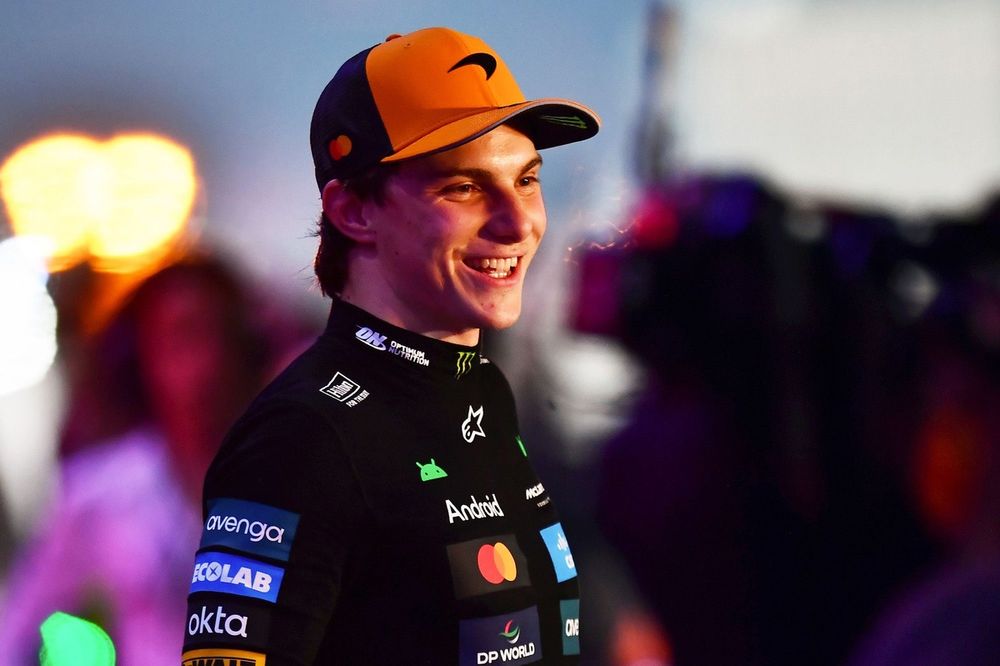
McLaren's Theory: Why Piastri is Back to His F1 Best in Qatar
McLaren team principal Andrea Stella attributes Oscar Piastri's resurgent performance in Qatar, including a sprint sweep and grand prix pole, to his natural aptitude for high-grip circuits. After struggling on low-grip tracks, Piastri's comeback highlights a specific driving style preference, while McLaren's unexpected speed in high-speed sections in Qatar points to successful car development efforts.
Oscar Piastri's return to dominant form in Qatar, where he swept sprint qualifying, the sprint race, and grand prix qualifying pole, aligns with McLaren team principal Andrea Stella's 'high-grip theory' about the Australian driver. After struggling at low-grip circuits like Austin and Mexico, Piastri's resurgence at the high-downforce Losail circuit highlights a specific driving style advantage.
Why it matters:
Piastri's performance fluctuation based on circuit grip types reveals a nuanced aspect of modern F1 driving and car setup. His ability to maximize potential on high-grip tracks, coupled with his ongoing development for low-grip scenarios, is crucial for McLaren's consistent championship aspirations. This insight also sheds light on the subtle technical differences that can separate top drivers and car performance.
The Details:
- Grip Theory: Andrea Stella attributes Piastri's struggles in Austin and Mexico, and his strong performance in Qatar, to the level of grip available on the circuits. Qatar's high-grip conditions suit Piastri's natural driving style.
- Driving Style Differences: On low-grip circuits, such as Mexico and Austin, drivers need a specific technique involving sliding the rear axle for braking and car rotation, a skill Lando Norris excels at.
- Piastri's Development: Oscar Piastri is actively developing this specific 'sliding' technique to improve his performance on low-grip tracks, though it's not yet his most natural mode of driving.
- Mental vs. Technical: Stella emphasizes that Piastri's recent dip in performance was purely a technical matter related to adapting to certain circuit characteristics, not a mental one. At the highest level of F1, even a 1% technical gap can lead to significant position losses.
The Big Picture:
McLaren's unexpected dominance in specific high-speed sections in Qatar, rather than their usual medium-speed corner strengths, indicates a strategic shift or successful development in their car. While they anticipated the track to suit them, the manner of their speed suggests focused work on high-speed performance. This also points to the increasing convergence of car performance across the grid as regulations mature, with teams like Red Bull potentially compromising high-speed strengths for low-speed gains, and Mercedes showing prowess in medium-speed corners.
What's next:
McLaren will continue to analyze how their car performs on different grip levels and corner types to ensure both drivers can extract maximum performance consistently. Piastri's ongoing development of his low-grip driving technique will be key to his overall performance consistency throughout the season and beyond. The battle for setup optimization and driver adaptation will remain a critical factor as the F1 season progresses, especially with the close convergence of top teams.