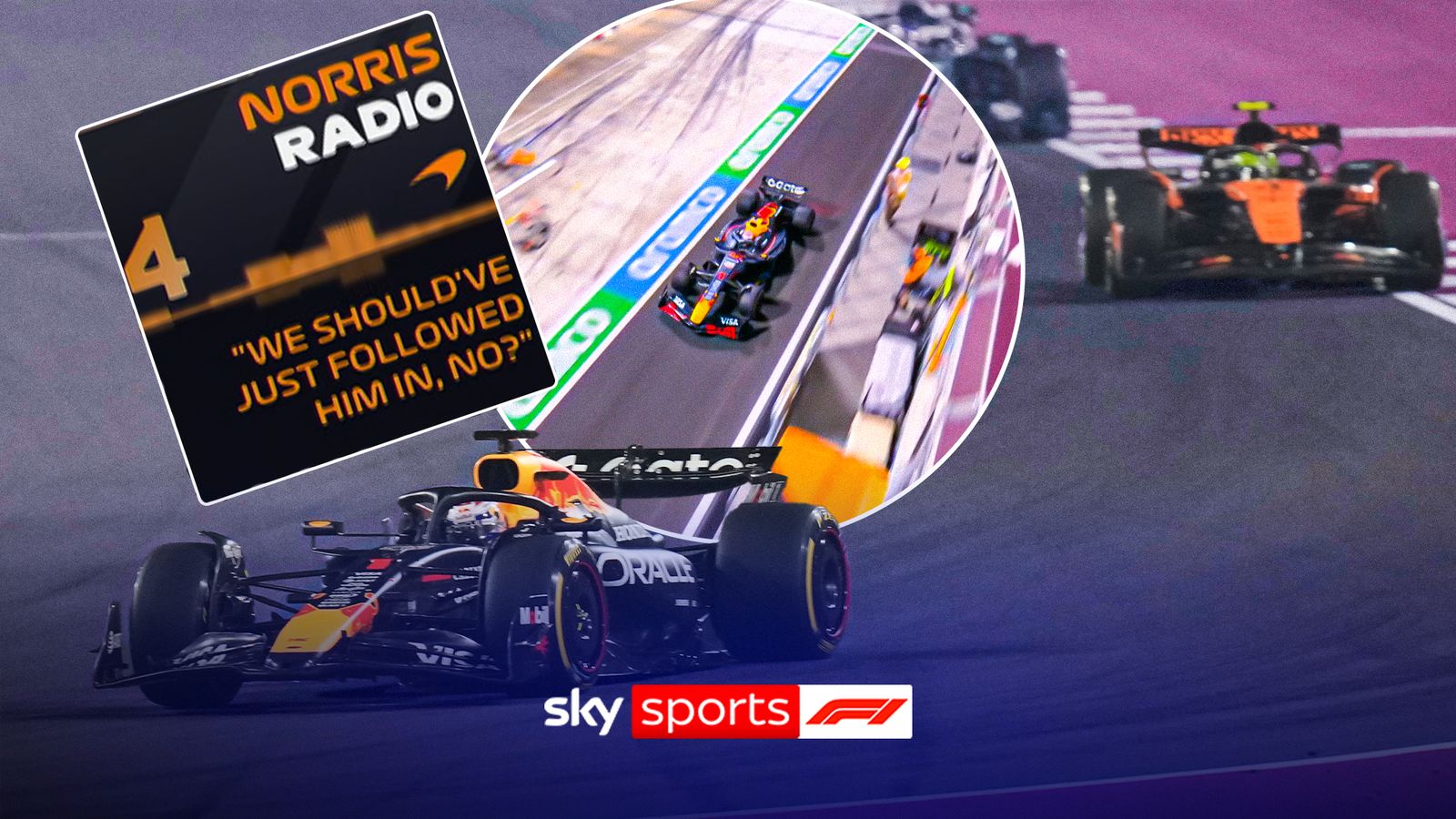
Norris Questions McLaren's Strategy After Verstappen Safety Car Pit Stop in Qatar
Lando Norris openly questioned McLaren's strategy at the Qatar Grand Prix when Max Verstappen pitted under a safety car, while Norris stayed out. His radio message, 'We should've followed?!', highlighted a critical strategic divergence and the high stakes of safety car decisions in Formula 1, prompting a review of McLaren's choice.
Lando Norris openly questioned McLaren's strategic decision at the Qatar Grand Prix, specifically their choice to keep him out on track while Max Verstappen pitted under a safety car. This moment highlighted a critical divergence in strategy that could have impacted the race outcome.
Why it matters:
Strategic calls under safety car periods are often race-defining in Formula 1. Norris's public questioning underscores the high stakes and potential frustrations when a team's decision doesn't align with a driver's immediate read of the situation, especially when a direct rival makes an opposing, seemingly advantageous move. For McLaren, it highlights the constant pressure to optimize every strategic decision in the heat of a Grand Prix.
The Details:
- During the Qatar Grand Prix, a safety car was deployed, presenting teams with a critical strategic window.
- Max Verstappen, leading the race for Red Bull, opted to pit for fresh tires, a common and often beneficial strategy under safety car conditions.
- McLaren, however, chose to keep Lando Norris out on track, maintaining his track position but potentially compromising his tire life for the remainder of the race.
- Norris was heard over team radio questioning the decision, asking, 'We should've followed?!', indicating his belief that pitting might have been the better option.
- This particular strategic choice led to a direct comparison with Verstappen's move, putting McLaren's decision under immediate scrutiny.
Between the lines:
Decisions like these are complex, balancing track position, tire degradation, the length of the safety car period, and the expected race conditions post-restart. While staying out can offer initial track position advantages, pitting for fresh tires provides better grip and pace for the subsequent racing laps, often proving more beneficial in the long run. Norris's immediate reaction suggests a gut feeling that fresh rubber would have been more advantageous, reflecting a common driver's instinct for maximum performance.
What's next:
McLaren's strategists will undoubtedly review this decision in post-race debriefs to understand the reasoning behind it and whether an alternative call could have yielded a better result for Norris. These moments are crucial learning opportunities for teams as they continually refine their race strategies. For Norris, it's a testament to his ambition and desire to maximize every opportunity on track, pushing his team to always aim for optimal performance.